The Jakarta Post
Please Update your browser
Your browser is out of date, and may not be compatible with our website. A list of the most popular web browsers can be found below.
Just click on the icons to get to the download page.


Popular Reads
Top Results
No results found. Please check your search term and try again
Can't find what you're looking for?
View all search results
Popular Reads
Top Results
No results found. Please check your search term and try again
Can't find what you're looking for?
View all search resultsWhat the Iran crisis means for middle powers
The Iran crisis makes clear that a restoration spearheaded by middle powers is crucial for steering geopolitics away from a world governed by power alone.
Change text size
Gift Premium Articles
to Anyone
Share the best of The Jakarta Post with friends, family, or colleagues. As a subscriber, you can gift 3 to 5 articles each month that anyone can read—no subscription needed!
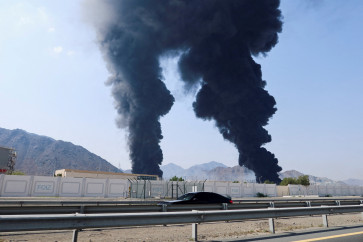
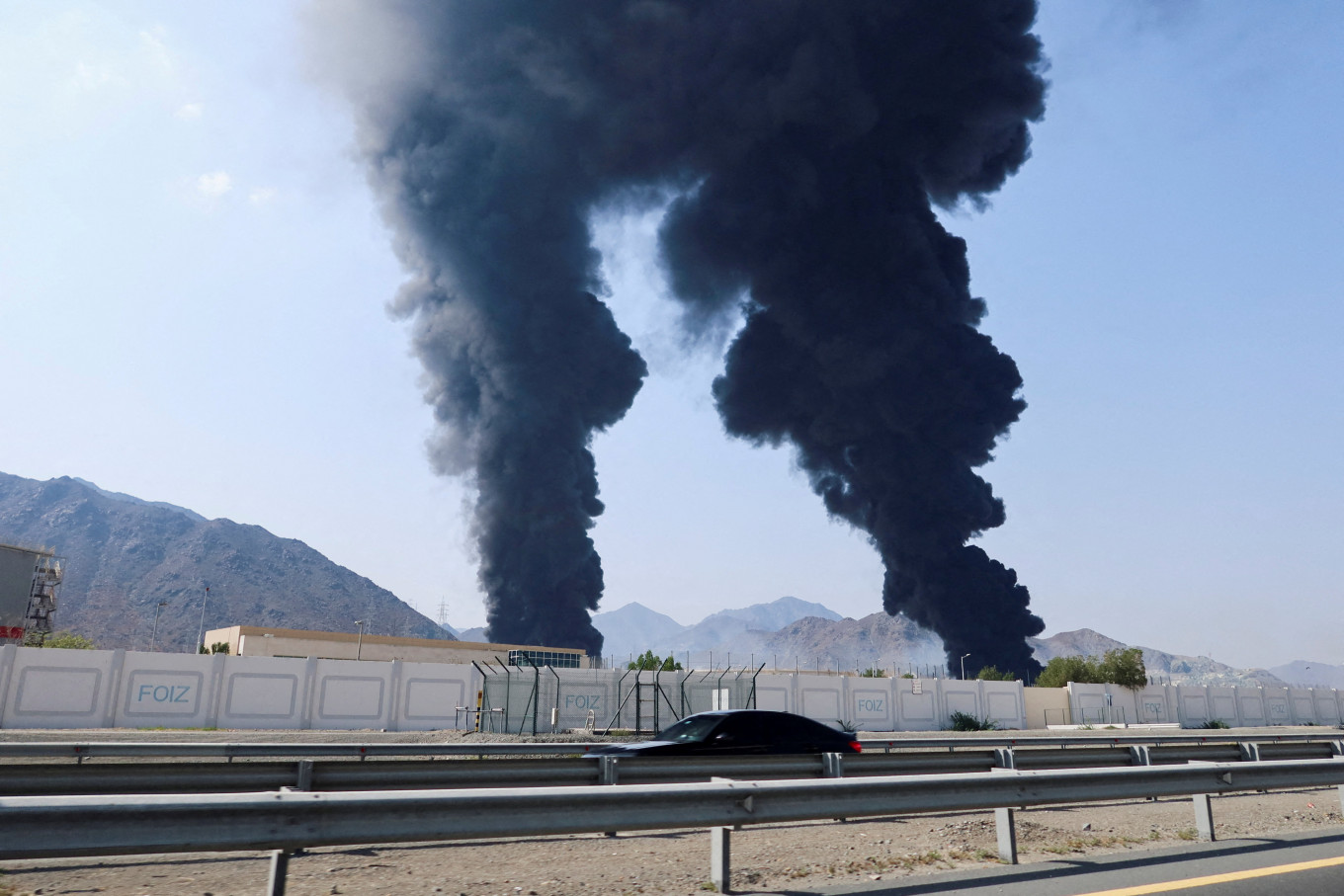 Smoke rises in the Fujairah oil industry zone, caused by debris after interception of a drone by air defenses, according to the Fujairah media office, amid the US-Israel conflict with Iran, in Fujairah, United Arab Emirates, on March 14, 2026. (Reuters/Staff)
A
s I mark the first year of my confinement in Silivri Prison, events unfolding beyond these walls suggest that we are witnessing not merely a shift in policies, but the crumbling of the international order. The headlines are dominated by escalating violence in Iran and across the Middle East, offering a stark reminder that power politics is once again setting the terms of global affairs.
The Iran conflict epitomizes the “rupture” that Canadian Prime Minister Mark Carney described so eloquently in his address at Davos. The comfortable assumptions that shaped the past three decades – that economic interdependence would prevent conflict, that global governance would deepen over time, and that technological progress would expand freedom – are rapidly losing credibility.
In their place stands a harsher truth: the instruments designed to bind the world together have been repurposed as tools of intimidation. Indeed, the very vocabulary of cooperation has been emptied of meaning, first through overuse and today through mendacity and bad faith. Too often, “diplomacy” is reduced to pressure politics – threats dressed up as engagement, backroom deals, or photo opportunities.
In both Davos and Munich, the subtext was that crisis management is becoming less hierarchical. Great powers may still dominate when it comes to establishing deterrence, but as hegemonic players embrace disruption and violate international law with abandon, the tasks of de-escalation and mediation are increasingly being shouldered by middle powers operating through flexible, overlapping diplomatic networks.
These states are learning to act in concert not by forming a single formal bloc, but by building issue-based coalitions that can move faster than great-power rivalries would allow. Middle powers can coordinate sanctions and humanitarian corridors, broker prisoner exchanges, open discreet backchannels, and keep multilateral institutions functioning when the largest players pull back or engage in sabotage. When confrontations between the strongest states threaten the potential for compromise, it is often middle powers that create the narrow openings through which diplomacy can proceed.
But for any middle-power framework to endure, it must be built on a foundation of democratic trust, with all participants playing by the same rules. During periods of rupture, autocratic states often present themselves as “indispensable” to global stability. They may step up to help manage international crises in the short term, even as their leaders exploit the same circumstances to entrench their rule at home. But autocrats can never serve as credible stewards of a new rules-based order, because they do not treat rules as binding. Everything is transactional.

The Iran conflict illustrates both what happens when such openings are too weak and why legitimacy matters as much as capabilities. In the new geopolitics, great powers tend to take matters into their own hands, acting through coercion first and diplomacy second. But when authority at home rests more on coercion than consent, external stability becomes brittle: policy turns reactive, deterrence becomes improvised, and a state’s room for maneuver depends less on durable commitments than on shifting balances of power. The result is not a renewed order, but a landscape shaped by faits accomplis, with everyone else forced to adjust after the fact.