TheJakartaPost
Please Update your browser
Your browser is out of date, and may not be compatible with our website. A list of the most popular web browsers can be found below.
Just click on the icons to get to the download page.


Popular Reads
Top Results
No results found. Please check your search term and try again
Can't find what you're looking for?
View all search results
Popular Reads
Top Results
No results found. Please check your search term and try again
Can't find what you're looking for?
View all search resultsRamadan values provide basis for just welfare distribution
Beyond a spiritual ritual, Ramadhan offers a powerful economic blueprint for bridging Indonesia’s wealth gap and securing a just, prosperous future by 2045.
Change text size
Gift Premium Articles
to Anyone
Share the best of The Jakarta Post with friends, family, or colleagues. As a subscriber, you can gift 3 to 5 articles each month that anyone can read—no subscription needed!
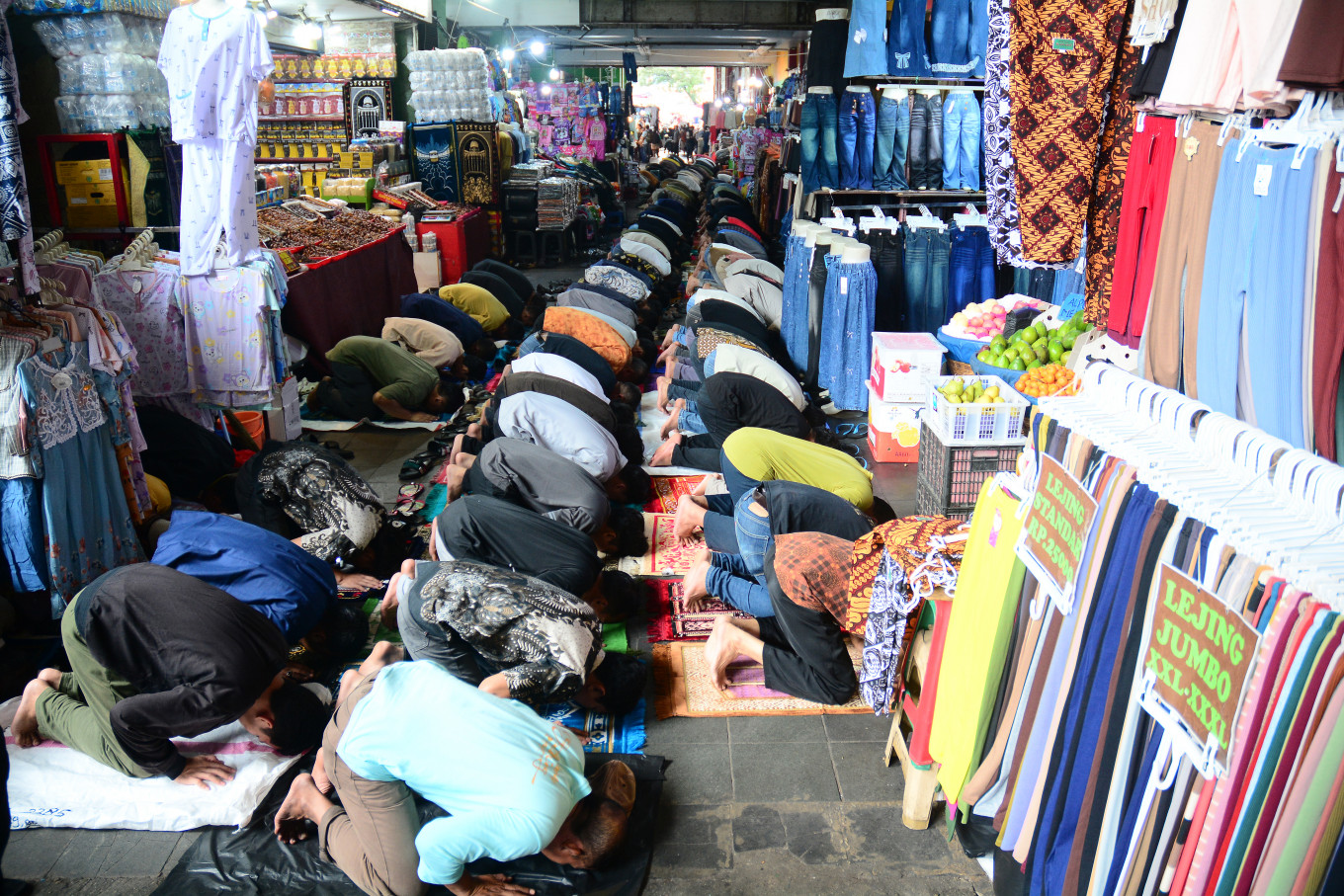 Muslims perform Friday prayers during Ramadan at Tanah Abang Market, Southeast Asia’s largest textile market, in Jakarta on Feb. 27, 2026. (JP/Iqro Rinaldi)
I
ndonesia stands at a pivotal moment in its history. As the nation moves toward its centennial milestone, Golden Indonesia 2045, it faces a convergence of internal and external challenges.
Externally, global climate change, technological disruptions (particularly artificial intelligence, drones and robotics), trade wars between the United States and the global market, and escalating geopolitical tensions, including the Russia-Ukraine conflict, the crisis in Gaza and the US-Israeli war on Iran, threaten to constrain Indonesia’s journey toward becoming an advanced, high-income and sovereign nation.
Internally, the challenges are equally daunting. Beyond high unemployment, deindustrialization and low productivity, Indonesia continues to grapple with persistent economic inequality. According to Oxfam International, Indonesia ranks as one of the most unequal countries in the world; the total wealth of the richest 1 percent of Indonesians is equal to nearly 50 percent of the nation’s total wealth. Furthermore, the richest 0.2 percent of the population owns approximately 68 percent of Indonesia’s land area.
This disparity is reflected not only in income gaps but also in unequal access to resources, economic opportunities and regional development. Historically, such extreme inequality has caused poverty alleviation programs to fail and has fueled social unrest and instability.
While structural reforms, such as fiscal redistribution, job creation and social protections, are essential, the role of ethical and spiritual values in shaping economic behavior is often underemphasized. In this context, the observance of Ramadan fasting offers a powerful moral framework to address inequality holistically.
Fasting is not merely a ritual abstention from food and drink; it is a rigorous process of nurturing empathy. By experiencing hunger and restraint, individuals, particularly those in privileged socioeconomic positions, gain a visceral understanding of the daily realities faced by the poor. This experiential awareness fosters human solidarity, translating into more compassionate economic decisions at both the household and institutional levels.

In the Indonesian context, where inequality often manifests between urban and rural areas, as well as across sectors such as agriculture and fisheries, this empathy can encourage stronger support for inclusive policies. It also strengthens community-based mechanisms such as gotong royong (mutual cooperation), which remain vital in bridging gaps left by formal institutions. Ramadan significantly amplifies the practice of Islamic social finance, particularly zakat (obligatory almsgiving), infaq (religious spending) and sadaqah (voluntary charity).