The Jakarta Post
Please Update your browser
Your browser is out of date, and may not be compatible with our website. A list of the most popular web browsers can be found below.
Just click on the icons to get to the download page.


Popular Reads
Top Results
No results found. Please check your search term and try again
Can't find what you're looking for?
View all search results
Popular Reads
Top Results
No results found. Please check your search term and try again
Can't find what you're looking for?
View all search resultsStrait strategy: Iran is sanctioning America
By choking off the Strait of Hormuz to oil flowing from pro-US Persian Gulf countries, while still shipping a substantial amount of its own oil to China, Iran has slapped painful sanctions on the US.
Change text size
Gift Premium Articles
to Anyone
Share the best of The Jakarta Post with friends, family, or colleagues. As a subscriber, you can gift 3 to 5 articles each month that anyone can read—no subscription needed!
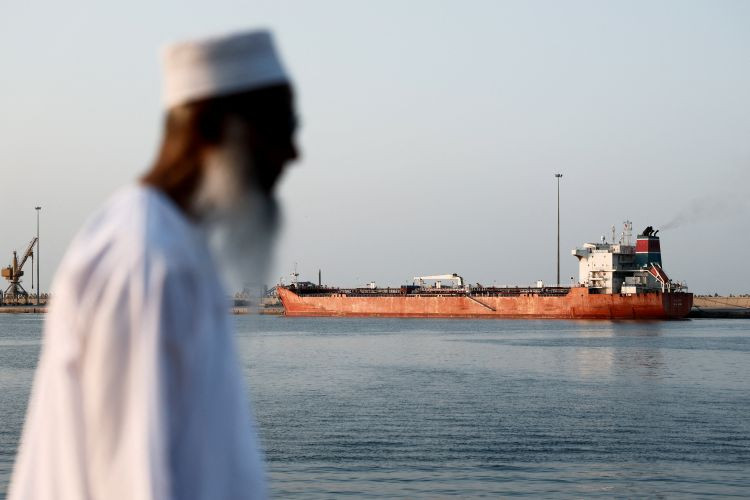 A man stands onshore against the backdrop of the Callisto tanker on March 12, 2026, anchored at Sultan Qaboos Port in Muscat amid a sharp drop in maritime traffic in the Strait of Hormuz due to the United States-Israeli war with Iran. (Reuters/Benoit Tessier)
T
he purpose of international sanctions is to impose economic pain on an adversary. If you are the United States, you do this by seizing assets or prohibiting transactions with particular countries, often targeting specific people or entities close to the targeted regime. Given the global reach of the dollar system, US sanctions are generally feared far and wide. But now the US is on the receiving end.
In effect, by choking off the Strait of Hormuz to oil flowing from pro-US Persian Gulf countries, while still shipping a substantial amount of its own oil to China, Iran has slapped painful sanctions on the US. If these de facto Iranian sanctions last, they will impose first-order economic costs on many Americans, including supporters of President Donald Trump, implying a major impact on the midterm elections in November.
The US does not usually buy much oil from Persian Gulf countries. Most of the region’s output moves by tanker to Asia and, since Russia’s full-scale invasion of Ukraine, to Europe. But the world oil market is so interconnected that changes in the price of Brent crude immediately affect energy prices everywhere, including for retail gasoline and diesel in every part of North America. According to the US Energy Information Administration, the price of on-highway diesel has risen by more than a dollar per gallon, to over US$5, since Feb. 28, when the US-Israeli strikes on Iran began.
Higher fuel prices have a direct impact on everyone who drives a vehicle, including many strong supporters of Trump who, according to market research, are more likely to drive full-size pickups. Higher diesel and fertilizer prices will squeeze farmers. Jet fuel prices are also up sharply in all markets, with immediate implications for the price of air travel (and further negative effects on transportation costs). And these higher prices will lower living standards more broadly, because transport costs strongly influence the price of food and all goods.
And then there are the financial market knock-on effects. How can the Federal Reserve possibly cut interest rates with Brent crude at or above $100 per barrel? If the Federal Open Market Committee fails to resist these intense inflationary pressures, parallels will increasingly be drawn with Arthur Burns, installed as Fed chair by Richard Nixon in 1970, with rather disastrous consequences for inflation (and stagnation) during that decade.
There are always policy options, and Trump is now signaling that he would like to de-escalate attacks on energy-related infrastructure. But to keep its de facto sanctions in place, all Iran needs to do is maintain the credibility of its threat against tankers in the Strait of Hormuz. Trump, of course, could declare victory and stop US missile attacks. But will this either stop the Israel-Iran conflict or make the Persian Gulf safe for shipping again?

In addition to its own production capabilities, Iran can draw on strong support from Russia. Press reports indicate that Russia is encouraging Iran to keep up its attacks, including by providing targeting data to strike US assets and supporting the drone effort in various ways. Russia wants to undermine the US and its allies, and higher oil prices are a windfall for the Kremlin. As the conflict with Iran has escalated, the US has relaxed sanctions against Russian oil. The Russians likely expect further relaxation if the conflict continues.