TheJakartaPost
Please Update your browser
Your browser is out of date, and may not be compatible with our website. A list of the most popular web browsers can be found below.
Just click on the icons to get to the download page.


Popular Reads
Top Results
No results found. Please check your search term and try again
Can't find what you're looking for?
View all search results
Popular Reads
Top Results
No results found. Please check your search term and try again
Can't find what you're looking for?
View all search resultsCriticism, intelligence and the future of a republic
Within the broader tradition of political thought, criticism is the most honest form of engagement.
Change text size
Gift Premium Articles
to Anyone
Share the best of The Jakarta Post with friends, family, or colleagues. As a subscriber, you can gift 3 to 5 articles each month that anyone can read—no subscription needed!
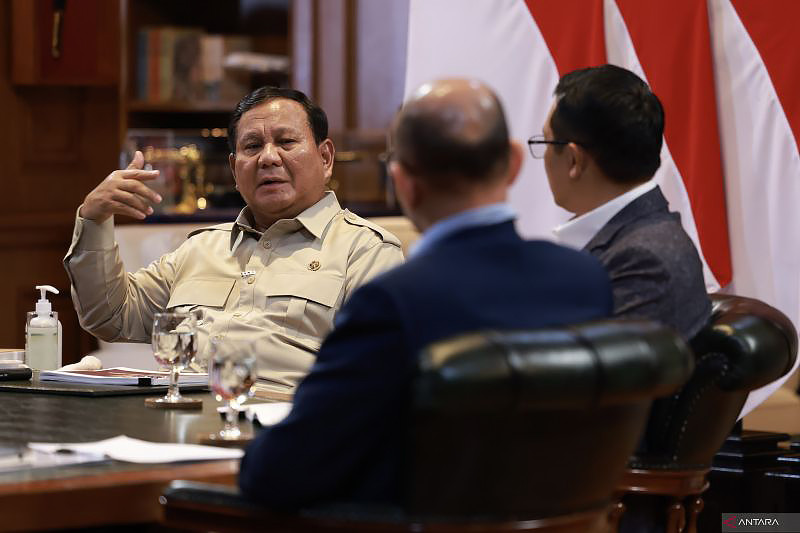 Hambalang talks: Prabowo Subianto (left) speaks with journalists and economists on March 17, 2026, at his private residence in Hambalang, Bogor regency, West Java. (Antara/Handout/Government Communication Office)
A
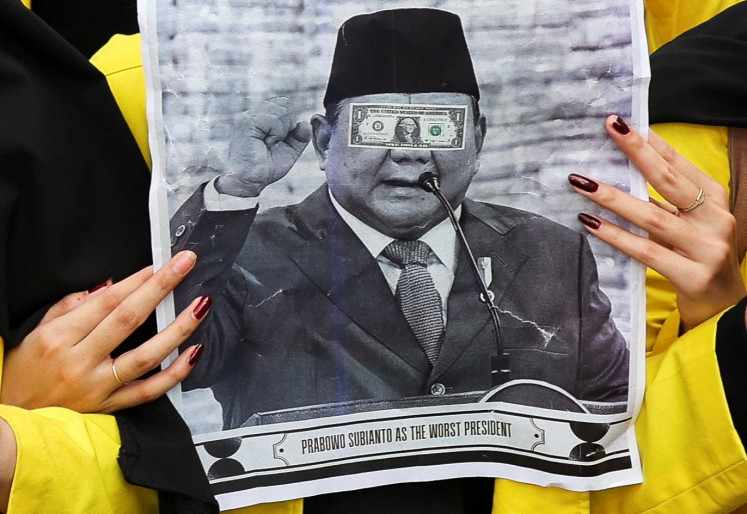
recent statement by President Prabowo Subianto suggesting that certain analysts are unpatriotic for persistently criticizing the government should not be dismissed as a passing controversy. It raises a deeper question about how the state perceives dissent and the extent to which disagreement remains a legitimate part of democratic life.
In these remarks, the administration did not merely frame criticism as a difference of opinion, but as something inherently suspicious, possibly driven by financial interests and subject to intelligence monitoring. At this juncture, criticism shifts from the realm of rational argument into the realm of state suspicion.
In the theory of the public sphere articulated by Jürgen Habermas, who died earlier this month, democracy relies not solely on elections, but on a free space where citizens can openly test and debate public policies. In this light, criticism is a corrective mechanism rather than a threat; it ensures that power does not operate without scrutiny.
However, when the state casts doubt on the critic’s motives, it distorts the public sphere. Debate no longer revolves around substance, but around intent. Arguments are no longer assessed on their merits, but are instead interrogated for their underlying loyalty.
This phenomenon mirrors patterns identified in Michel Foucault’s theories of power. Foucault argued that modern power operates not only through laws or coercion, but through the "production of truth". The state possesses the unique capacity to define what is legitimate and what is deviant.
Labeling critics as “unpatriotic” is therefore more than a moral judgment; it is a political instrument that draws a boundary between those considered part of the nation and those placed outside it. Criticism, once a vital element of democratic discourse, is gradually repositioned as a subversive act.

This dynamic can also be understood through the lens of populism, as described by Cas Mudde. Populism often simplifies politics into a binary struggle between “the pure people” and those deemed to undermine them. Critics are frequently relegated to the latter category.