TheJakartaPost
Please Update your browser
Your browser is out of date, and may not be compatible with our website. A list of the most popular web browsers can be found below.
Just click on the icons to get to the download page.


Popular Reads
Top Results
No results found. Please check your search term and try again
Can't find what you're looking for?
View all search results
Popular Reads
Top Results
No results found. Please check your search term and try again
Can't find what you're looking for?
View all search resultsThis energy shock demands a green industrial strategy
Green investment is a win-win. In addition to mitigating climate change, its spillover effects lead to higher productivity, good jobs and higher living standards.
Change text size
Gift Premium Articles
to Anyone
Share the best of The Jakarta Post with friends, family, or colleagues. As a subscriber, you can gift 3 to 5 articles each month that anyone can read—no subscription needed!
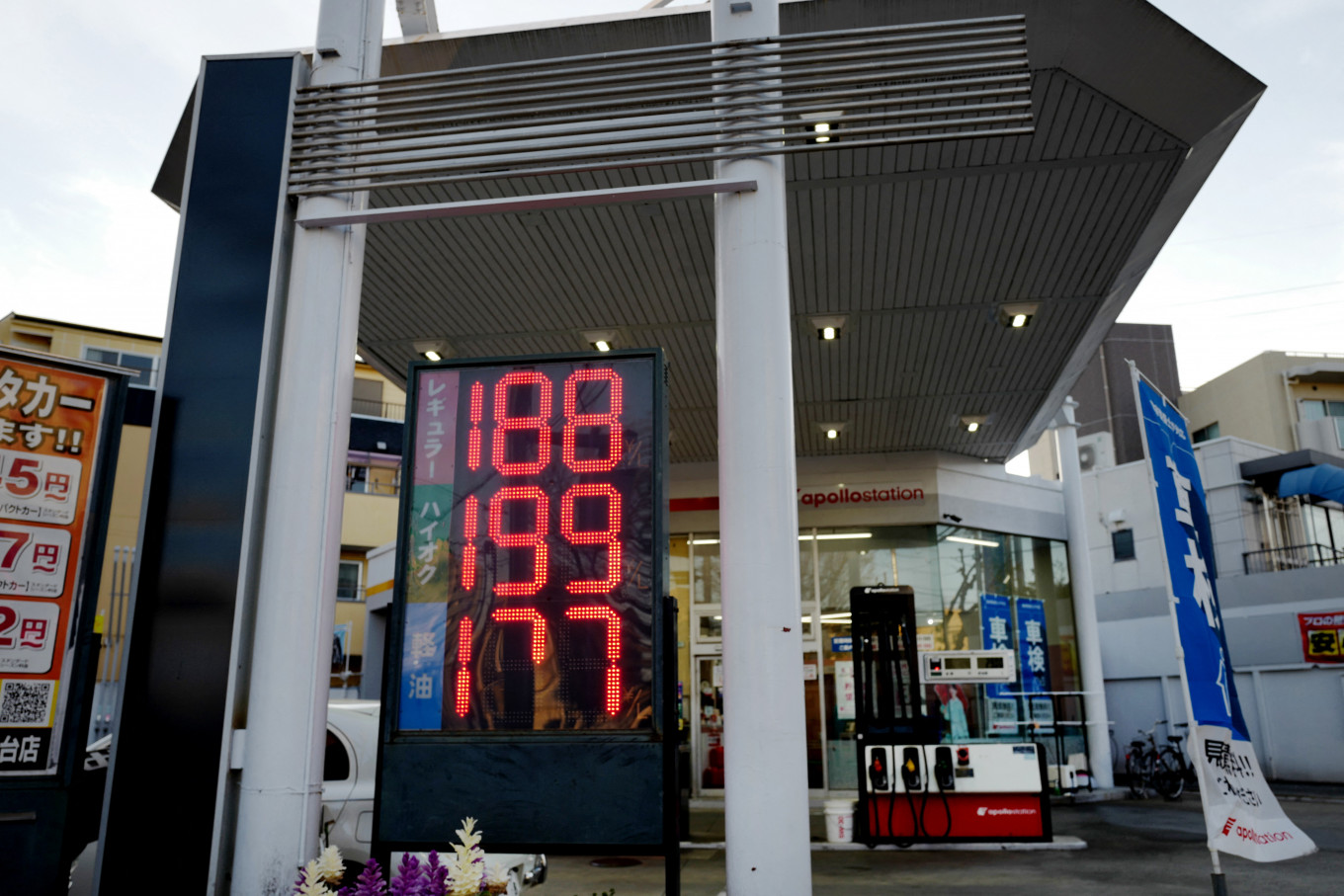 A sign at a gas station shows the price of gasoline, which has risen to 188 yen (US$1.18) per liter for regular gasoline, in Tokyo on March 14, 2026, due to a sharp rise in crude oil prices sparked by the war in the Middle East. (AFP/Kazuhiro Nogi)
T
he United States-Israeli war on Iran has destabilized the entire Middle East, inflicted a massive human and environmental toll, and caused one of the biggest oil-price swings ever recorded. With the fallout reverberating through global stock markets and pushing up government borrowing, policymakers must recognize that this type of energy shock is not an isolated, short-term crisis. It represents our new reality.
In an era of geopolitical turmoil, economic resilience requires changing not only the kinds of energy we consume, but also how, where and by whom things are produced. Through a mission-oriented green industrial strategy and a macroeconomic framework that supports strategic public investment, governments can help secure living standards and build economic resilience simultaneously.
Immediate measures to protect households and businesses from the squeeze should be designed to advance larger economic goals. If a policy serves merely to prop up fossil-fuel profits, it should be considered a failure.
This is the moment for a new approach. Inflationary energy shocks driven by geopolitical conflict are becoming more common. Iran threatened to close the Strait of Hormuz during the 12-day war last June, and it has now followed through, sending crude oil prices above US$100 per barrel for the first time since Russia invaded Ukraine in 2022.
The United Kingdom, which was hit harder than any other country in Western Europe four years ago, owing to its heavy reliance on natural gas and woeful lack of storage, is a cautionary tale for any country that is still willing to risk high exposure to sudden supply shocks. Despite the progress UK Energy Secretary Ed Miliband has made in advancing his “Clean Power” mission to decarbonize the power grid, the link between gas and electricity prices has not been severed. UK wholesale energy prices have shot up by around 50 percent since the start of the Iran war.
It would be a mistake for developed economies to follow US President Donald Trump’s example and double down on the fossil fuels that are driving energy-price volatility and serving as military bargaining chips. The UK, and all other economies, will be more secure if the supply of electricity comes from clean, homegrown sources and, beyond the grid, transforms how we move, build and live.

But achieving this objective requires coordinated action across the government departments that oversee housing, transportation, science and technology, and finance. Government missions should set a clear “moonshot” goal for all relevant ministries to pursue, because that is how the necessary cross-sectoral investments are mobilized.