TheJakartaPost
Please Update your browser
Your browser is out of date, and may not be compatible with our website. A list of the most popular web browsers can be found below.
Just click on the icons to get to the download page.


Popular Reads
Top Results
No results found. Please check your search term and try again
Can't find what you're looking for?
View all search results
Popular Reads
Top Results
No results found. Please check your search term and try again
Can't find what you're looking for?
View all search resultsAmid trade uncertainties and unilateralism, give RCEP a chance
RCEP is widely identified as an instrument for regional resilience: a platform for market expansion, supply chain diversification and rules-based certainty.
Change text size
Gift Premium Articles
to Anyone
Share the best of The Jakarta Post with friends, family, or colleagues. As a subscriber, you can gift 3 to 5 articles each month that anyone can read—no subscription needed!
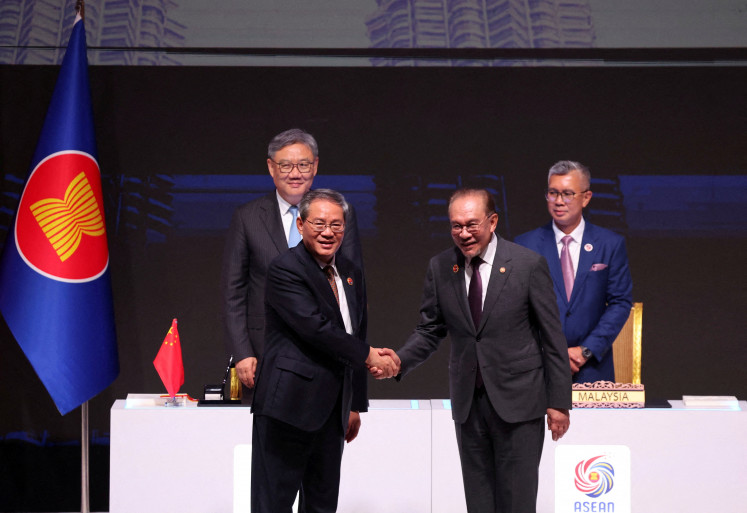
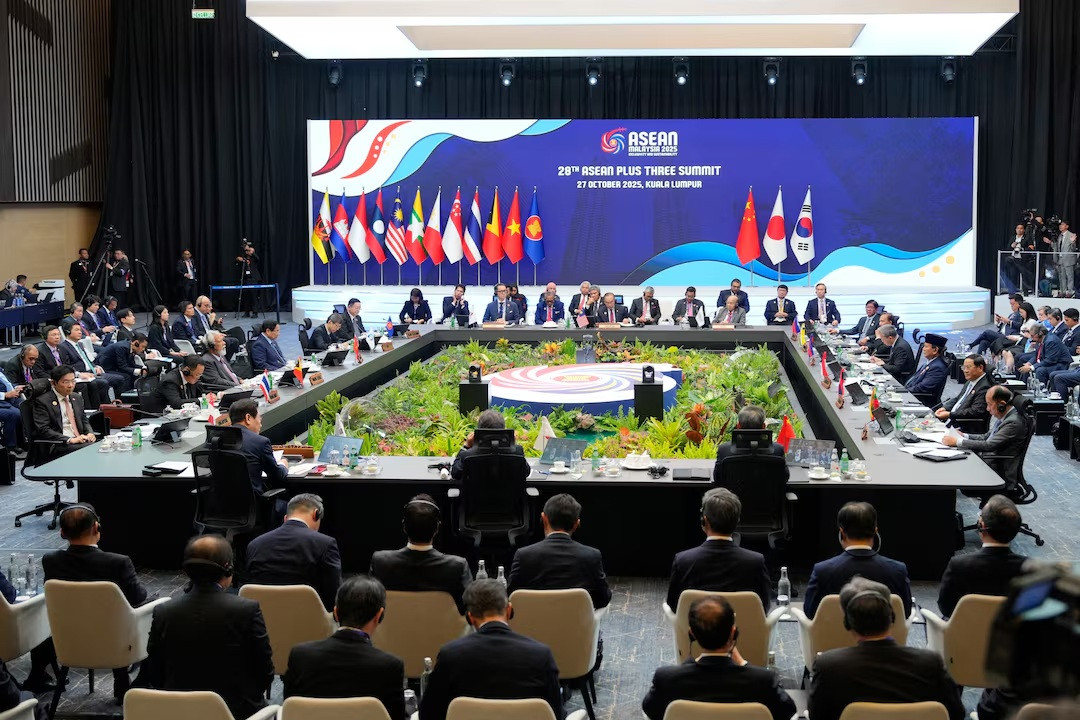 Leaders attend the 28th ASEAN Plus Three Summit on Oct. 27, 2025, in Kuala Lumpur. (Reuters/Pool/Vincent Thian)
T
he rules-based trading order is under pressure. It is being dismantled, selectively, by the very powers that built it. When ASEAN economic ministers held their retreat earlier this month, the immediate concerns were shared: energy supply disruption from an escalating Middle East conflict and heightening global trade uncertainties from the sweeping Section 301 investigations by the United States affecting most ASEAN member states.
These are symptoms of a deeper structural shift, where rules-based frameworks need to adapt and coexist with overt geostrategic competition. In this environment, middle powers face the twin challenges of upholding the rules-based multilateral system and finding its more sustainable democratic form.
The statement adopted by the ministers reiterated the message of unity, coordination and commitment to regional integration and a rules-based multilateral system. What the statement omitted was the Regional Comprehensive Economic Partnership (RCEP), the world’s largest trade agreement initiated and led by ASEAN. This is despite the leaders’ clear directions at last year's 5th RCEP Summit.
That omission matters. Experts and officials convened at the recent Track 1.5 RCEP Dialogue last week, on the sidelines of the 12th RCEP Joint Committee Meeting, were direct: RCEP remains relevant and is even more important and urgent now; business as usual is not an option.
It is worth recalling what RCEP represented when it was signed in November 2020, in the depths of the COVID-19 pandemic. Fifteen economies came together under a single trade agreement, convened by ASEAN. At a moment when global cooperation was fracturing, it demonstrated ASEAN’s growing role in regional economic governance. That achievement should not be squandered by inertia.
While RCEP is often criticized for its level of ambition, it successfully brings together countries of different levels of development under shared trade and investment rules. RCEP remains the world’s largest free trade agreement (FTA).

Given the global trade uncertainties and rising aggressive unilateralism, RCEP holds great potential to strengthen regional resilience and business certainty. One rule-bending superpower is one too many. RCEP parties include ASEAN largest trading partners. Ensuring that they are bound by shared rules will benefit ASEAN.