The Jakarta Post
Please Update your browser
Your browser is out of date, and may not be compatible with our website. A list of the most popular web browsers can be found below.
Just click on the icons to get to the download page.


Popular Reads
Top Results
No results found. Please check your search term and try again
Can't find what you're looking for?
View all search results
Popular Reads
Top Results
No results found. Please check your search term and try again
Can't find what you're looking for?
View all search resultsGeoeconomic headwinds fracture ASEAN neutrality
Once viewed as a bulwark of neutrality, ASEAN has shown it can be divided when external economic pressure is applied.
Change text size
Gift Premium Articles
to Anyone
Share the best of The Jakarta Post with friends, family, or colleagues. As a subscriber, you can gift 3 to 5 articles each month that anyone can read—no subscription needed!
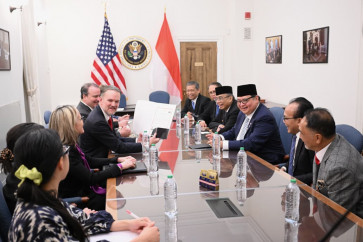
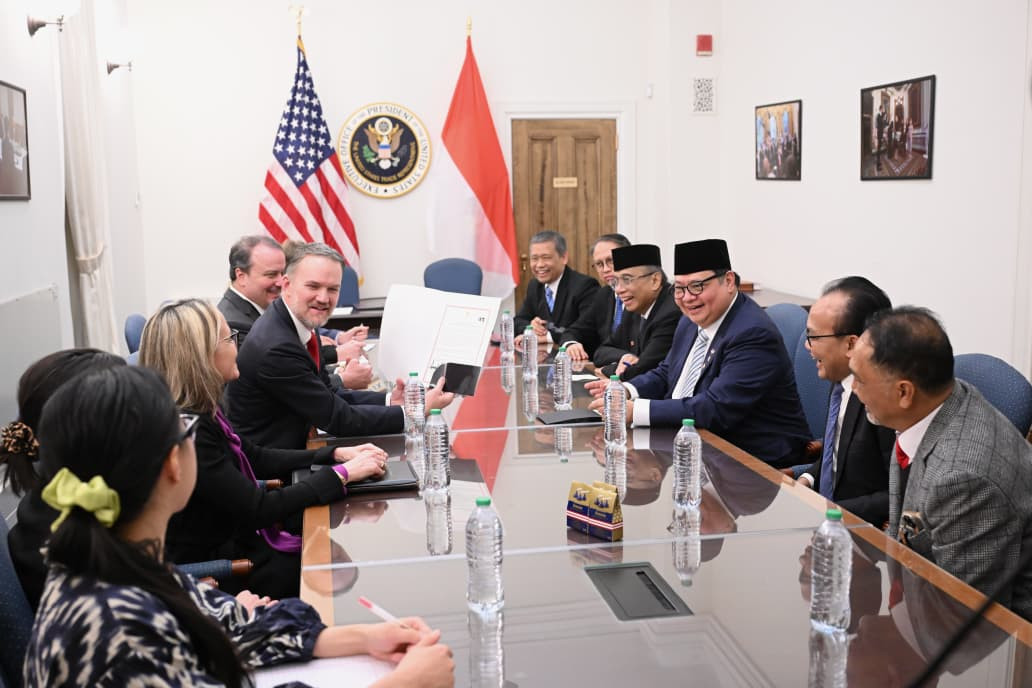 Coordinating Economic Minister Airlangga Hartarto (third right) leads the Indonesian delegation during a meeting with United States Trade Representative Jamieson Greer (fourth left) in Washington, US, on Feb. 19 where the US-Indonesia Agreement on Reciprocal Tariffs (ART) was signed by both officials. (Courtesy of Presidential Secretariat/Kris)
T
he signing of the Agreement on Reciprocal Trade (ART) between Indonesia and the United States on Feb. 19 has raised serious concern regarding the erosion of sovereignty in Indonesia’s foreign policymaking. By requiring Indonesia to align its domestic regulations with Washington’s security interests, the ART does more than just compromise Jakarta’s "free and active" doctrine; it tarnishes ASEAN’s collective reputation as a zone of peace, freedom and neutrality amid escalating great power rivalry.
The ability of Southeast Asian nations to navigate global competition has traditionally rested on two pillars: a persistent refusal to "take sides" and a commitment to regional unity in the face of external pressure.
However, nearly a year after the US first announced its global tariff strategy on April 2, 2025, those pillars have begun to fracture. The varied responses to the ART framework demonstrate a growing willingness among member states to sacrifice regional solidarity for individual economic survival.
This fracture did not occur overnight. Initially, ASEAN’s response showed signs of resilience. Just a week after the 2025 tariff announcement, the bloc issued a joint statement asserting "open economic regionalism" and established the ASEAN Geoeconomic Taskforce under the Malaysian chairmanship. These moves highlighted the grouping’s adaptive ability to manage the growing economic-security nexus.
However, as geoeconomic headwinds intensified, it became clear that pragmatism frequently trumps idealism. The indispensability of the US market forced Indonesia and its neighbors to consider non-reciprocal concessions to save their export-dependent economies.
Competitive pressure—specifically from fellow ASEAN members who rely on the same manufacturing exports—prevented collective action. Instead of a unified front, nations opted for bilateral negotiations to secure better deals than their regional competitors, even when such deals demanded a compromise of their neutrality.

The ART demands more than just commercial facilitation; it mandates an alignment with US security enforcement. These deals essentially facilitate the extraterritorial application of US security measures on Southeast Asian soil.