The Jakarta Post
Please Update your browser
Your browser is out of date, and may not be compatible with our website. A list of the most popular web browsers can be found below.
Just click on the icons to get to the download page.


Popular Reads
Top Results
No results found. Please check your search term and try again
Can't find what you're looking for?
View all search results
Popular Reads
Top Results
No results found. Please check your search term and try again
Can't find what you're looking for?
View all search resultsAnalysis: Strong data, fragile foundations: Testing Indonesia’s growth narrative
Change text size
Gift Premium Articles
to Anyone
Share the best of The Jakarta Post with friends, family, or colleagues. As a subscriber, you can gift 3 to 5 articles each month that anyone can read—no subscription needed!
 Set as preferred source
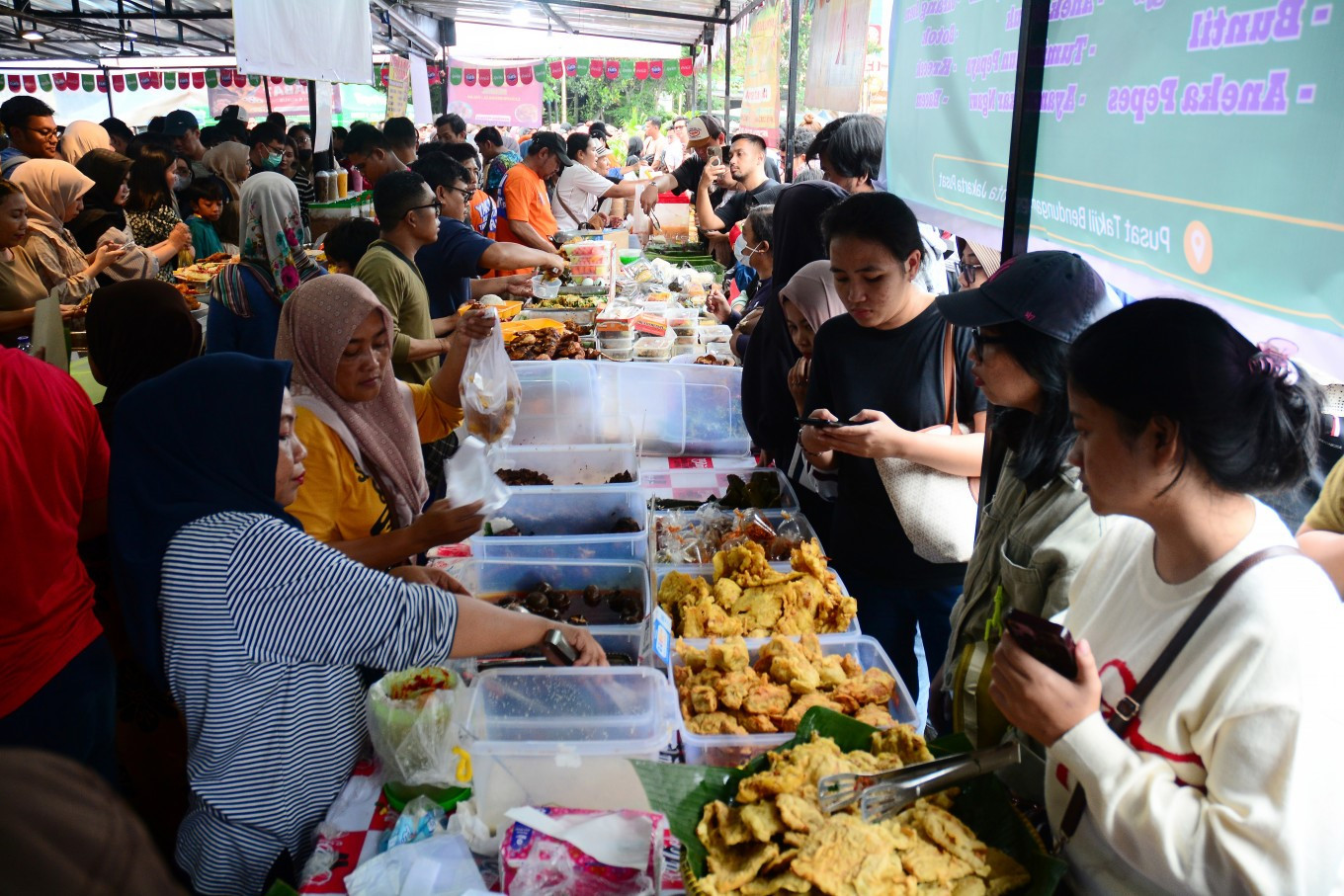 People crowd around vendors selling snacks for iftar on Feb. 22, 2026, at the Bendungan Hilir Ramadan Takjil Bazaar in Tanah Abang, Central Jakarta. (JP/Iqro Rinald)
E
scalating geopolitical tensions between Iran and the United States-Israel are putting pressure on global oil markets and pushing many economies into a defensive stance. Against this backdrop, Finance Minister, Purbaya Yudhi Sadewa, has maintained an outwardly optimistic outlook, projecting economic growth of 5.7 percent in the first quarter of 2026. Yet such confidence has been met with caution from economists and market participants. The concern is not merely how the government spends, but at what cost to fiscal credibility.
Purbaya has argued that a “healthy” fiscal position must be actively deployed to sustain economic momentum. In an environment marked by uncertainty and sensitive investor sentiment, however, the gap between policy ambition and policy credibility becomes increasingly critical. Can Indonesia pursue higher growth without undermining the stability on which that growth depends?
Economists, in particular, offer a more cautious assessment of Indonesia’s current trajectory. Rather than signaling a robust recovery, they point to underlying vulnerabilities, especially in fiscal management and investor confidence. A survey conducted by the Indonesian Institute of Economics and Business (LPEM FEB UI), which gathered responses from 85 economists, reveals growing skepticism toward the government’s fiscal stance. The survey shows that a significant majority, 67 respondents, expressed doubts about the government’s ability to maintain its fiscal deficit target while preserving the quality of spending. Such consensus, according to LPEM, is rare among economists, underscoring the depth of concern surrounding fiscal credibility.
Recent revisions of Indonesia’s outlook from positive to negative by international credit rating agencies such as Fitch Ratings and Moody’s serve as early warning signals for the country’s fiscal outlook. These agencies have highlighted priority programs such as the free nutritious meal (MBG) program and the Red and White Cooperatives (KMP) scheme as potential sources of additional fiscal strain, particularly if they fail to generate sufficient multiplier effects on employment or household purchasing power.
These concerns are compounded by mounting macroeconomic pressures. Statistics Indonesia (BPS) recorded annual inflation at 4.76 percent in February 2026, while the fiscal deficit has widened to Rp 135.7 trillion (US$8 billion). Moreover, the 2026 budget assumes an oil price of $70 per barrel, but the Iran conflict has pushed prices to around $100 per barrel. Each $1 increase in global oil prices is estimated to add approximately Rp 6.7 trillion to the fiscal burden, highlighting Indonesia’s exposure to external shocks.
Against this backdrop of skepticism, recent macroeconomic indicators present a more nuanced picture. Data from Bank Indonesia suggest that, from a monetary and financial standpoint, the economy remained relatively resilient prior to the US-Israeli war with Iran, which began on Feb. 28. Credit growth reached 9.96 percent in January 2026, indicating that businesses were gradually regaining confidence. This was supported by a stable and well-capitalized banking sector, alongside continued strength in consumption reflected in the expansion of digital transactions. These trends suggest that, despite prevailing concerns, parts of the economy continue to exhibit underlying momentum, raising the question whether this resilience can be sustained.

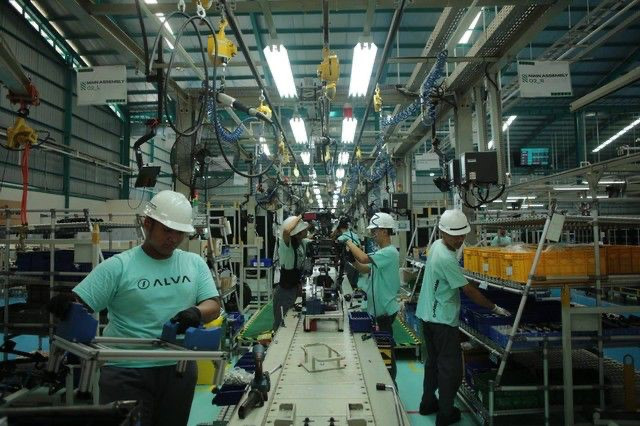
Still, Purbaya has pushed back firmly against recession concerns, dismissing them as overly pessimistic. He maintains that Indonesia’s economy is not deteriorating but rather recovering from last year’s pressures. To support this view, he points to key indicators such as the manufacturing Purchasing Managers’ Index (PMI), which rose to 53.8 in February 2026, its highest level in two years. The Mandiri Spending Index (MSI) has also trended upward to 360.7, alongside a 12.2 percent increase in car sales. Taken together, these figures suggest a strengthening recovery rather than an economy on the brink of contraction.