TheJakartaPost
Please Update your browser
Your browser is out of date, and may not be compatible with our website. A list of the most popular web browsers can be found below.
Just click on the icons to get to the download page.


Popular Reads
Top Results
No results found. Please check your search term and try again
Can't find what you're looking for?
View all search results
Popular Reads
Top Results
No results found. Please check your search term and try again
Can't find what you're looking for?
View all search resultsPlatform workers need more than algorithmic transparency
Digital labor platforms in Indonesia are moving beyond simple coordination to a model of "digital Taylorism" that monetizes driver dependence. To protect workers, regulation must shift its focus from surface-level pricing transparency to the underlying algorithmic power structures that govern their daily lives.
Change text size
Gift Premium Articles
to Anyone
Share the best of The Jakarta Post with friends, family, or colleagues. As a subscriber, you can gift 3 to 5 articles each month that anyone can read—no subscription needed!
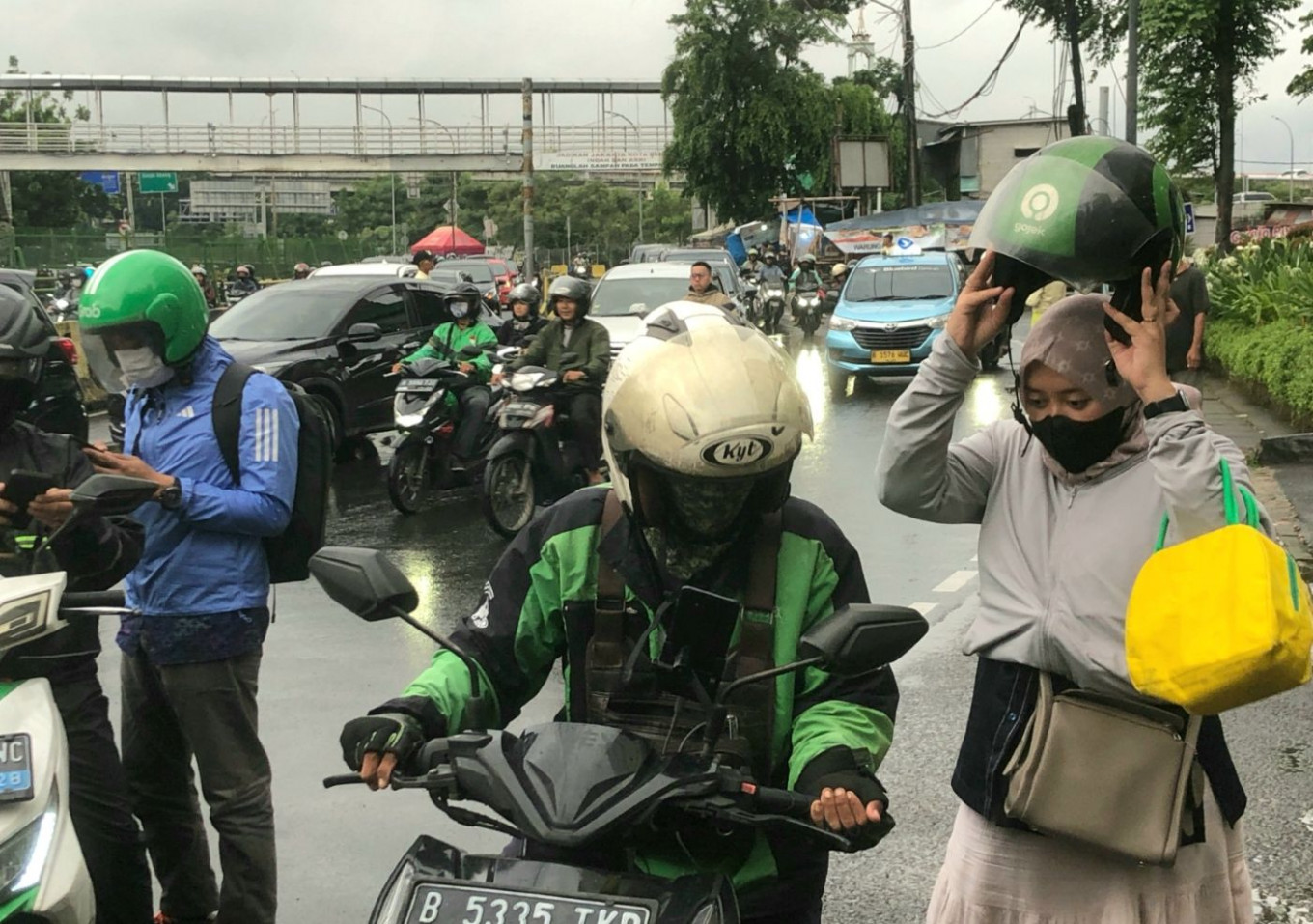 Final stop: An ojol (online motorcycle transportation) driver drops off a passenger on Jan. 14, 2026 in front of a shopping mall in East Jakarta. (JP/Iqro Rinaldi)
“We cannot afford to take long breaks. We need to leave the house early and start driving. We cannot afford to cancel incoming orders. We should not take long holidays. We need to keep performing well and avoid missing orders […]”
This was how one driver described his daily routine to me in 2021. His experience reflects a pattern I have observed consistently over the years.
As early as 2015–2016, during the early expansion of platform companies, drivers were already speculating about how orders were distributed. They tried to make sense of why some shifts seemed busier than others, why certain areas yielded more jobs, and whether particular behaviors, such as accepting orders quickly, staying close to "hotspots" or maintaining high ratings, influenced the algorithm’s decisions.
Over time, these everyday theories evolved into a form of situated expertise: practical, shared knowledge about how to work with the system, even while the underlying rules remained opaque and ever-changing.
Langdon Winner, a renowned scholar on the politics of technology, argues that technological artifacts embody specific forms of power. From this perspective, algorithms in digital labor platforms are not merely tools designed for efficiency; they are instruments of political power that structure order and establish norms of behavior decided by their designers.
This dynamic has become even more explicit in recent years. In Indonesia, one platform company recently introduced paid subscription programs that promise drivers access to more consistent orders. Those enrolled are prioritized by dispatch algorithms, while nonsubscribers find themselves receiving fewer or less efficient orders.

These practices are a far cry from the narrative of platform work as a "flexible income opportunity" once touted by the same companies. This ability to discriminate among drivers and monetize their dependence is a core feature of the partnership model. It enables platforms to exercise control without the burden of formal employment obligations.