TheJakartaPost
Please Update your browser
Your browser is out of date, and may not be compatible with our website. A list of the most popular web browsers can be found below.
Just click on the icons to get to the download page.


Popular Reads
Top Results
No results found. Please check your search term and try again
Can't find what you're looking for?
View all search results
Popular Reads
Top Results
No results found. Please check your search term and try again
Can't find what you're looking for?
View all search resultsA ‘reciprocal’ trade deal that isn’t
In the 2026 Indonesia–US Agreement on Reciprocal Trade, the phrase “Indonesia shall” appears more than 200 times. “United States shall” appears only nine times. The agreement may not hold up under international law.
Change text size
Gift Premium Articles
to Anyone
Share the best of The Jakarta Post with friends, family, or colleagues. As a subscriber, you can gift 3 to 5 articles each month that anyone can read—no subscription needed!
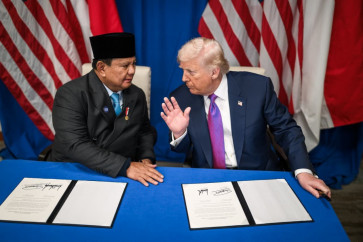
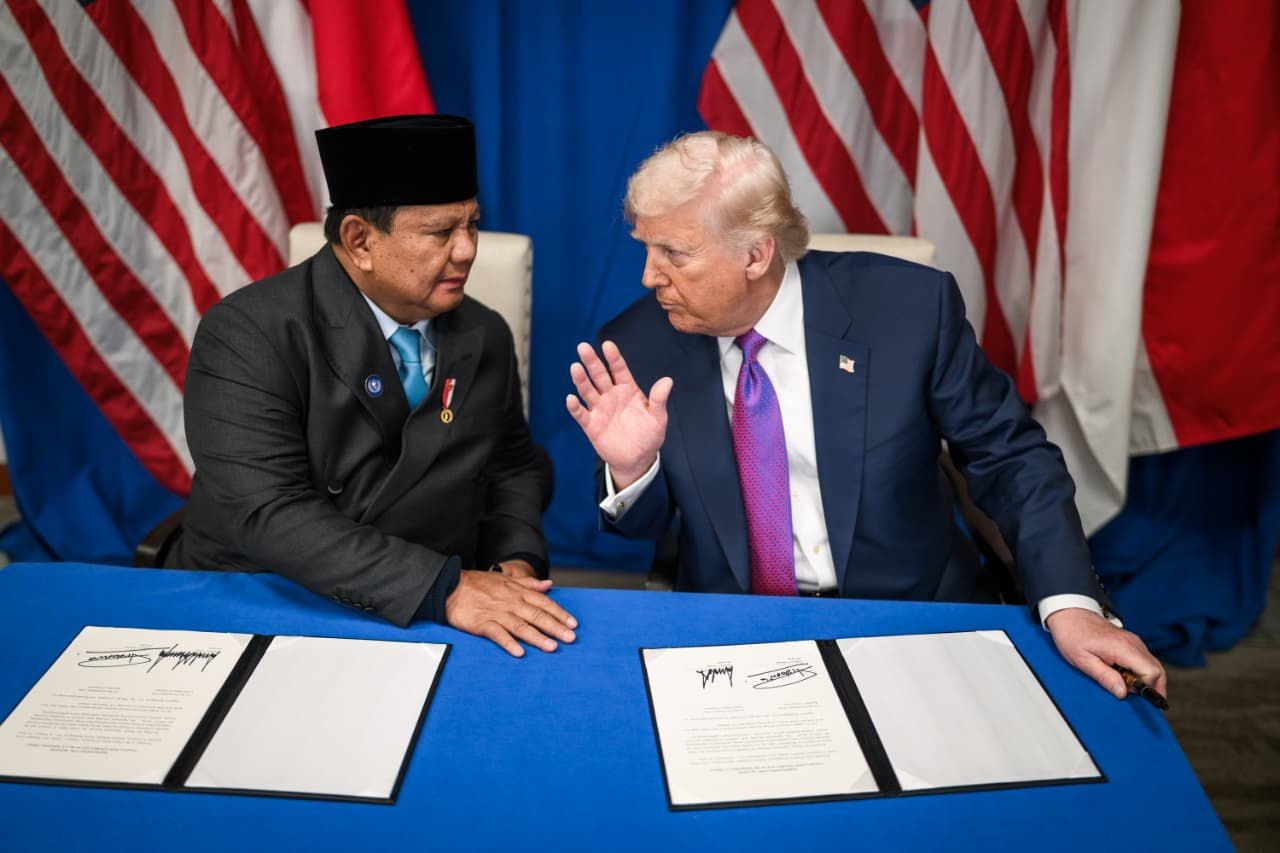 President Prabowo Subianto (left) speaks to United States President Donald Trump on Feb. 19 during the signing of the United States-Indonesia Agreement on Reciprocal Tariffs (ART) in Washington, DC. (Courtesy of Presidential Secretariat/White House)
T
he Agreement on Reciprocal Trade (ART), signed by Indonesia and the United States in February, has triggered wide debate among legal scholars, economists and policymakers.
In international treaty law, two principles exist in constant tension: pacta sunt servanda, meaning agreements must be honored, and rebus sic stantibus, meaning a treaty binds only as long as the conditions that created it remain the same. ART is a case where these two principles collide.
The word “reciprocal” in the agreement’s title is a diplomatic label that hides more than it explains. The phrase “Indonesia shall” appears more than 200 times across 45 pages, while “United States shall” appears only nine times. This 22‑to‑1 ratio reflects a built-in imbalance of power written into binding obligations.
Indonesia agreed to remove tariffs on 99 percent of US goods, buy energy, agricultural products and commercial aircraft worth US$33–38 billion, and give up control over its digital regulations, including removing taxes on US digital service companies and duties on electronic transmissions.
The US offered a 19 percent tariff rate on Indonesian exports. That rate turned out to be higher than the standard 10–15 percent applied to all other countries after the US Supreme Court struck down the IEEPA tariff system the next morning. Indonesia negotiated for months to secure a worse result than it would have received by doing nothing.
The ART contains legal weaknesses across three areas. Each one alone is enough to justify renegotiation, and together they form a strong argument that is hard to dismiss.

First, the agreement’s basic foundation is flawed. The ART was created under the pressure of a threatened 32 percent tariff imposed through the International Emergency Economic Powers Act (IEEPA), which the US Supreme Court declared unconstitutional on Feb. 20 in a 6–3 ruling.