TheJakartaPost
Please Update your browser
Your browser is out of date, and may not be compatible with our website. A list of the most popular web browsers can be found below.
Just click on the icons to get to the download page.


Popular Reads
Top Results
No results found. Please check your search term and try again
Can't find what you're looking for?
View all search results
Popular Reads
Top Results
No results found. Please check your search term and try again
Can't find what you're looking for?
View all search resultsQuestioning truth in the post-truth era
The concept of truth is increasingly fraught in our post-truth era. In a world defined by unilateral power and hegemonic influence, we must learn to scrutinize public information with a discerning eye rather than accepting it at face value.
Change text size
Gift Premium Articles
to Anyone
Share the best of The Jakarta Post with friends, family, or colleagues. As a subscriber, you can gift 3 to 5 articles each month that anyone can read—no subscription needed!
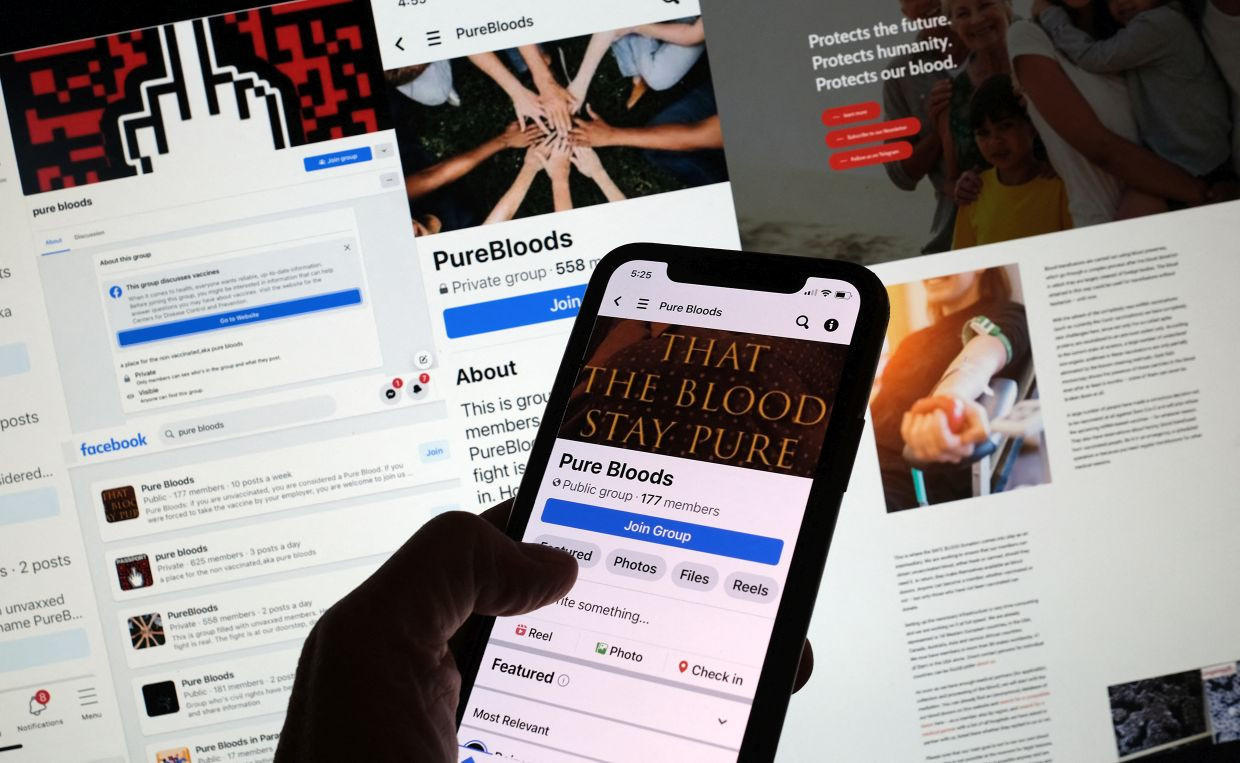 A phone user looks at an anti-vaccine “pure blood” Facebook group on Jan. 20, 2023, in Los Angeles, the United States. Vaccine skeptics refusing transfusions for life-saving surgery, closed Facebook groups inciting violence over “tainted” blood, a global campaign to connect unvaccinated donors and surging COVID-19 misinformation has spawned a so-called “pure blood” movement. (AFP/Chris Delmas)
T
he circulation of a video that is suspected to be a product of artificial intelligence (AI) regarding the refutation of claims about Israeli Prime Minister Netanyahu’s death or injury raises the issue of confirming the truth in the post-truth digital era.
In today's digital age, the search for truth faces far greater challenges. We are confronted with a massive, fragmented, diverse and even contradictory flow of information. In the post-truth era, seeking the truth is neither easy nor simple.
Throughout history, humanity has sought the truth. Prophets and philosophers have long explored the idea of ultimate and transcendental truth. In everyday life, the search for truth typically involves a process of verification with numerous obstacles and challenges that may outlast a searcher’s lifetime and even generations.
Through the process of seeking truth, thought and logic, we evolve and develop knowledge and beliefs, with each development contributing to improving life, creating laws and building civilizations as they accumulate.
Information in the post-truth era is often modified and influenced not only by social, economic and political forces but also by hegemonic powers which seek to dominate and control the geopolitical narrative of developing countries. Manipulated information ultimately erodes the essence of truth. Altered information makes it difficult for people to distinguish facts from lies or propaganda. As a result, the search for truth becomes more complex and mentally exhausting.
In this post-truth era, the concept of truth is now increasingly complex and contentious. Living in a world built through instruments of military, economic, political and social dominance, we must become critical thinkers and discern public information, not simply absorb and accept it.

This situation stems largely from information in the digital media, especially easily disseminated social media, which has lost its objectivity and is shaped more by emotional appeals, ideological preferences, and personal beliefs. All of these have influenced public narratives and opinions, rather than objective facts or rational arguments.