The Jakarta Post
Please Update your browser
Your browser is out of date, and may not be compatible with our website. A list of the most popular web browsers can be found below.
Just click on the icons to get to the download page.


Popular Reads
Top Results
No results found. Please check your search term and try again
Can't find what you're looking for?
View all search results
Popular Reads
Top Results
No results found. Please check your search term and try again
Can't find what you're looking for?
View all search resultsAfter 20 years, it is time to amend the Citizenship Law
Though the 2006 Citizenship Law was hailed as a landmark in its day, it needs amending to reflect the modern-day realities of 2026 so Indonesians of diaspora communities and mixed marriages can contribute to and serve their homeland, if they choose.
Change text size
Gift Premium Articles
to Anyone
Share the best of The Jakarta Post with friends, family, or colleagues. As a subscriber, you can gift 3 to 5 articles each month that anyone can read—no subscription needed!
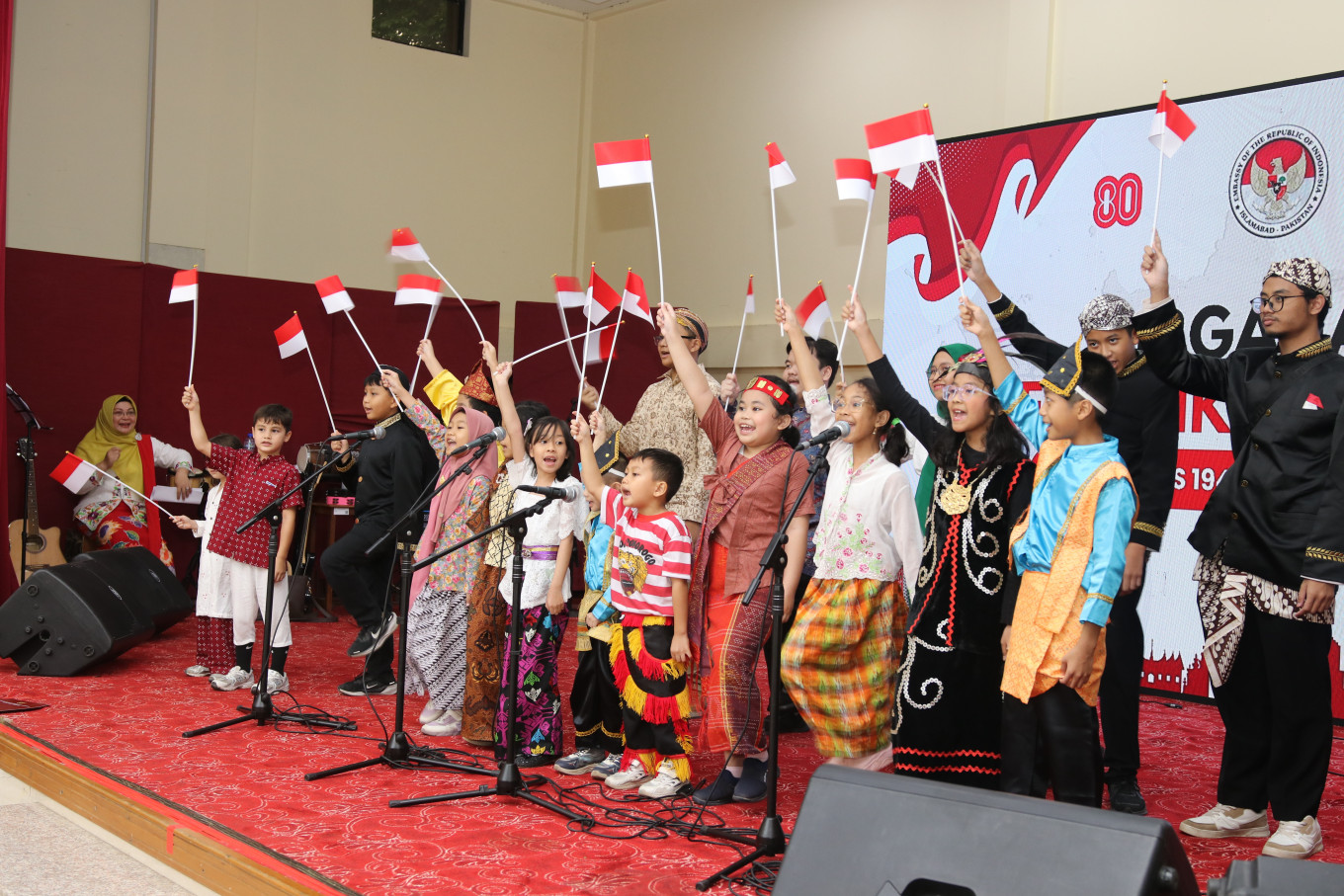 Diaspora children, wearing traditional dress from various local cultures, wave the national flag on Aug. 17, 2025, during a gathering in Islamabad to celebrate the 80th anniversary of Indonesian Independence Day. (Courtesy of /The Indonesian Embassy in Islamabad)
L
aw No. 12/2006 on citizenship of the Republic of Indonesia has served as a landmark piece of legislation for the past two decades, particularly for children of mixed-heritage families: those born from marriages between Indonesian citizens (WNI) and foreign nationals (WNA).
According to the Great Dictionary of the Indonesian Language (KBBI), mixed-heritage individuals represent the intersection of two cultures and often possess a unique dual identity that makes them natural global citizens. Meanwhile, the broader Indonesian diaspora, those who have migrated and settled abroad, continues to grow, forming a vast network of potential contributors to the nation’s future.
At its inception, the Citizenship Law was hailed as a milestone for human rights and gender equality in Indonesia and was highly revolutionary compared to its predecessor Law No. 62/1958. It provided long-overdue legal protection to Indonesian women married to foreign men, ensuring that their children were not rendered stateless or automatically foreign.
It also introduced the concept of limited dual citizenship, allowing these children to hold two passports until the age of 21. For 20 years, this served as a "role model" law.
However, the world in 2026 is vastly different from that in 2006. As the global economy becomes increasingly interconnected and technology erases physical borders, our citizenship framework must evolve. We are currently witnessing a war for talent where nations like Singapore, Germany and Australia are actively courting skilled young professionals.
If Indonesia does not adapt, we risk a massive "brain drain", where talented children of mixed heritage "flee" to other nations simply because our administrative processes are too rigid or their window of choice is too narrow.

While the 2006 law was a step forward, it left significant gaps. For instance, mixed-heritage children born before the law’s passage were given a strict four-year window (Aug. 1, 2006, to Aug. 1, 2010) to determine their citizenship status. Many families, unaware of the deadline or caught in bureaucratic red tape, missed this window.