The Jakarta Post
Please Update your browser
Your browser is out of date, and may not be compatible with our website. A list of the most popular web browsers can be found below.
Just click on the icons to get to the download page.


Popular Reads
Top Results
No results found. Please check your search term and try again
Can't find what you're looking for?
View all search results
Popular Reads
Top Results
No results found. Please check your search term and try again
Can't find what you're looking for?
View all search resultsAs war becomes just another post, are we losing our empathy online?
In the relentless rhythm of the infinite scroll, a humanitarian crisis carries no more weight than a trending meme. We aren't suffering from a lack of information, we are drowning in a digital flattening that turns empathy into an optional setting.
Change text size
Gift Premium Articles
to Anyone
Share the best of The Jakarta Post with friends, family, or colleagues. As a subscriber, you can gift 3 to 5 articles each month that anyone can read—no subscription needed!
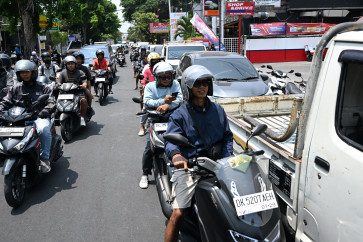
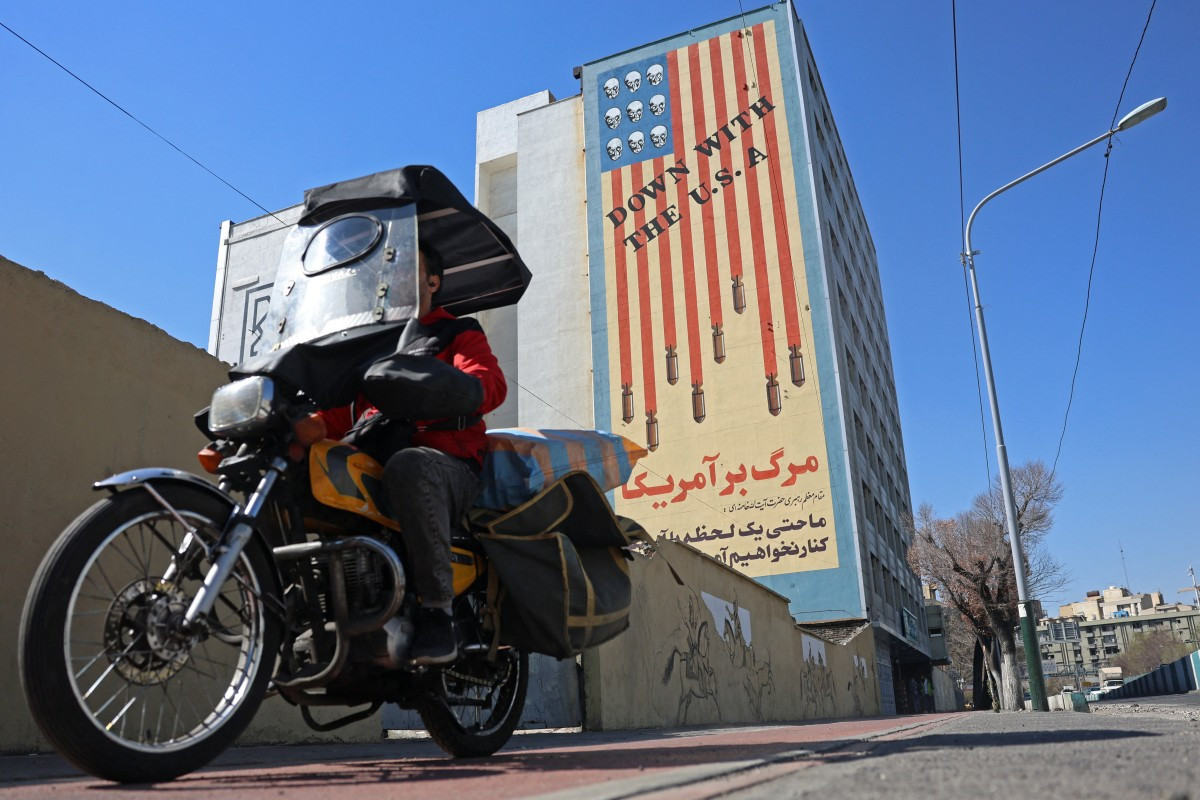 A man rides a motorbike on Feb. 26, 2026, next to an anti-United States mural on a building in Tehran, two days before the recent US-Israeli strikes began on Iran. AFP. (AFP/-)
Scroll. Pause. Scroll again.
A video of bombings in the Middle East. A celebrity kiss at an awards show. A headline about rising oil prices. A meme. All in under 10 seconds.
This is not a dystopian future; this is your daily feed. In the span of a single swipe, the suffering of real people sits alongside entertainment, gossip and viral joy. War and pop culture now share the same visual space, flattened into identical digital rectangles on our screens. Then, an uncomfortable question arises: Are we becoming desensitized to reality?
The modern feed does not distinguish between tragedy and triviality. A bombing in Gaza, a fuel price hike affecting families across the Philippines and Indonesia, and a celebrity breakup all arrive with the same formatting, the same aesthetic and the same rapid cadence.
In Indonesia, this dynamic plays out on an enormous scale. The country now has more than 212 million internet users, over 74 percent of the population. Around 143 million of them are active on social media, spending an average of more than three hours per day on platforms like TikTok, Instagram and WhatsApp. This is one of the highest rates globally. But this is not just high access; it is high immersion, a constant state of being where the world’s weight is filtered through a three-inch screen.
The problem is not that entertainment exists alongside news. It always has; tabloids and broadsheets have coexisted for over a century. The problem is a juxtaposition that lacks emotional bandwidth. A war is followed by a meme; grief is followed by a giveaway. The brain receives both in the same interface, which flattens diverse human experiences into a singular, shallow visual stream.

Digital platforms are engineered to maximize engagement, not meaning. Algorithms surface what captures attention, not what deserves it. The result is "algorithmic flattening": a continuous stream of emotional extremes where tragedy and entertainment coexist without hierarchy, without pause, and without space to breathe. Over time, psychologists warn, this produces compassion fatigue. Repeated, unprocessed exposure to distant suffering does not make us more sensitive; it makes us numb.