The Jakarta Post
Please Update your browser
Your browser is out of date, and may not be compatible with our website. A list of the most popular web browsers can be found below.
Just click on the icons to get to the download page.


Popular Reads
Top Results
No results found. Please check your search term and try again
Can't find what you're looking for?
View all search results
Popular Reads
Top Results
No results found. Please check your search term and try again
Can't find what you're looking for?
View all search resultsGlobal oil shocks and fiscal pressures: Indonesia’s next crisis?
Indonesia’s fiscal resilience is facing a high-stakes stress test as rising global oil prices collide with rigid domestic spending. While a crisis is not yet inevitable, the narrowing gap between political commitments and economic reality suggests the window for decisive action is closing.
Change text size
Gift Premium Articles
to Anyone
Share the best of The Jakarta Post with friends, family, or colleagues. As a subscriber, you can gift 3 to 5 articles each month that anyone can read—no subscription needed!
 Set as preferred source
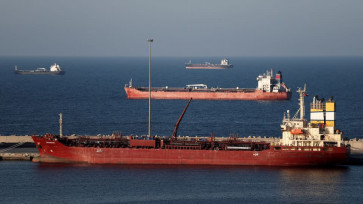
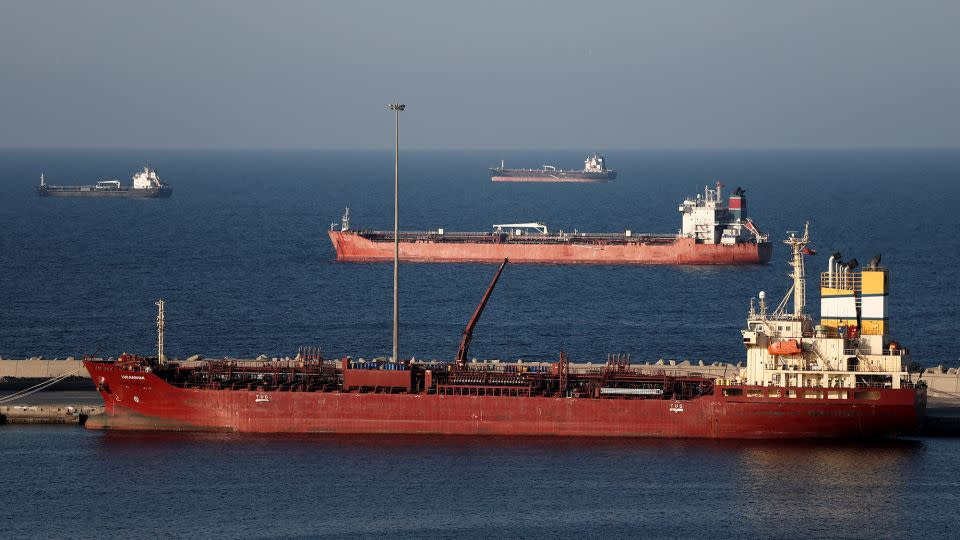 Luojiashan, a Marshall Islands-flagged tanker, is docked at a pier in Muscat on March 7, 2026, as Iran vows to close the Strait of Hormuz amid the war with the United States and Israel. (Reuters/Benoit Tessier)
E
conomic crises rarely begin with a single policy mistake. More often, they emerge when external shocks collide with domestic constraints that policymakers have long postponed.
The recent surge in global oil prices, driven by escalating geopolitical tensions in the Middle East, may represent precisely such a moment for Indonesia. With oil prices now well above the US$70 per barrel assumption in the 2026 state budget, what initially appeared as an external disturbance is rapidly becoming a test of fiscal resilience.
For Indonesia, oil is not just a commodity; it is a critical fiscal variable. When global prices rise, the impact transmits immediately through higher energy subsidies and compensation spending. Because this spending is largely nondiscretionary, it expands automatically, tightening the budget at the very moment flexibility is most needed: The more persistent the oil price shock, the greater the constraint on Indonesia’s fiscal policy.
Even before the latest shock, the fiscal deficit was already hovering close to the legal ceiling of 3 percent of gross domestic product. With additional subsidy pressures, the deficit now risks breaching that threshold in a sustained manner.
At the same time, the national fiscal position is becoming increasingly rigid. Public debt has risen steadily and is projected to exceed 40 percent of GDP in 2026. More importantly, interest payments are growing faster than revenues, with debt servicing now absorbing roughly 20 percent of government income.
This rigidity is compounded by persistent, politically sensitive spending commitments. Flagship initiatives, including the nationwide free nutritious meal program, are unlikely to be scaled back, even under intense fiscal pressure.

While economic growth remains stable at around 5 percent, this is currently insufficient to generate necessary buffers in an increasingly volatile global environment.