The Jakarta Post
Please Update your browser
Your browser is out of date, and may not be compatible with our website. A list of the most popular web browsers can be found below.
Just click on the icons to get to the download page.


Popular Reads
Top Results
No results found. Please check your search term and try again
Can't find what you're looking for?
View all search results
Popular Reads
Top Results
No results found. Please check your search term and try again
Can't find what you're looking for?
View all search resultsThe two sides of resilience: Navigating Indonesia’s multijobbing reality
Beyond Indonesia’s record-low unemployment lies a hidden reality: a growing "multi-jobbing" class where one paycheck is no longer enough to survive.
Change text size
Gift Premium Articles
to Anyone
Share the best of The Jakarta Post with friends, family, or colleagues. As a subscriber, you can gift 3 to 5 articles each month that anyone can read—no subscription needed!
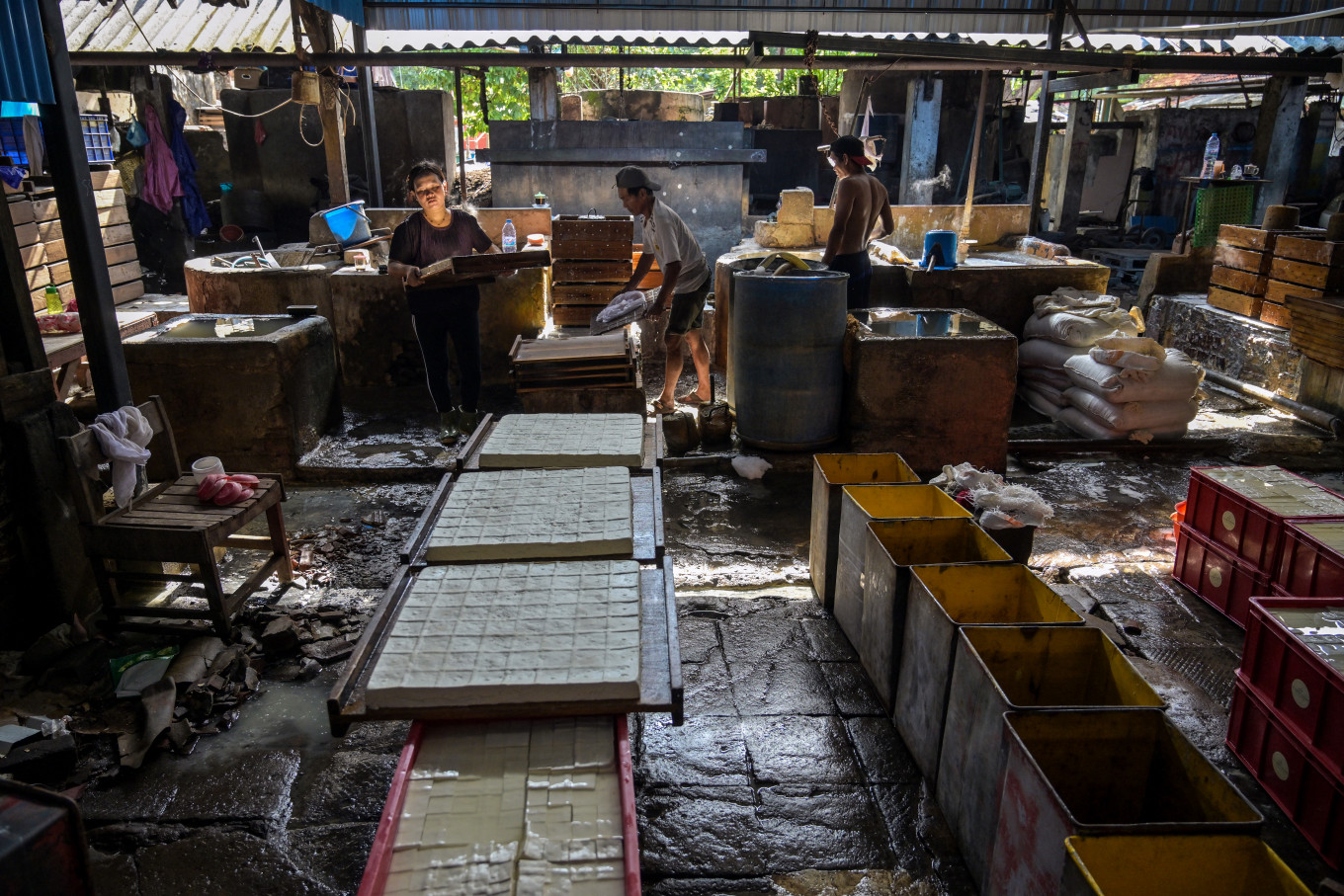 Workers make tofu at a factory in Surabaya, East Java, on Feb. 5, 2026. (AFP/Juni Kriswanto)
I
ndonesia’s labor market is often interpreted through a relatively optimistic narrative. The unemployment rate remains at historically low levels, labor force participation is stable and the economy continues to absorb millions of workers annually.
From a macroeconomic perspective, these indicators convey an image of resilience. Yet beneath this surface lies a quieter transformation that warrants closer attention: for a growing number of workers, a single job is no longer sufficient.
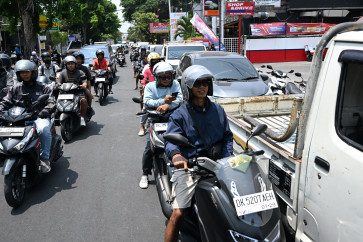
The practice of holding more than one job, where workers combine a primary occupation with various supplementary economic activities, has become increasingly common in both urban and rural areas. Office employees who drive ride-hailing motorcycles after hours, informal traders who manage online shops at night and freelance workers handling multiple contracts simultaneously are no longer peripheral stories. This pattern has increasingly become a core strategy for how households adapt to evolving economic conditions.
This phenomenon is often understood as a byproduct of digital innovation or entrepreneurial spirit. Indeed, technological development has lowered entry barriers to earning additional income. However, when viewed solely through the lens of opportunity, there is a risk of overlooking deeper structural dimensions. Multiple jobholding is not merely a matter of ambition; it is also a household-level risk management strategy.
Data from Statistics Indonesia (BPS) show that in November 2025, the labor force reached approximately 155 million people, reflecting both demographic momentum and rising economic participation. Employment continued to increase, and the open unemployment rate remained below 5 percent over the past two years. Nevertheless, these aggregate figures do not fully explain how secure or adequate the available jobs actually are.
More revealing signals emerge from working-hour patterns. The November 2025 National Labor Force Survey (Sakernas) indicates that nearly 7.8 percent of workers worked fewer than 35 hours per week while still seeking employment, preparing a business or being willing to take on additional work. At the same time, another segment worked extremely long hours, 49 hours or more per week. This coexistence of underemployment and excessive working hours reflects imbalances in labor utilization and income adequacy.

Earlier labor force surveys suggest that when workers with reduced hours are considered more broadly, beyond those actively seeking additional work, the share of workers facing insufficient labor utilization is substantially higher, pointing to persistent "slack" beneath headline employment figures.