The Jakarta Post
Please Update your browser
Your browser is out of date, and may not be compatible with our website. A list of the most popular web browsers can be found below.
Just click on the icons to get to the download page.


Popular Reads
Top Results
No results found. Please check your search term and try again
Can't find what you're looking for?
View all search results
Popular Reads
Top Results
No results found. Please check your search term and try again
Can't find what you're looking for?
View all search resultsWhy energy security starts in the kitchen
During the previous administration the planned transition from fuel to LPG was rapidly reversed, in part due to the broader political considerations and debate surrounding energy subsidy reform at the time.
Change text size
Gift Premium Articles
to Anyone
Share the best of The Jakarta Post with friends, family, or colleagues. As a subscriber, you can gift 3 to 5 articles each month that anyone can read—no subscription needed!
 Set as preferred source
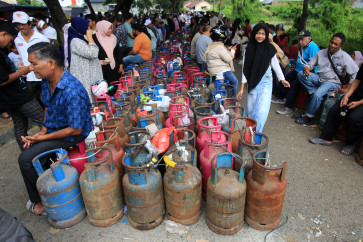
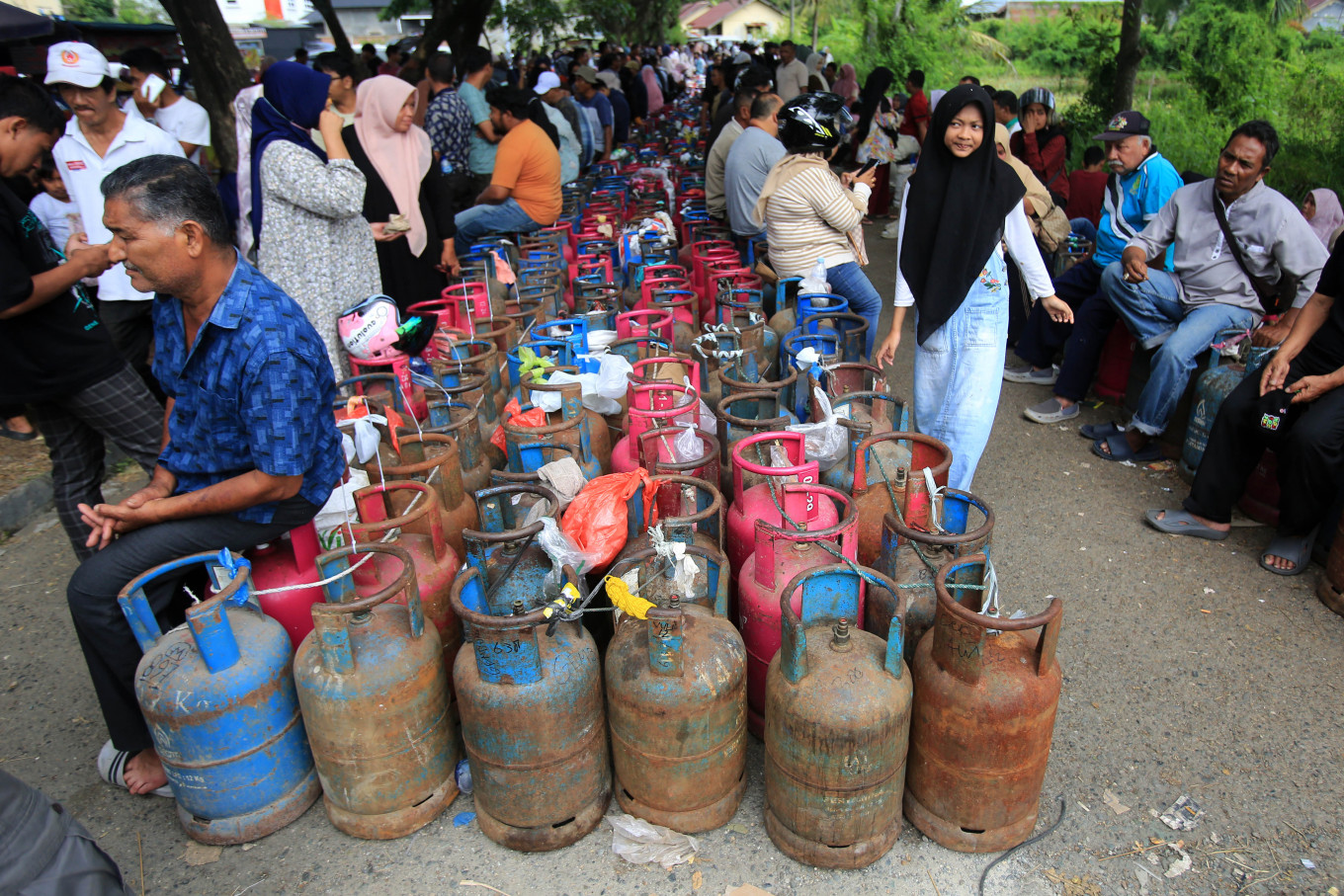 Residents line up to buy nonsubsidized liquefied petroleum gas on Dec. 13, 2025, at a PT Loon Mita Gah agency in Banda Aceh, Aceh. State energy company PT Pertamina said it is using all modes of land, air and sea transportation to ensure smooth energy distribution, including LPG, as part of recovery efforts in areas affected by floods and landslides in Sumatra. (Antara/Ampelsa)
P
resident Prabowo Subianto’s announcement that the government is going to encourage households to switch from LPG to induction stoves for cooking is welcome. The war in the Middle East is generating a significant economic disruption worldwide. Already LPG prices on global markets have surged. Since the price of LPG for Indonesian households has long been fixed far below world prices, this is causing immense strain on the government’s budget.
Even before the war, the government was spending more than Rp 80 trillion (US$4.7 billion) each year on LPG subsidies. The President’s desire to see a switch to induction stoves is not only motivated by his commitment to a green energy transition, he is also seeking to address the fiscal pressure on the government’s budget while reducing Indonesia’s fuel import dependence and exposure to price volatility.
However, the high cost of the government’s subsidy budget is not primarily due to the war in the Middle East. It reflects an LPG subsidy reform that successive governments over the past two decades have found difficult to advance. In particular, subsidized 3 kilogram LPG cannisters marked “hanya untuk masyarakan miskin” (for poor people only) have been available for all households since they were introduced in 2007.
A recent report from the International Institute for Sustainable Development (IISD) shows that 57 percent of subsidized LPG is used by households outside the bottom 40 percent of poorest households in the country; in other words, most of the subsidy goes to Indonesia’s middle classes and better-off households, including more than 7 million of Indonesia’s richest 10 percent.
Proposals to target LPG subsidies have repeatedly stalled, largely due to fears of backlash from middle-class voters who would face higher prices for LPG. Similarly, after a successful pilot of induction stoves with 2,000 households in Bali and Central Java, the Jokowi administration proposed in 2024 a major expansion of the program to one million households. But, as the election approached this policy was rapidly reversed, in part due to the broader political considerations and debate surrounding energy subsidy reform at the time.
The fiscal evidence increasingly points to the need to better direct subsidies toward those who need them most. IISD calculated that targeting subsidized LPG to the bottom 60 percent of population, which would ensure that most of the middle class still retain access, would save Rp 7.61 trillion each year.

Targeting it to the bottom 40 percent, still many more than “only the poor”, would save Rp 11.87 trillion. These are resources that are needed now to support the households hardest hit by the war in the Middle East.