The Jakarta Post
Please Update your browser
Your browser is out of date, and may not be compatible with our website. A list of the most popular web browsers can be found below.
Just click on the icons to get to the download page.


Popular Reads
Top Results
No results found. Please check your search term and try again
Can't find what you're looking for?
View all search results
Popular Reads
Top Results
No results found. Please check your search term and try again
Can't find what you're looking for?
View all search resultsAnalysis: Martabe compromise: Agincourt pays Rp 200b to resume gold mining
Change text size
Gift Premium Articles
to Anyone
Share the best of The Jakarta Post with friends, family, or colleagues. As a subscriber, you can gift 3 to 5 articles each month that anyone can read—no subscription needed!
 Set as preferred source
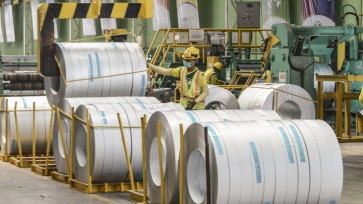
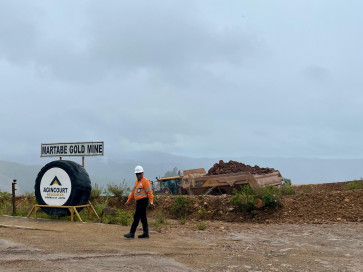
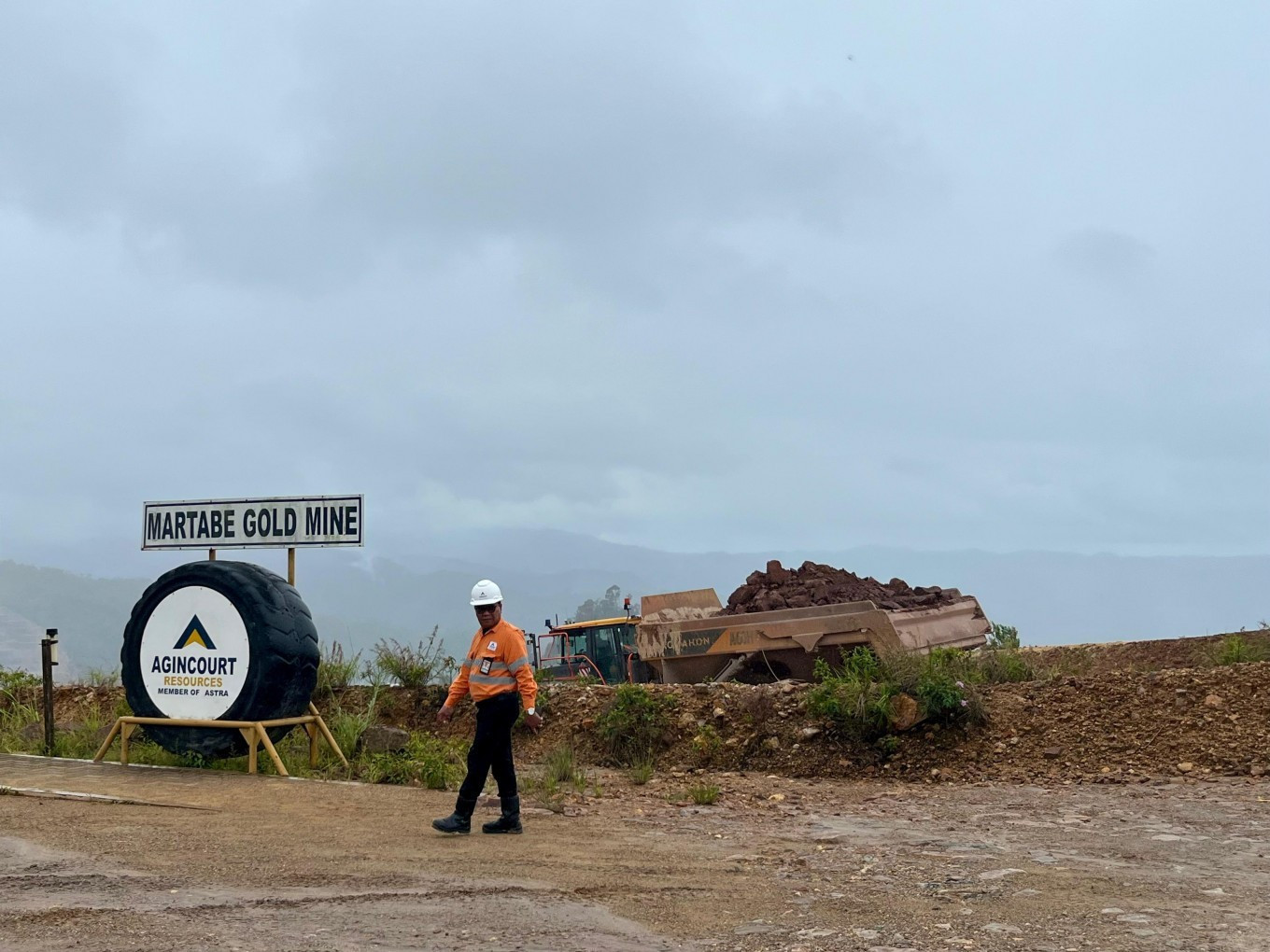 A worker walks across an operational area at the Martabe gold mine located in the Batang Toru district of South Tapanuli, North Sumatra. The mine is operated by PT Agincourt Resources, a unit of Indonesian conglomerate PT Astra International. (JP/Ruth Dea Juwita)
G
old miner Agincourt Resources, part of diversified conglomerate Astra International, was recently given the go-ahead from the Environment Ministry and the Energy and Mineral Resources Ministry to resume operations at its Martabe gold mine in North Sumatra, following an earlier sanction over alleged environmental breaches. However, reports reveal that neither ministry had ever issued a decree to formally revoke Agincourt’s business permits.
To recap, Agincourt was among the 28 firms whose permits were revoked by the government following its probe into corporate actions linked to environmental damage that worsened the flooding and landslides in northern Sumatra last November, which killed at least 1,200 people. Another high-profile operator implicated in the case was North Sumatera Hydro Energy (NSHE), which operates the Batangtoru Hydroelectric Power Plant in South Tapanuli Regency, one of the worst-affected regions.
The government announced on Jan. 20 that it would revoke the license for Agincourt’s Martabe gold mine, but this decision soon encountered internal resistance. In February, energy ministry officials met with the forest area enforcement task force (Satgas PKH), which had been tasked with overseeing the permit revocation for the 28 firms. The ministry pushed back against the move, citing high risk of international arbitration and subsequent erosion of investor trust, as it could be interpreted as a contractual breach in relevant projects.
For Agincourt, which operates under a long-standing government contract, revoking the miner’s permits could expose the state to allegations that it had failed to uphold its own contractual commitments.
On the other hand, Satgas PKH argued that the firms had done measurable harm to the environment, highlighting that the work contracts of international companies would be deemed null if they were similarly found guilty of criminal activities.
As the talks stalled, the energy ministry offered a compromise: Agincourt and NHSE would be allowed to keep their licenses if they paid for the environmental damage. This arrangement was accepted and Agincourt fined Rp 200.9 billion (US$11.84 million) over environmental damage, while NHSE was fined Rp 200.6 billion. The two companies must also pay restoration costs.

Underlying this back-and-forth, however, is a more fundamental issue: the reactionary nature of the initial law enforcement effort. While both sides presented valid arguments, whether centered on contractual certainty or environmental accountability, the process appears to have been inverted. The push to revoke licenses came first, while the effort to substantiate environmental violations only gained momentum well after the alleged damage had occurred.