The Jakarta Post
Please Update your browser
Your browser is out of date, and may not be compatible with our website. A list of the most popular web browsers can be found below.
Just click on the icons to get to the download page.


Popular Reads
Top Results
No results found. Please check your search term and try again
Can't find what you're looking for?
View all search results
Popular Reads
Top Results
No results found. Please check your search term and try again
Can't find what you're looking for?
View all search resultsBeyond oil: The forgotten seafarers of the Strait of Hormuz
While the world watches oil prices and insurance premiums in the Strait of Hormuz, 20,000 seafarers are trapped in a humanitarian crisis unfolding in plain sight. It is time to stop insuring the cargo and start protecting the people who move the world.
Change text size
Gift Premium Articles
to Anyone
Share the best of The Jakarta Post with friends, family, or colleagues. As a subscriber, you can gift 3 to 5 articles each month that anyone can read—no subscription needed!
 Set as preferred source
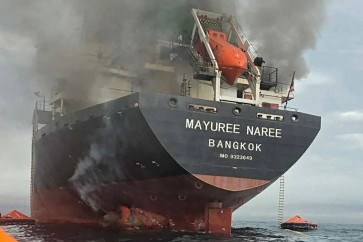
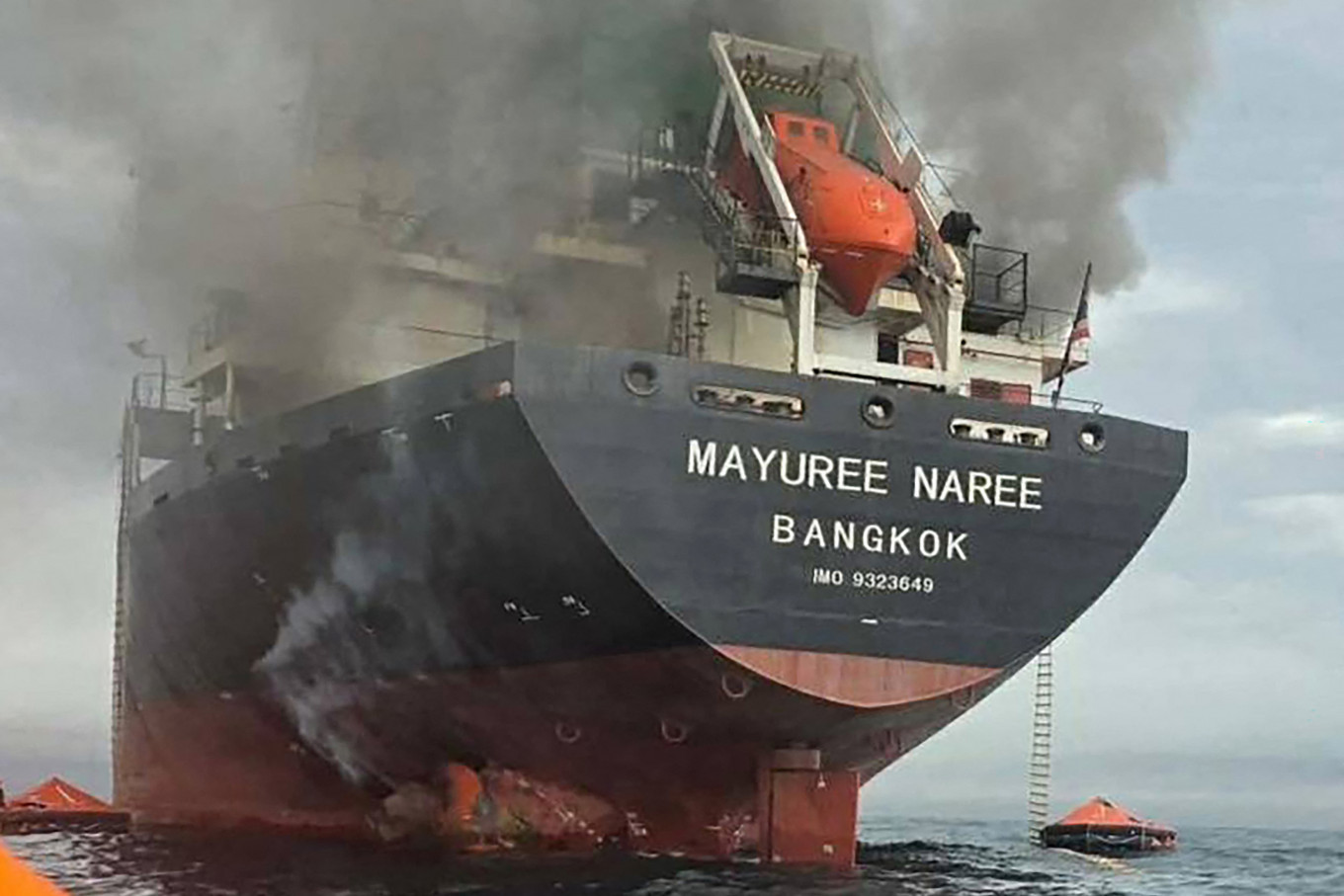 Thick black smoke rises from the deck of the Thailand-flagged bulk carrier Mayuree Naree on March 11, 2026, after it was attacked by Iranian forces while sailing the Strait of Hormuz. (AFP/Handout/Royal Thai Navy)
A
s tensions persist in the Strait of Hormuz, global attention remains fixated on oil flows, insurance premiums and geopolitical maneuvering. Yet this focus has come at a cost: the near-total neglect of the people who keep global trade moving. Thousands of seafarers are stranded at sea, exposed to danger and left largely to fend for themselves.
An estimated 20,000 seafarers aboard at least 3,000 oil tankers and cargo vessels are unable to dock, disembark or access basic services. They continue to work under increasingly hazardous conditions, trapped in a crisis not of their making. Essential workers in every sense, they have become invisible at the very moment they are most at risk.
The Strait of Hormuz carries roughly a fifth of the world’s oil supply each day. But it is not oil that navigates these waters; it is people. Seafarers from Indonesia, the Philippines, India and other developing countries form the backbone of this system. When crisis strikes, it is they who bear the greatest risk and, too often, the least protection.
What we are witnessing is not merely disruption; it is a humanitarian failure unfolding in plain sight.
This crisis operates on two fronts.
The first concerns those already in the strait: crews stranded on vessels that cannot dock due to security restrictions, insurance constraints and the constant threat of attack.

Supplies run low. Medical care is difficult to access. Crew rotations are effectively frozen. The psychological toll, marked by isolation, anxiety and prolonged uncertainty, is severe. These are not abstract hardships; they are conditions that no worker should be expected to endure.