TheJakartaPost
Please Update your browser
Your browser is out of date, and may not be compatible with our website. A list of the most popular web browsers can be found below.
Just click on the icons to get to the download page.


Popular Reads
Top Results
No results found. Please check your search term and try again
Can't find what you're looking for?
View all search results
Popular Reads
Top Results
No results found. Please check your search term and try again
Can't find what you're looking for?
View all search resultsHow Iran turns US strength into vulnerability
For decades, the US has nurtured the belief that it could wage wars abroad without exposing itself to the risk of serious retaliation.
Change text size
Gift Premium Articles
to Anyone
Share the best of The Jakarta Post with friends, family, or colleagues. As a subscriber, you can gift 3 to 5 articles each month that anyone can read—no subscription needed!
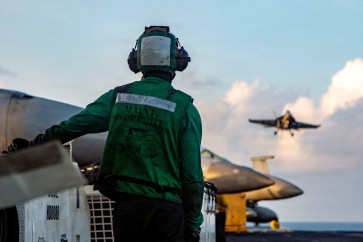
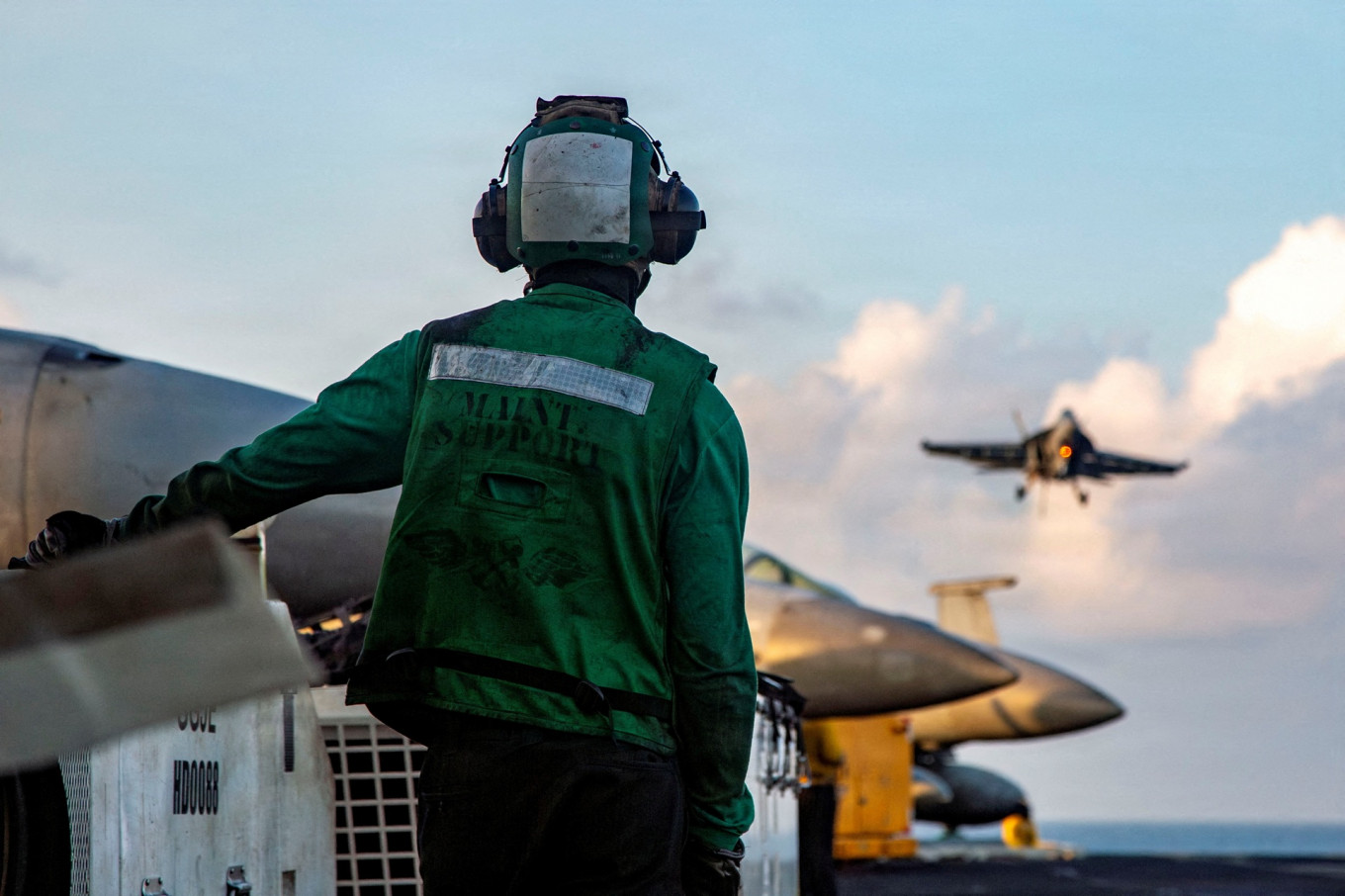 A United States sailor observes flight operations as an F/A-18E Super Hornet, attached to Strike Fighter Squadron 14, prepares to make an arrested landing on the flight deck of Nimitz-class aircraft carrier USS Abraham Lincoln during the Iran war on March 26 at an undisclosed location. (-/US Navy/Handout via Reuters)
I
n a rambling address to the United States people on April 1, US President Donald Trump claimed that the US war against Iran has been a success, vowing to “finish the job […] very fast.” It was a statement in obvious conflict with the facts.
Trump is still pretending that Iran is just another small US adversary that can only absorb punishment, lash out locally and ultimately buckle under sustained military and economic coercion. In reality, Iran has upended the model on which US interventionism has long relied.
For decades, the US has nurtured the belief that it could wage wars abroad without exposing itself to the risk of serious retaliation. This was made possible by the careful selection of targets — such as Grenada, Panama, Iraq, Libya and even Venezuela — that lacked the capacity to impose significant costs beyond their borders, such as by striking US assets or allies in a sustained or meaningful way. Even when insurgencies wore down US forces, as in Vietnam and Afghanistan, the conflicts remained geographically contained.
This “asymmetric cost” model, a war the US starts will ultimately cost the other side far more, has proven vital in sustaining the illusion of American invincibility and limiting domestic political resistance to US military adventurism. Now, Iran has broken it.
Iran’s security doctrine is built on “forward defense,” which makes use of asymmetric military capabilities — including ballistic and cruise missiles, drones and a network of partners and proxies — to protect itself and project power beyond its borders. When the US and Israel attacked, Iran was able to leverage this strategic depth to retaliate immediately against targets across the region, including US allies, military bases and forward-deployed assets.
By threatening infrastructure, airbases and economic chokepoints, such as the Strait of Hormuz and Bab al-Mandeb across the Gulf, Iran is effectively forcing US partners to share the costs of conflict. As the Gulf states, which have long hosted US bases in exchange for a place under the US' vaunted security umbrella, bear the brunt of Iran’s response, strategic friction is growing within America’s coalition. Thanks to Iran, allies that once enabled the US to project power in the Middle East now have a strong incentive to restrain it.

The US should have seen this coming. Following the US assassination of Iranian Major General Qassem Suleimani in 2020, Iran responded not with proxy action or deniable escalation, but with a direct ballistic-missile attack on a US military installation: the Al-Asad Airbase in Iraq. This should have dispelled any doubt that Iran could retaliate against American forces with precision and without fear of immediate retribution. Since then, Iran has only refined its strategy of distributed retaliation.