The Jakarta Post
Please Update your browser
Your browser is out of date, and may not be compatible with our website. A list of the most popular web browsers can be found below.
Just click on the icons to get to the download page.


Popular Reads
Top Results
No results found. Please check your search term and try again
Can't find what you're looking for?
View all search results
Popular Reads
Top Results
No results found. Please check your search term and try again
Can't find what you're looking for?
View all search resultsHormuz should be a wake-up call for how Indonesia feeds itself
Every trillion spent compensating for global fertilizer price spikes is a trillion not invested in making Indonesian agriculture resilient.
Change text size
Gift Premium Articles
to Anyone
Share the best of The Jakarta Post with friends, family, or colleagues. As a subscriber, you can gift 3 to 5 articles each month that anyone can read—no subscription needed!
 Set as preferred source
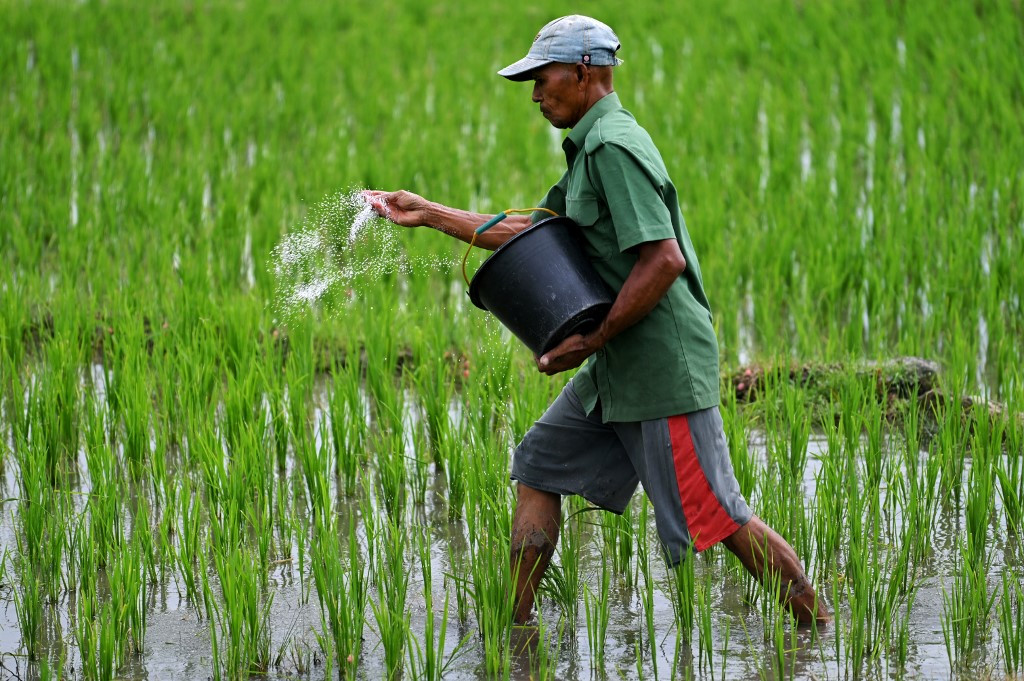 A farmer spreads fertilizer on his paddy field on Aug. 22, 2022, in Lamteuba, Aceh. (AFP/Chaideer Mahyuddin )
I
ndonesia spends Rp 46.87 trillion (US$2.76 billion) per year subsidizing fertilizer. That figure exceeds the combined budgets of several ministries. To keep the nation fed and 15 million hectares of rice and corn productive, the government distributes 9.55 million tons of subsidized urea, NPK and other inputs to farmers registered in the e-Approved Group Requirements Plan (RDKK) system.
But the Strait of Hormuz crisis is forcing an uncomfortable question: how much of that Rp 46 trillion actually reaches the plant?
The answer, according to decades of global agronomic research, is shockingly little. Studies consistently show that only 20 percent to 40 percent of applied nitrogen fertilizer is taken up by crops in the year of application. For phosphorus, a meta-analysis across 274 studies puts the figure at just 12.6 percent. The rest leaches into waterways, evaporates into the atmosphere or locks into soil in forms that plants cannot access.
Let us run the numbers for Indonesia. The average rice farmer applies about 239 kilograms of urea per hectare per season at the subsidized price of Rp 1,800 per kg. That is Rp 430,000 in urea alone. If the crop absorbs nitrogen from only 30 percent of that, a conservative midpoint, then Rp 300,000 per hectare per season is spent on nitrogen that contributes nothing to the harvest. Scale that across 15 million hectares of food crops, twice a year, and the country wastes more than Rp 9 trillion annually on nitrogen that never reaches a single grain of rice.
9 trillion rupiah. Gone. Every year. And that is before factoring in NPK, SP-36 or other chemical inputs.
Now, layer the war on top of that structural waste. About one-third of globally traded fertilizer passes through the Strait of Hormuz. Five weeks into the conflict, urea benchmark prices have surged roughly 30 percent, from around Rp 6.6 million per tonne to approaching Rp11.6 million per tonne internationally. DAP prices in Southeast Asia have climbed from roughly Rp 12 million to Rp 14 million per tonne.

Indonesia produces most of its own urea through state-owned Pupuk Indonesia’s five subsidiaries. However, production runs on natural gas, and gas is priced globally. Older Pupuk Indonesia factories spend up to 43 percent of operating expenses on gas. When Iran struck Qatar’s Ras Laffan LNG facility, destroying 17 percent of Qatar’s production capacity, Asian LNG spot prices surged more than 140 percent.