The Jakarta Post
Please Update your browser
Your browser is out of date, and may not be compatible with our website. A list of the most popular web browsers can be found below.
Just click on the icons to get to the download page.


Popular Reads
Top Results
No results found. Please check your search term and try again
Can't find what you're looking for?
View all search results
Popular Reads
Top Results
No results found. Please check your search term and try again
Can't find what you're looking for?
View all search resultsAnalysis: Agrinas’ expanding role risks turning policy ambition into liability
Change text size
Gift Premium Articles
to Anyone
Share the best of The Jakarta Post with friends, family, or colleagues. As a subscriber, you can gift 3 to 5 articles each month that anyone can read—no subscription needed!
 Set as preferred source
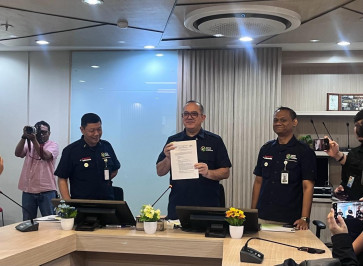
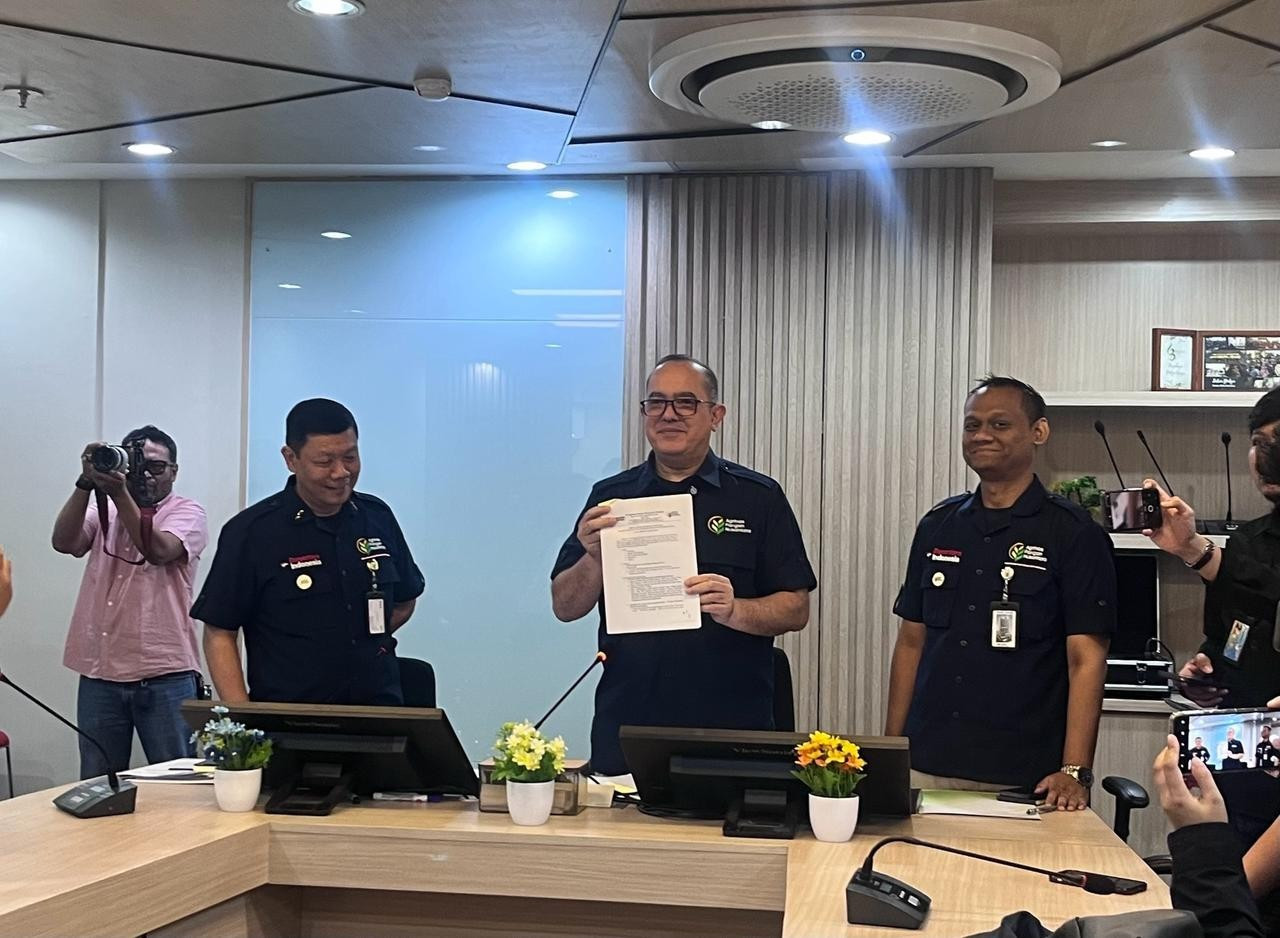 State-owned agriculture firm PT Agrinas Pangan Nusantara CEO Joao Angelo De Sousa Mota (center) poses for a picture in a press conference on Feb. 24 while showing a document related to the decision to import 105,000 vehicles from Indian firms Tata Motors and Mahindra. (The Jakarta Post/Ni Made Tasyarani)
P
T Agrinas Pangan Nusantara is fast becoming one of the most powerful, yet least clearly defined state-owned enterprises under President Prabowo Subianto’s flagship programs. Initially mandated to produce staple foods and manage 425,000 hectares of food estate, Agrinas Pangan has now been entrusted with an even broader role: operating the Red and White Cooperatives (KMP) for the first two years. However, as its mandate expands, its core business becomes increasingly blurred and government liability rises.
Agrinas Pangan was transformed from state-owned engineering consultant Yodya Karya in early 2025, with the ambition of achieving food self-sufficiency through land development and agricultural infrastructure. The government backed this vision with plans for Rp 8 trillion (US$485 million) in state capital injections. But beyond ambition, there has been little evidence of measurable performance. To date, Agrinas Pangan has not published clear operational or financial results, raising early concerns about accountability.
Leadership instability has further complicated matters. CEO Joao Angelo De Sousa Mota briefly resigned just six months into his tenure, citing insufficient budget support and weak institutional coordination, only to reverse his decision weeks later. The episode exposed internal uncertainty while highlighting the political weight behind the company’s leadership, given Joao’s proximity to President Prabowo.
More fundamentally, Agrinas Pangan appears to be drifting away from its original mandate. Under Cooperatives Ministerial Regulation No. 1/2026, Agrinas Pangan is authorized to fully manage KMP units in their early years, effectively centralizing control over institutions that are meant to be locally driven. This could undermine village autonomy and potentially contradict the spirit of decentralization embedded in the Village Law. It is also at odds with the cooperative model, which traditionally relies on local participation and ownership.
The fiscal implications are equally concerning. Villages are now required to establish KMP units to access village funds, with approximately 58 percent of these funds redirected toward the cooperatives. This shift risks crowding out essential spending on basic infrastructure such as sanitation, roads and drainage, areas that directly affect rural welfare.
In October 2025, the government assigned Agrinas, alongside the military, to build KMP infrastructure across 2,400 locations. Each cooperative is backed by roughly Rp 3 billion in financing from state-owned banks, reflecting the administration’s urgency in rolling out the program nationwide.

Despite its limited track record, Agrinas Pangan has quickly scaled up financially. State-owned banks have committed up to Rp 200 trillion for KMP development, with around Rp 90 trillion already disbursed. A significant portion of this funding is being channeled into logistics, including a controversial plan to import more than 100,000 pickup trucks from India’s Mahindra and Tata Motors. Joao has argued that the imports are necessary due to the lack of suitable domestic vehicles for remote areas and high procurement costs through the government’s e-catalog platform, even claiming the purchase could save Rp 46.5 trillion.