The Jakarta Post
Please Update your browser
Your browser is out of date, and may not be compatible with our website. A list of the most popular web browsers can be found below.
Just click on the icons to get to the download page.


Popular Reads
Top Results
No results found. Please check your search term and try again
Can't find what you're looking for?
View all search results
Popular Reads
Top Results
No results found. Please check your search term and try again
Can't find what you're looking for?
View all search resultsLogistics is not expensive, it is misaligned
Indonesia is an archipelago where the sea is not a separator, but the primary connector. Yet, Indonesia’s logistics architecture tells a different story
Change text size
Gift Premium Articles
to Anyone
Share the best of The Jakarta Post with friends, family, or colleagues. As a subscriber, you can gift 3 to 5 articles each month that anyone can read—no subscription needed!
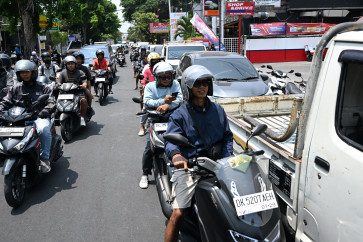
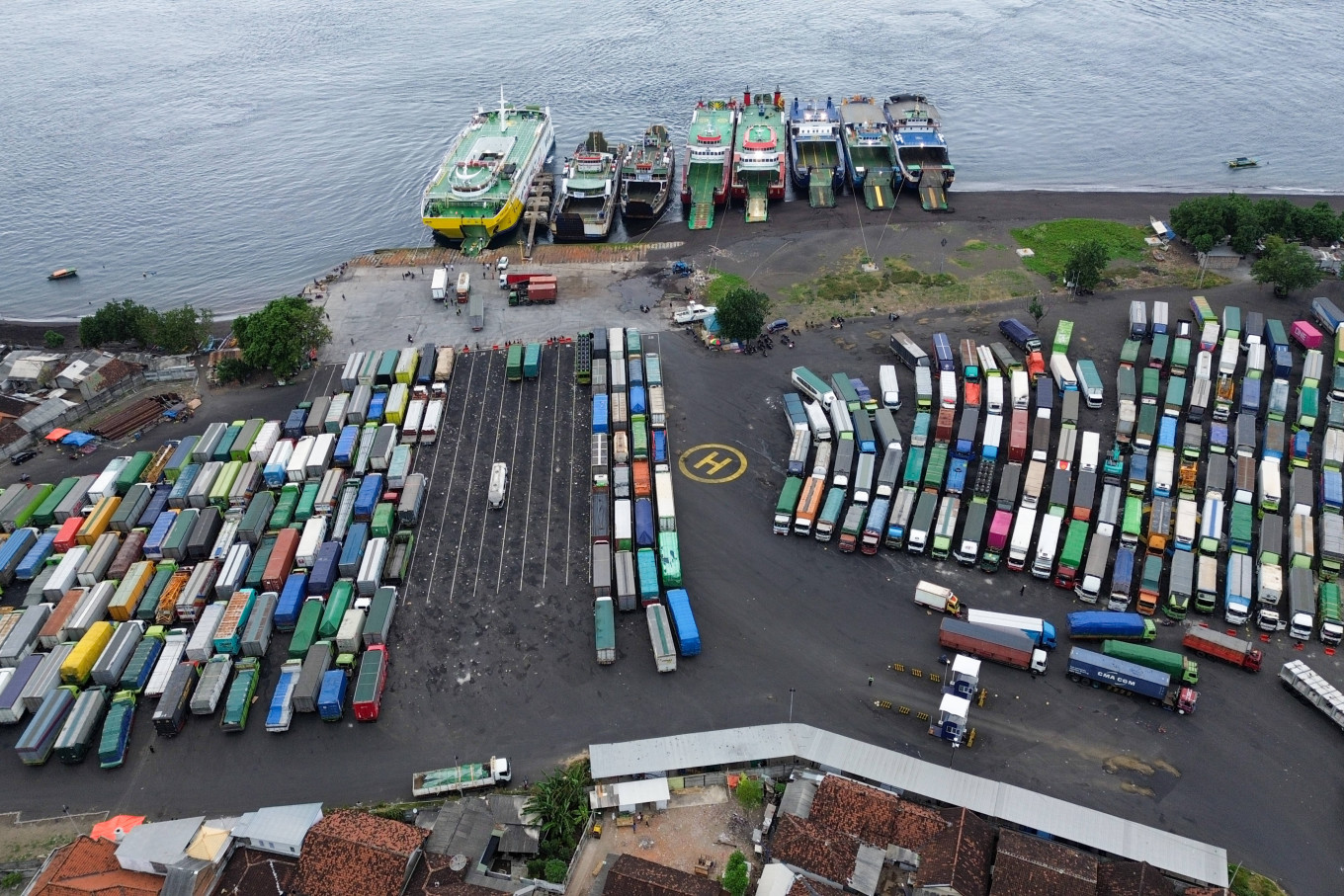 Freight trucks wait for their turn to board ferries at Bulusan Port in Banyuwangi, East Java, on July 25, 2025. (Antara/Budi Candra Setya)
T
here is a question that has lingered in Indonesia for decades. Why is logistics so expensive? It is a question that has shaped policy, justified massive investments and driven national debate.
It has led to more roads, more trucks, more tollways and more subsidies. It has been used to explain regional price disparities, to rationalize inefficiencies and to frame logistics as an unavoidable burden of geography.
And yet, despite all these efforts, the outcome remains unchanged. The system improves in parts, but never transforms as a whole.
At some point, we must begin to ponder whether we have been asking the wrong question all along.
Indonesia is an archipelago where the sea is not a separator, but the primary connector.
Yet, Indonesia’s logistics architecture tells a different story. It is designed as if the country were a continuous landmass. Goods are forced onto trucks for long distances. Supply chains stretch across congested corridors. Ports are treated as destinations rather than nodes. The system operates against its own geography. And that is where cost begins.

Japan, an island nation with high density and industrial complexity, did not build its logistics backbone on trucks alone. It developed coastal shipping corridors connecting its major industrial regions. Large volumes move by sea; trucks play a role, but not the dominant one. The result is not just efficiency in transport.