TheJakartaPost
Please Update your browser
Your browser is out of date, and may not be compatible with our website. A list of the most popular web browsers can be found below.
Just click on the icons to get to the download page.


Popular Reads
Top Results
No results found. Please check your search term and try again
Can't find what you're looking for?
View all search results
Popular Reads
Top Results
No results found. Please check your search term and try again
Can't find what you're looking for?
View all search resultsTurning Middle East conflict into a catalyst for energy security
As the Strait of Hormuz crisis exposes the fragility of global oil, Indonesia’s path to true energy sovereignty lies not in its oil wells, but in its electric vehicle revolution.
Change text size
Gift Premium Articles
to Anyone
Share the best of The Jakarta Post with friends, family, or colleagues. As a subscriber, you can gift 3 to 5 articles each month that anyone can read—no subscription needed!
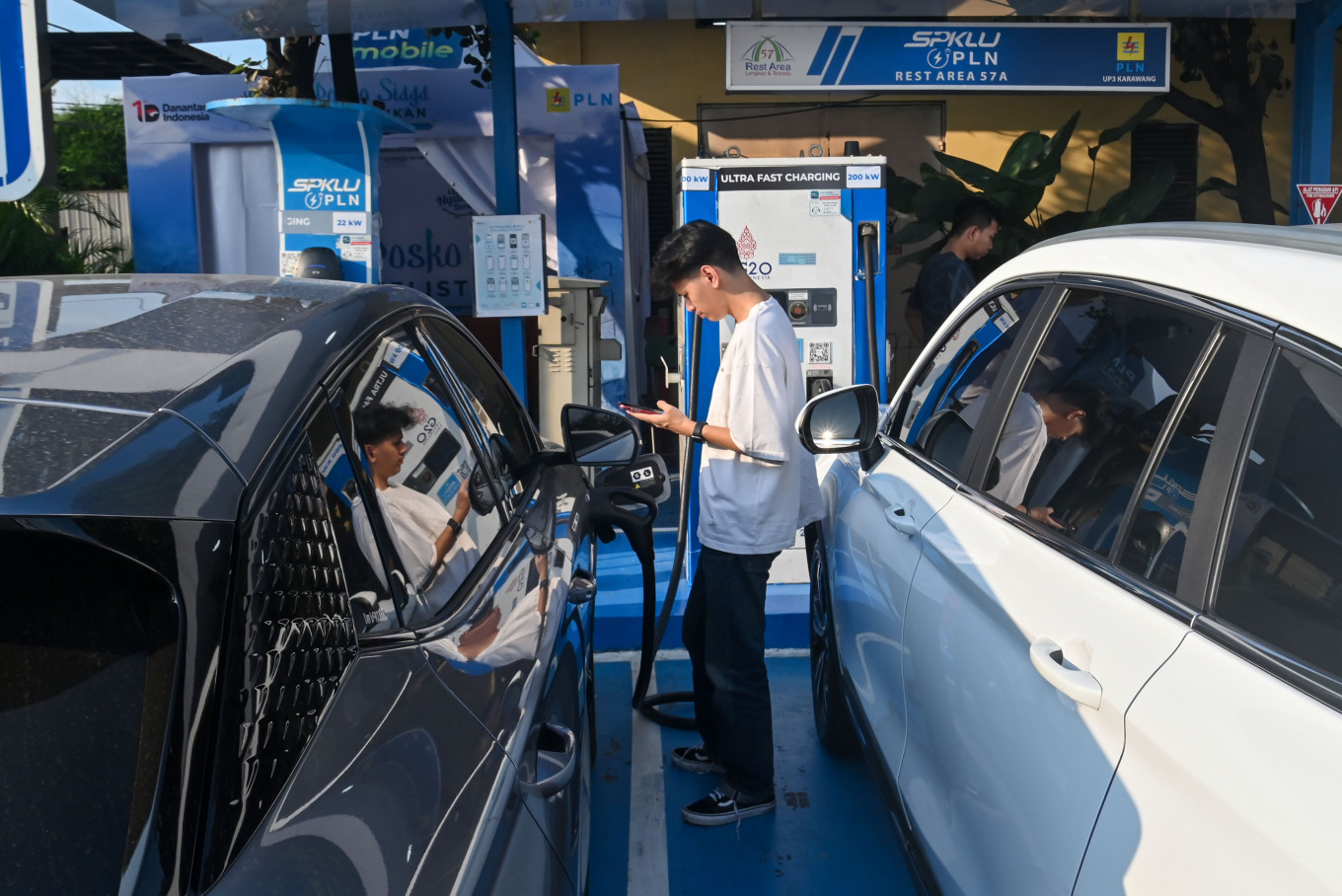 A traveler charges an electric vehicle on March 15, 2026, at a public EV charging station operated by energy giant PT PLN at a rest area on the Jakarta-Cikampek toll road in Karawang regency, West Java. The transition to transportation electrification requires political will, as well as subsidies and a clear long-term strategy. (Antara/Fakhri Hermansyah)
I
ran’s blockade of the Strait of Hormuz has disrupted global energy supplies and sent oil prices sharply upward. For Indonesia, this serves as both a wake-up call and an opportunity to reduce its vulnerability to external shocks and strengthen long-term energy security.
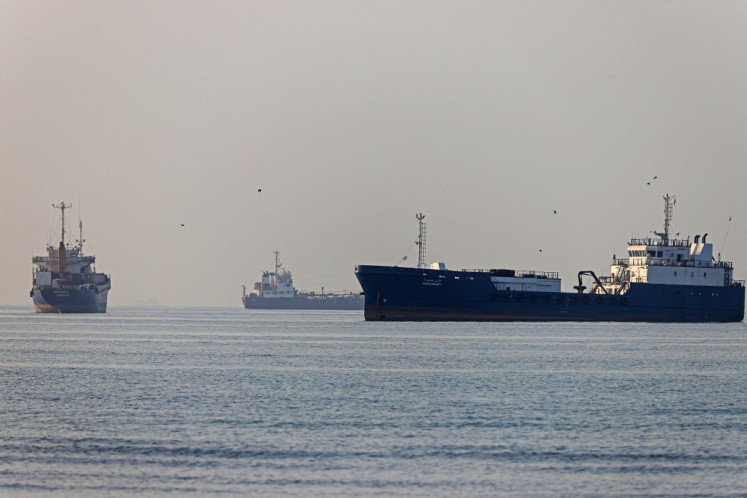
The Strait of Hormuz carries roughly a quarter of global seaborne crude oil and petroleum product trade, as well as around a fifth of the global liquefied natural gas (LNG) trade. More than 80 percent of these energy commodities ultimately flow to Asian markets. Any disruption along this route immediately raises the risk of supply shortages and price spikes across the region. Several countries, including India, China, Pakistan and the Philippines, have already adopted emergency measures ranging from restrictions on fuel and LPG purchases to shorter working weeks and work-from-home arrangements. Brent crude, which traded at around US$70 per barrel before the United States-Israeli war on Iran, has surged past $100. Fuel prices have climbed in many countries.
Indonesia has responded by seeking alternative supplies, promoting energy conservation and using the state budget as a shock absorber to protect households from rising energy costs. These are necessary short-term measures. However, this crisis also highlights a deeper structural problem: Indonesia’s energy system remains highly exposed to global geopolitical instability.
Despite being a major energy producer, Indonesia faces a striking paradox: The nation imports approximately 20 percent of the energy it consumes, primarily in the form of crude oil, fuel products and LPG. In 2024, the country consumed around 2,000 million barrels of oil equivalent (mboe) in primary energy while producing nearly double that amount, roughly 3,900 mboe.
The core of the problem is not a lack of resources, but rather their composition. While Indonesia produces vast quantities of coal, gas and renewable energy, it does not produce enough domestic oil to meet internal demand. This is why transport electrification is a strategic necessity.
It offers a credible pathway to reduce oil dependence by shifting mobility toward energy sources sourced entirely within our borders. Currently, oil accounts for 70 percent of Indonesia’s energy imports, and more than 80 percent of that oil is consumed by land transportation.

In contrast, 97 percent of Indonesia’s electricity is generated from coal, gas and renewables, all of which are domestically available. The more the nation shifts from internal combustion engines (ICE) to electric vehicles (EVs), the less vulnerable it becomes to the fluctuations of the global oil market.