The Jakarta Post
Please Update your browser
Your browser is out of date, and may not be compatible with our website. A list of the most popular web browsers can be found below.
Just click on the icons to get to the download page.


Popular Reads
Top Results
No results found. Please check your search term and try again
Can't find what you're looking for?
View all search results
Popular Reads
Top Results
No results found. Please check your search term and try again
Can't find what you're looking for?
View all search resultsWhen permits are revoked but mining operation continues
Mining business permit revocation and asset transfers can strengthen governance, but only if they lead to demonstrable improvements in land-use practices, risk management, and environmental performance.
Change text size
Gift Premium Articles
to Anyone
Share the best of The Jakarta Post with friends, family, or colleagues. As a subscriber, you can gift 3 to 5 articles each month that anyone can read—no subscription needed!
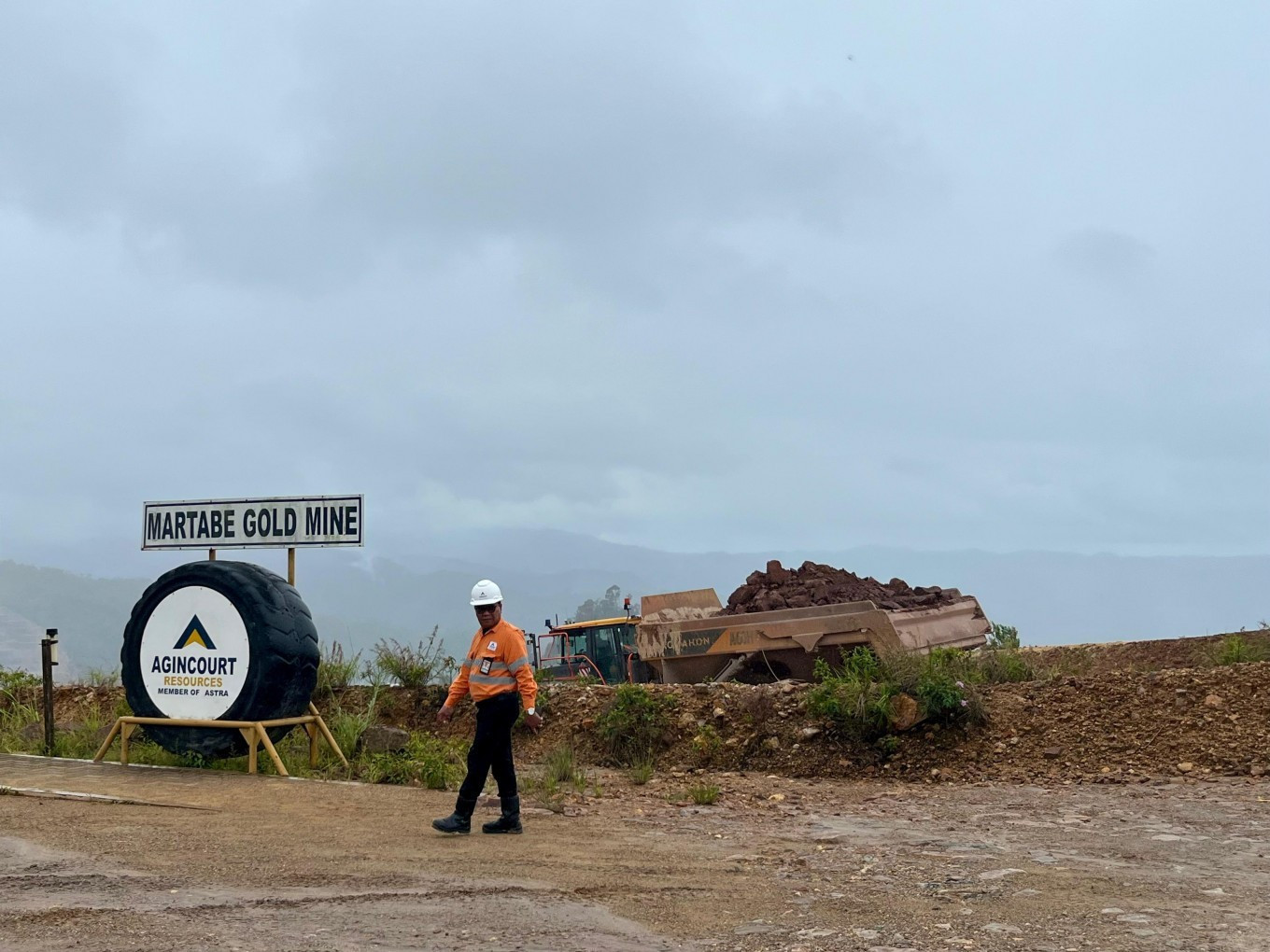 A worker walks across an operational area at the Martabe gold mine located in the Batangtoru district of South Tapanuli, North Sumatra. The mine is operated by PT Agincourt Resources, a unit of Indonesian conglomerate PT Astra International. (JP/Ruth Dea Juwita)
T
he government’s decision to revoke forest and mining permits after the November 2025 landslides in northern Sumatra reflects growing awareness that environmental disasters are often made worse by human behavior. Landslides are commonly described as natural disasters, but research shows that they are frequently linked to deforestation and intensive land use, especially in areas with vulnerable terrain.
In Indonesia, mining has been a major contributor to forest loss, and scientific research has proven that reduced forest cover can leave slopes more vulnerable to collapse under certain conditions, such as heavy rain. This makes clear that land-use planning and vegetation protection are critical to reducing environmental risks and matter greatly for public safety.
What is significant is not the announcement of the permit revocation, but how to implement it and what happens next.
In principle, withdrawing the permits can allow damaged land to be restored, risk to be reduced and the fostering of alternative land uses. In reality, the outcome depends on how these decisions are carried out.
Recent reporting indicates that, rather than halting operations outright, the government has moved toward restructuring ownership and control of certain affected assets, including for example, the Martabe gold mine in Batangtoru, South Tapanuli regency, North Sumatra. If mining continues under new arrangements, the enforcement actions may be seen as an administrative measure rather than a substantive shift in land-use strategy or risk management.
The transfer of the Martabe gold mine from PT Agincourt Resources to a newly established state-owned entity operating under state asset fund Danantara, illustrates this broader policy tension.

Greater state involvement in strategic assets is often justified as a means to enhance coordination, oversight and alignment with national development objectives. At the same time, such transitions inevitably invite scrutiny of their consistency with existing legal frameworks, administrative processes and procedural safeguards.