TheJakartaPost
Please Update your browser
Your browser is out of date, and may not be compatible with our website. A list of the most popular web browsers can be found below.
Just click on the icons to get to the download page.


Popular Reads
Top Results
No results found. Please check your search term and try again
Can't find what you're looking for?
View all search results
Popular Reads
Top Results
No results found. Please check your search term and try again
Can't find what you're looking for?
View all search resultsThe bullying crisis: A wake-up call for society
The recent surge in violence at top Indonesian universities marks a critical erosion of the nation’s ethical fabric and a failure of institutional protection. By adopting the rigorous behavioral frameworks, Indonesia can transition from reactive outcry to a transformative, safe educational paradigm.
Change text size
Gift Premium Articles
to Anyone
Share the best of The Jakarta Post with friends, family, or colleagues. As a subscriber, you can gift 3 to 5 articles each month that anyone can read—no subscription needed!
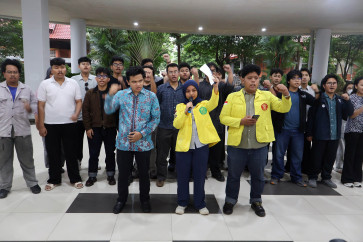
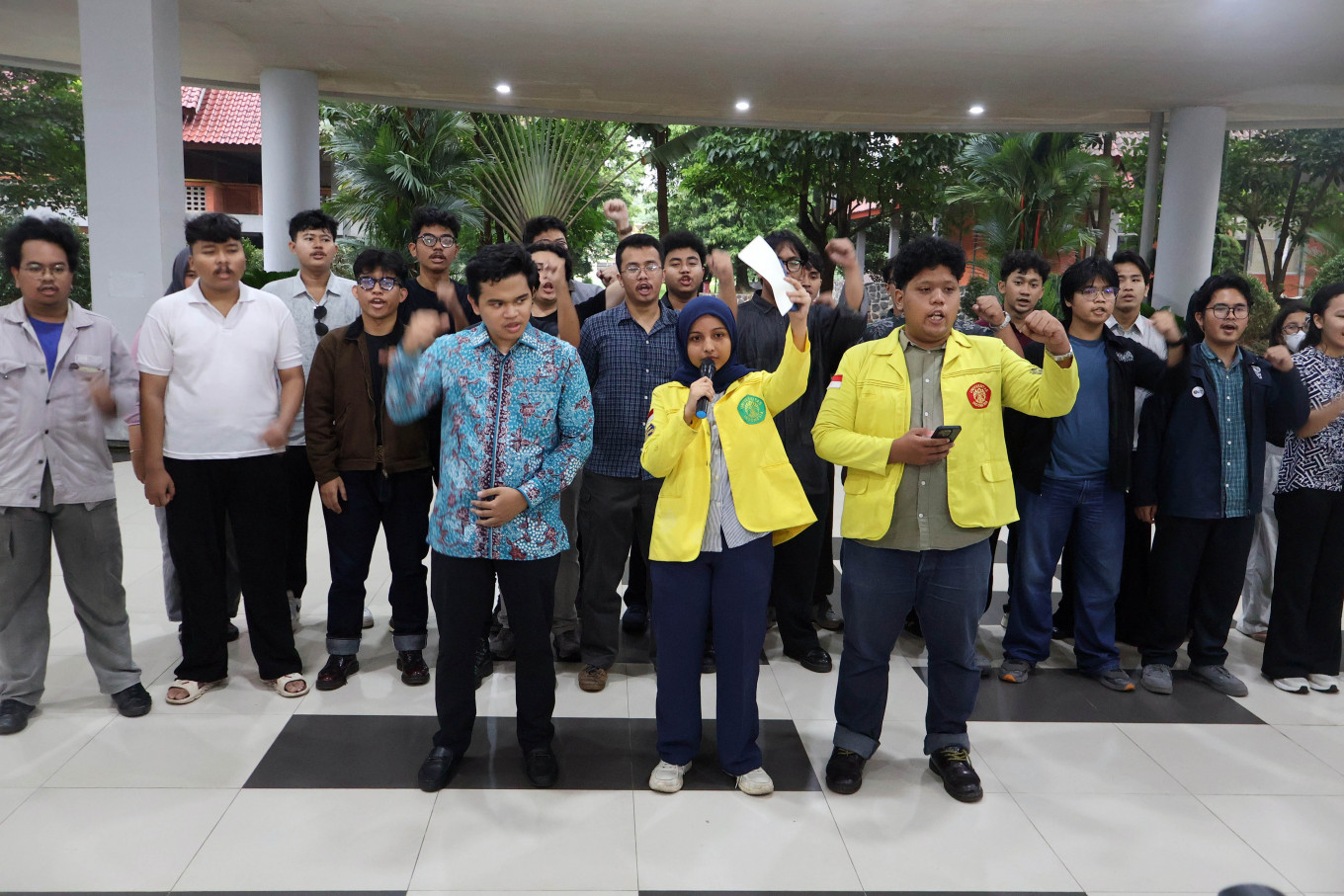 Mounting pressure: Students from the University of Indonesia (UI) Student Executive Board Alliance express their stance on Tuesday regarding sexual violence at the university's Faculty of Law in Depok, West Java. The alliance urged the faculty’s dean and the university rectorate to transparently process the case. (Antara/Yulius Satria Wijaya)
T
he bullying case involving 16 law students at the University of Indonesia (UI) marks a critical inflection point, revealing the growing normalization of aggression in Indonesian society. Rather than reinforcing the nation’s moral fabric, this incident exposes a serious erosion of ethical values and civic responsibility. It serves as a compelling warning to state institutions, parents and youth to strengthen efforts to cultivate a society driven by integrity.
Furthermore, persistent bullying across educational settings poses a serious challenge to national education standards. It directly contradicts Sustainable Development Goal 4 (Quality Education), which mandates safe, inclusive and violence-free learning environments. As a structural barrier, bullying undermines students’ psychological well-being and reduces engagement, ultimately weakening academic performance and impeding equitable education for all.
An examination of the current trajectory of bullying in Indonesia reveals an alarming escalation in both frequency and complexity. Empirical data from the Indonesian Child Protection Commission and the Indonesian Education Monitoring Network indicates a substantial surge in violence within schools.
Reported incidents increased from 285 cases in 2023 to 573 in 2024 - a more than twofold rise. Notably, 31 percent of these incidents are attributable to bullying. Physical bullying remains predominant (55.5 percent), followed by verbal or psychological abuse (29.3 percent).
Primary school students constitute the most affected demographic (26 percent), followed by junior secondary (25 percent) and senior secondary students (18.75 percent), underscoring early childhood as a particularly vulnerable stage.
Recently, the diffusion of bullying into higher education signals a troubling expansion of the phenomenon. Emerging cases suggest that institutionalized forms of violence are projected to intensify through the 2025 - 2026 period. For instance, a fatality allegedly linked to severe bullying at Udayana University has prompted a formal investigation and significant public scrutiny.

At Sriwijaya University, indications of coercive practices have surfaced regarding unofficial financial contributions. Similarly, at UI, concerns have arisen over inappropriate sexual content in digital spaces, while viral testimonies have exposed bullying at State Islamic University (UIN) Jambi.