TheJakartaPost
Please Update your browser
Your browser is out of date, and may not be compatible with our website. A list of the most popular web browsers can be found below.
Just click on the icons to get to the download page.


Popular Reads
Top Results
No results found. Please check your search term and try again
Can't find what you're looking for?
View all search results
Popular Reads
Top Results
No results found. Please check your search term and try again
Can't find what you're looking for?
View all search resultsTransit drives growth
While often viewed as a public cost, Transjakarta is actually a massive economic driver generating three times its weight in national output. By shifting focus from fuel subsidies to transit integration, Indonesia can clear its skies and its balance sheets simultaneously.
Change text size
Gift Premium Articles
to Anyone
Share the best of The Jakarta Post with friends, family, or colleagues. As a subscriber, you can gift 3 to 5 articles each month that anyone can read—no subscription needed!
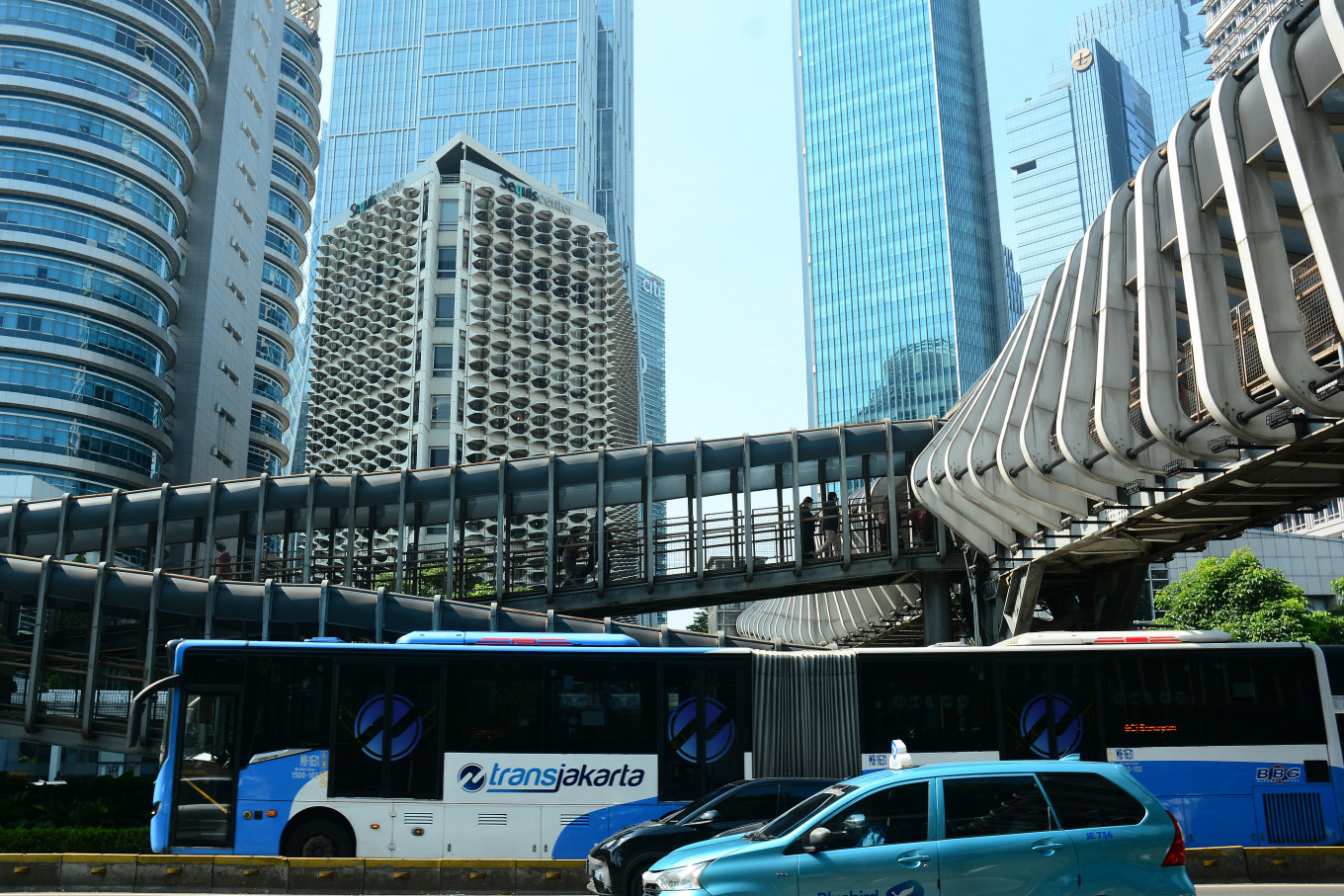 A TransJakarta bus passes through the Senayan area of South Jakarta, on Wednesday, April 15, 2026. (JP/Iqro Rinaldi)
E
very morning, Jakarta bears witness to millions of commuters who share the same calculation: how much time, money and frustration it takes to get from home to work, and which option will cost them the least of all three.
A new study suggests that one of the city’s most familiar answers, Transjakarta, is not just easing that daily trade-off but quietly reshaping the economy beneath it in ways that often go unnoticed. The study, conducted by the University of Indonesia’s Institute for Economic and Social Research, finds that the city-owned bus network generates economic returns far exceeding the public subsidy it receives, pointing to a multiplier effect rarely associated with public transport.
Between 2015 and 2024, Transjakarta absorbed Rp 23.1 trillion (US$1.35 billion) in subsidies but produced Rp 73.8 trillion in national economic output and Rp 33.9 trillion in added value. To put it simply, every Rp 1 trillion in subsidies generates Rp 3.2 trillion in output and Rp 1.5 trillion in added value.
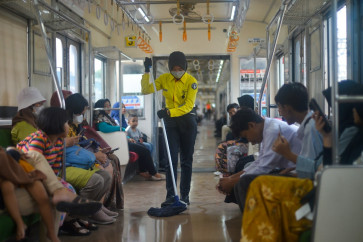
For households, the benefits are immediate and tangible. Commuters in Jakarta save an average of Rp 174,400 per month, while those from surrounding cities save an additional Rp 70,000. These figures do more than measure a successful bus system; they call into question a long-held assumption in Indonesia’s transport policy, that mobility subsidies are best spent on private vehicles, whether through road expansion or fuel subsidies that keep prices artificially low.
That model, while politically convenient, is becoming increasingly costly. It not only fuels congestion and deteriorating air quality but also entrenches Indonesia’s reliance on imported fuels, an exposure that feels particularly risky at a time when geopolitical tensions in the Middle East continue to disrupt global energy supply chains.
Transjakarta offers a different, and arguably more sustainable, path. It demonstrates how public transport can generate broader economic returns while addressing multiple urban challenges at once. Beyond the direct savings for households, the system supports an estimated 32,000 jobs each year, reduces healthcare costs by Rp 3.79 trillion through lower emissions, and saves more than 1.8 million hours of travel time annually by easing congestion across the capital.

The broader implication is not simply that public transport works, but that it works as an economic driver. In many cities around the world, transit hubs anchor neighborhood development by attracting retail, housing and services that depend on steady commuter flows and, in turn, generate further economic activity.