The Jakarta Post
Please Update your browser
Your browser is out of date, and may not be compatible with our website. A list of the most popular web browsers can be found below.
Just click on the icons to get to the download page.


Popular Reads
Top Results
No results found. Please check your search term and try again
Can't find what you're looking for?
View all search results
Popular Reads
Top Results
No results found. Please check your search term and try again
Can't find what you're looking for?
View all search resultsWomen farmers define the future of food security in Asia-Pacific
Empowering women in agriculture isn’t just a matter of equity - it’s a trillion-dollar opportunity to transform global food security and climate resilience.
Change text size
Gift Premium Articles
to Anyone
Share the best of The Jakarta Post with friends, family, or colleagues. As a subscriber, you can gift 3 to 5 articles each month that anyone can read—no subscription needed!
 Set as preferred source
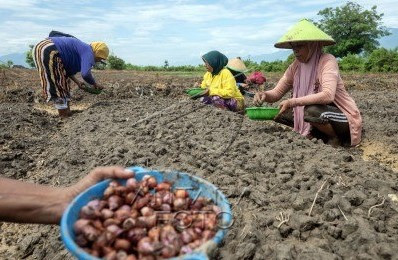 Allium boom: Female workers plant shallot bulbs on Aug. 8, 2024, at a farm in Kawatuna village, Palu, Central Sulawesi. The regional administration is encouraging farmers to plant shallots as the food commodity commands high prices in the domestic market. (Antara/Basri Marzuki)
W
alk through any rice paddy in Southeast Asia, any market in the Pacific islands or any fishing village along the Bay of Bengal, and you will find women working. They are planting, harvesting, processing and selling.
Nearly 58 percent of employed women across Asia and the Pacific work in the agricultural sector; they are the backbone of how this region feeds itself.
And yet, despite their essential labor, women farmers continue to face persistent and systemic barriers.
Only 10 to 20 percent of women in the region hold land tenure rights. Without a title to the land they cultivate, women cannot access credit, make long-term investments or fully benefit from the systems they spend their lives sustaining. Furthermore, a stubborn wage gap persists: for every dollar earned by their male counterparts, women take home just 82 cents.
From April 20 to 24, agriculture ministers, senior officials and delegates from 46 countries will gather in Brunei Darussalam for the 38th Session of the Food and Agriculture Organization’s (FAO) Regional Conference for Asia and the Pacific (APRC 38) to set the region's priorities. This year - with the United Nations having declared 2026 the International Year of the Woman Farmer - we have a pivotal opportunity to prioritize gender equality across agrifood systems.
Addressing these inequalities is not merely a matter of fairness; it is fundamental to the challenges of food insecurity, climate resilience, rural poverty and sustainable development. We cannot achieve meaningful progress while leaving women behind.

Research from the FAO suggests that closing gender gaps in farm productivity and wages could add US$1 trillion to global gross domestic product and lift 45 million people out of food insecurity. Such action would also improve household well-being, strengthen resilience to climate change and accelerate progress toward the sustainable development goals. Empowered women farmers are the ultimate agents of change.