TheJakartaPost
Please Update your browser
Your browser is out of date, and may not be compatible with our website. A list of the most popular web browsers can be found below.
Just click on the icons to get to the download page.


Popular Reads
Top Results
No results found. Please check your search term and try again
Can't find what you're looking for?
View all search results
Popular Reads
Top Results
No results found. Please check your search term and try again
Can't find what you're looking for?
View all search resultsKartini’s struggle: What the Republic owes to Papuan women
Often caught in the crossfire, Papuan women are pressured by separatist groups for food and shelter while their homes are simultaneously utilized by security forces.
Change text size
Gift Premium Articles
to Anyone
Share the best of The Jakarta Post with friends, family, or colleagues. As a subscriber, you can gift 3 to 5 articles each month that anyone can read—no subscription needed!
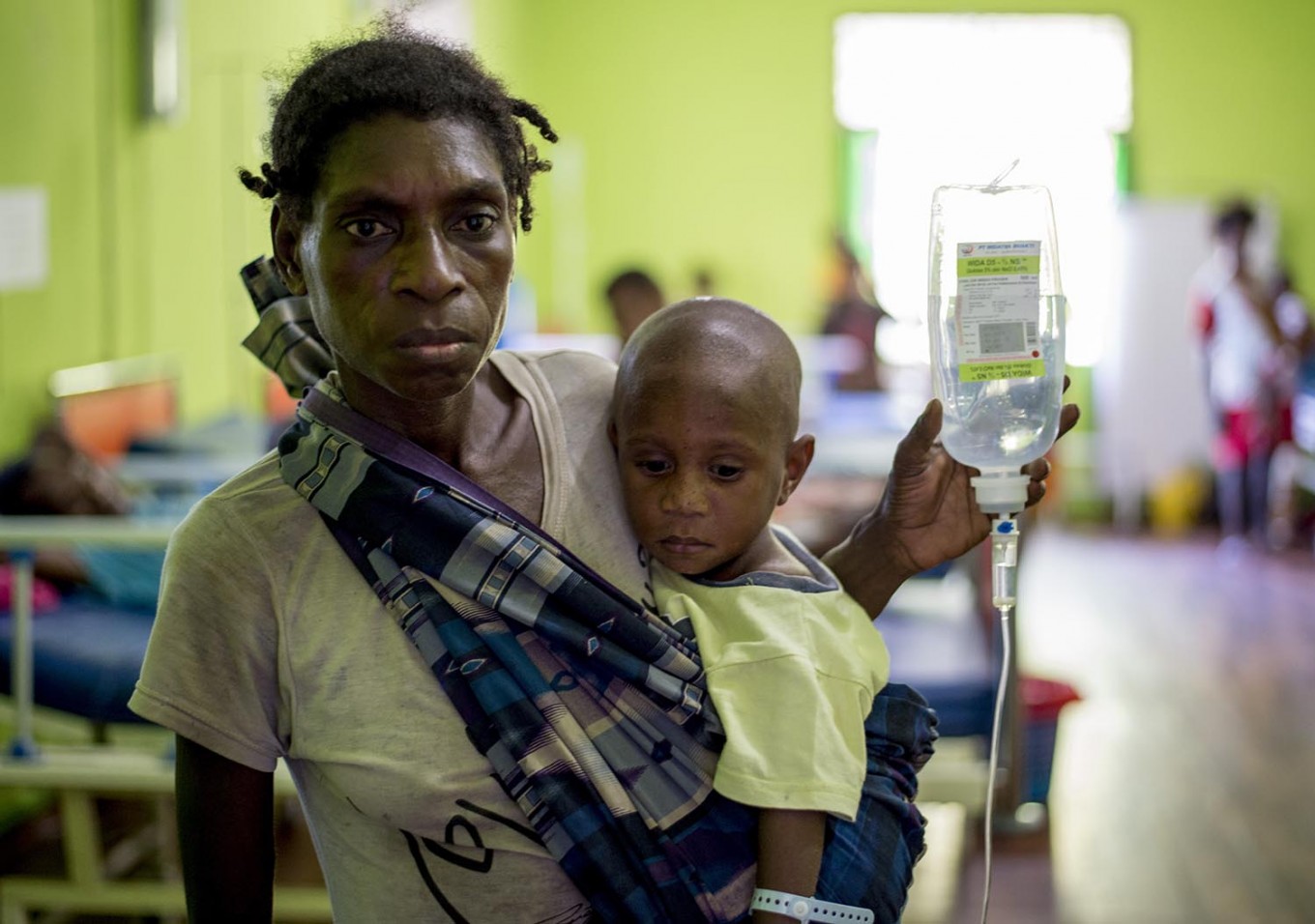 A Papuan woman carrying a drip looks on with her child on Jan. 25, 2018, at a local hospital handling measles and malnutrition patients in Agats, Asmat regency, South Papua. Around 800 children were sickened by a measles-and-malnutrition outbreak in South Papua at the time. AFP/ Bay Ismoyo (AFP/Bay Ismoyo)
E
very time we observe Kartini Day, special messages reanimate this historic figure. Kartini left behind a framework of thinking that views the oppression of women as inextricably tied to larger power structures: patriarchal culture, colonialism, feudalism and systemic inequality. This framework remains vital today when we direct it toward the lived reality of Papuan women.
The situation in Papua is more complex than it was in Kartini’s era over a century ago. Women in Papua bear a triple burden: navigating a deeply patriarchal society, being Papuan in a nation that has historically marginalized the periphery and living in a region defined by decades of armed conflict. This is a violent intersection of gender, ethnicity and geopolitics.
The impact of the Food Estate Project in Papua has become a nightmare for indigenous women. A Centre for Strategic and International Studies (CSIS) Indonesia study found that, under traditional conditions, there was once a "healthy" division of labor; men earned income through hunting, while women managed the gardens.
With the disappearance of their land, Papuan men have been left unemployed. Consequently, the entire burden of daily survival has fallen upon women. Furthermore, when men receive "compensation" for their land, they often spend it on alcohol, a trend that fuels domestic violence, leaving women as the primary victims.
The psychological impact of these projects extends into the most private spheres. The forest is a space of intimacy; with its loss, couples find it difficult to express sexual desire. This frequently triggers household conflict, and once more, women bear the consequences of this environmental and social displacement.
How, then, can Papuan women break free from this structural oppression? One answer lies in education. True education is a strategy of empowerment and a means of liberation.

Ironically, in Papua, female education remains in a state of crisis. School dropout rates in the interior regions are among the highest in Indonesia. While Special Autonomy funding is abundant, it suffers from a lack of transparency and accountability. Security also remains a barrier; in conflict zones, teachers often flee for their safety, as the state provides no security guarantees.