The Jakarta Post
Please Update your browser
Your browser is out of date, and may not be compatible with our website. A list of the most popular web browsers can be found below.
Just click on the icons to get to the download page.


Popular Reads
Top Results
No results found. Please check your search term and try again
Can't find what you're looking for?
View all search results
Popular Reads
Top Results
No results found. Please check your search term and try again
Can't find what you're looking for?
View all search resultsThe coming food crisis will not look like the last one
Today’s risk begins upstream in global energy markets and flows through fertilizer production into the agricultural system, affecting not only current prices but also future harvests.
Change text size
Gift Premium Articles
to Anyone
Share the best of The Jakarta Post with friends, family, or colleagues. As a subscriber, you can gift 3 to 5 articles each month that anyone can read—no subscription needed!
 Set as preferred source
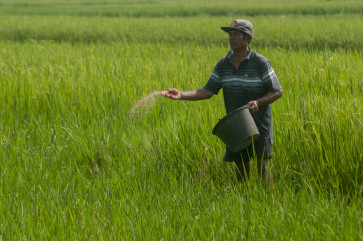
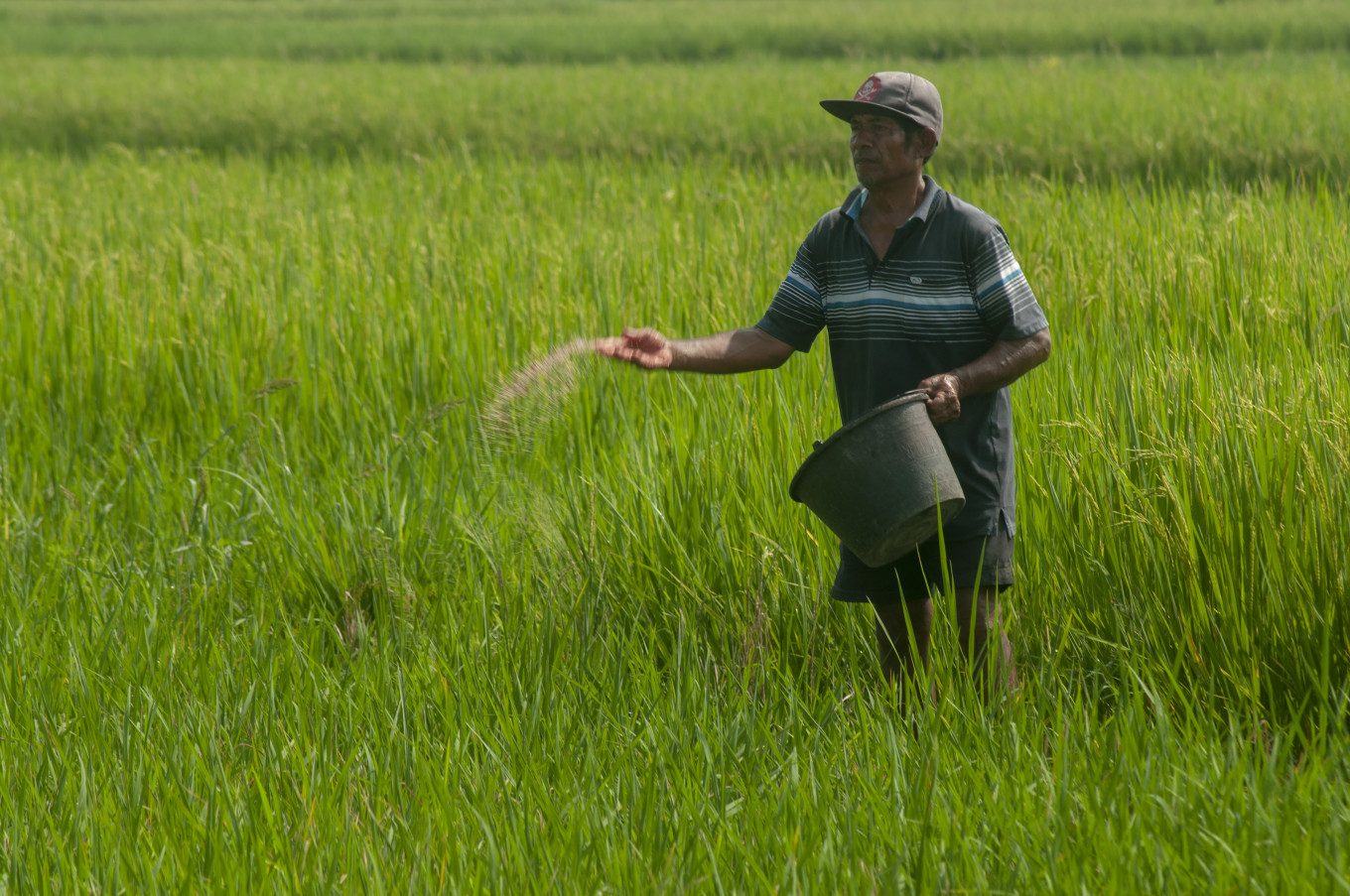 A farmer applies dry fertilizer on a paddy field in Sawit, Boyolali, Central Java, on March 1, 2024. (Antara/Aloysius Jarot Nugroho)
I
n a recent analysis in the Financial Times, Adam Hanieh from SOAS University of London warned the world may be heading toward another food crisis, but this time, it may not begin with empty fields or failed harvests.
In past crises, food shortages were visible. Today’s risk is less visible but potentially more dangerous. It begins upstream in global energy markets and flows through fertilizer production into the agricultural system, affecting not only current prices but also future harvests.
Fertilizer has become the most critical bottleneck in the global food system. Its production depends heavily on natural gas, making it highly sensitive to geopolitical shocks. When gas supply is disrupted or prices spike, fertilizer production contracts. Farmers respond by reducing application, yields decline and the effects ripple across the food system with a lag.
This means today’s real impact may only emerge months later, when harvests fall short and markets tighten.
There is, however, an important nuance. Recent analysis by Arita and Glauber at the International Food Policy Research Institute suggests that the conditions for a full-blown global food price spike are not yet in place. Grain markets remain relatively stable, stocks are still adequate and demand pressures are not as strong as in previous crises. What we are seeing instead is a divergence between input markets and food markets.
Fertilizer and energy prices are rising sharply, while grain prices remain relatively flat. This creates a dangerous asymmetry. If fertilizer remains expensive or scarce for an extended period, the consequences will appear in the next planting cycle. Lower fertilizer application today means lower yields tomorrow. And when that coincides with other shocks, the system can tip very quickly.

This is where climate risk becomes critical. The probability of an El Niño event developing in 2026 is increasing. Historically, El Niño has had significant impacts on agricultural production, including in Southeast Asia. Its effects are uneven, but for key staples such as rice, the risks are real.