TheJakartaPost
Please Update your browser
Your browser is out of date, and may not be compatible with our website. A list of the most popular web browsers can be found below.
Just click on the icons to get to the download page.


Popular Reads
Top Results
No results found. Please check your search term and try again
Can't find what you're looking for?
View all search results
Popular Reads
Top Results
No results found. Please check your search term and try again
Can't find what you're looking for?
View all search resultsThe net-zero fantasy: Renewables alone won't save Indonesia
Indonesia’s path to a net-zero society is being choked by more than just carbon emissions; it is drowning in a sea of plastic and a lack of local infrastructure. While President Prabowo pivots toward renewables, true sustainability will remain a fantasy until the political will at the top translates into accountability for the polluters on the ground.
Change text size
Gift Premium Articles
to Anyone
Share the best of The Jakarta Post with friends, family, or colleagues. As a subscriber, you can gift 3 to 5 articles each month that anyone can read—no subscription needed!
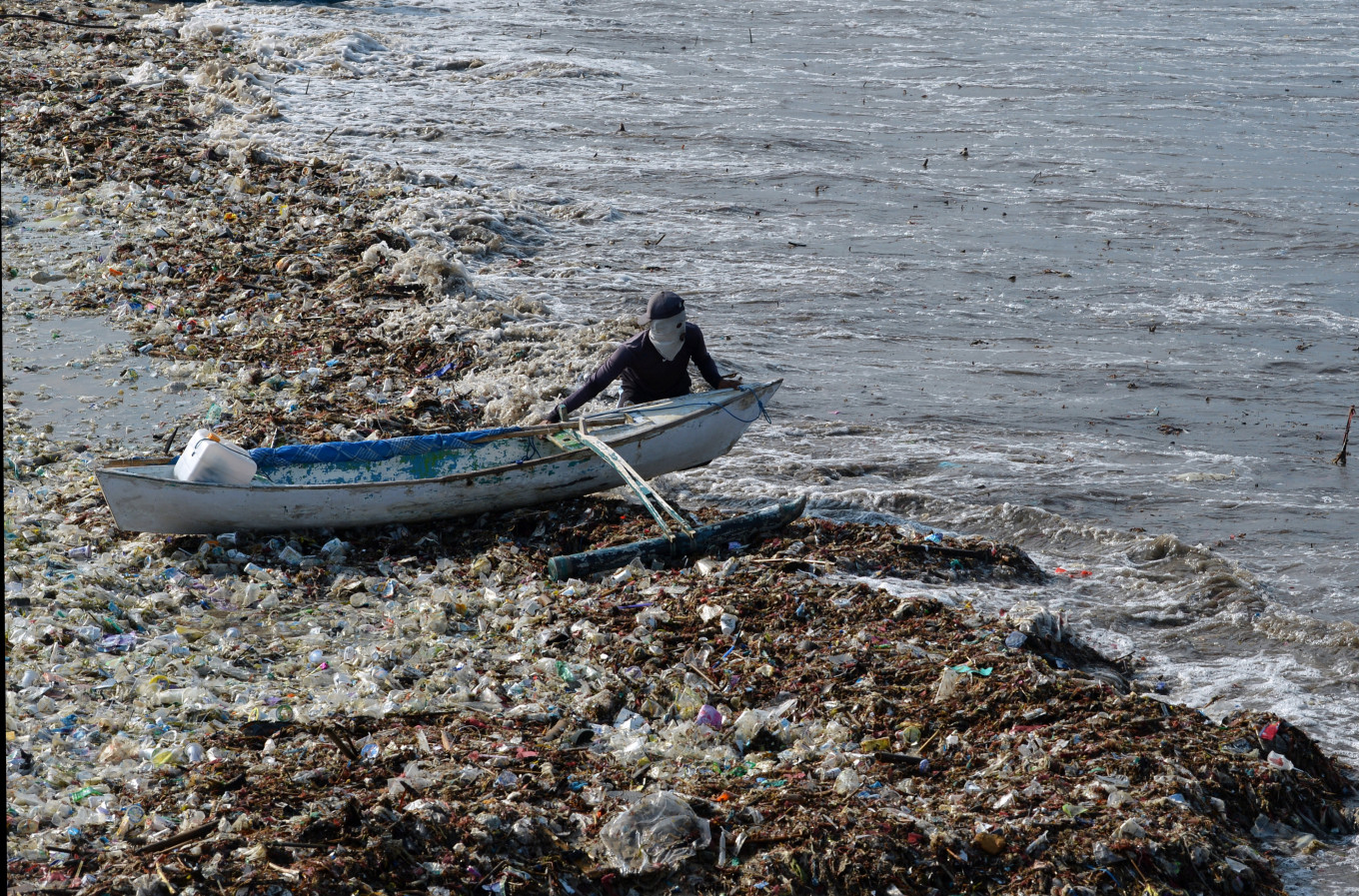 A fisherman pulls his boat out to the sea on March 20, 2024, across waste that covers much of Kedonganan Beach in Badung, Bali. Kedonganan is one of Bali’s worst polluted beaches with plastic materials. (Antara/Fikri Yusuf)
C
an Indonesia win the challenge of transitioning toward a low-carbon economy and pave the way to the ultimate goal: a net-zero society? How far is the country from realizing this ambitious but essential objective?
Answering these questions is not easy. However, there is a key determinant we must consider when assessing the feasibility of this shift—what climate jargon calls a “Just Transition”. This is a shift where every citizen is supported through the difficult trade-offs a net-zero society demands.
The core of this issue is simple to understand: it is the sheer political will found at the highest levels of power in Indonesia—the Merdeka Palace.
A few weeks ago, I was in Bali during the peak of the heightened geopolitical tensions between the United States, Israel and Iran. At the time, I read that President Prabowo Subianto had found a renewed interest in alternative energy sources, even asking national universities to develop a new blueprint for reducing Indonesia’s oil dependency. “Better late than never,” I thought, though I remained skeptical of this sudden pivot toward renewables.
My skepticism stemmed from a firsthand look at how deeply addicted to fossil fuels Bali has become. I saw how local lives are impacted by the heavy use of polluting two-wheelers across the island. In Nusa Lembongan, a serene island near Bali, locals have become entirely dependent on scooters for even the shortest journeys. Even tourists are trapped in this dependency, often riding when a short stroll would suffice.
But it was not just the scooters that were upsetting. What truly bothered me was how the ocean was vomiting plastic debris of all kinds onto the pristine beaches. It was a tragedy, and I was shocked to see many locals shrugging off the issue as an inevitable reality beyond their control. While the scale of the plastic crisis is indeed staggering, I did not expect such resignation.

Curious to learn more, I approached the Center for International Development at Warmadewa University in Denpasar. I was encouraged to find a team deeply concerned about Bali’s sustainability; their work is vital because parts of the island are at a breaking point. Recently, the center partnered with a coalition of groups to organize a program on pedestrian advocacy. These efforts, though small, deserve their own dedicated space in a future column.