The Jakarta Post
Please Update your browser
Your browser is out of date, and may not be compatible with our website. A list of the most popular web browsers can be found below.
Just click on the icons to get to the download page.


Popular Reads
Top Results
No results found. Please check your search term and try again
Can't find what you're looking for?
View all search results
Popular Reads
Top Results
No results found. Please check your search term and try again
Can't find what you're looking for?
View all search resultsAnalysis: Fiscal stability at risk amid rising energy costs
Change text size
Gift Premium Articles
to Anyone
Share the best of The Jakarta Post with friends, family, or colleagues. As a subscriber, you can gift 3 to 5 articles each month that anyone can read—no subscription needed!
 Set as preferred source
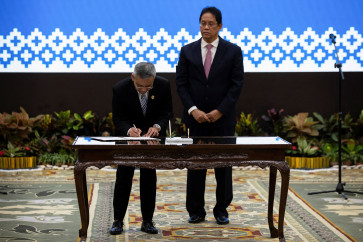
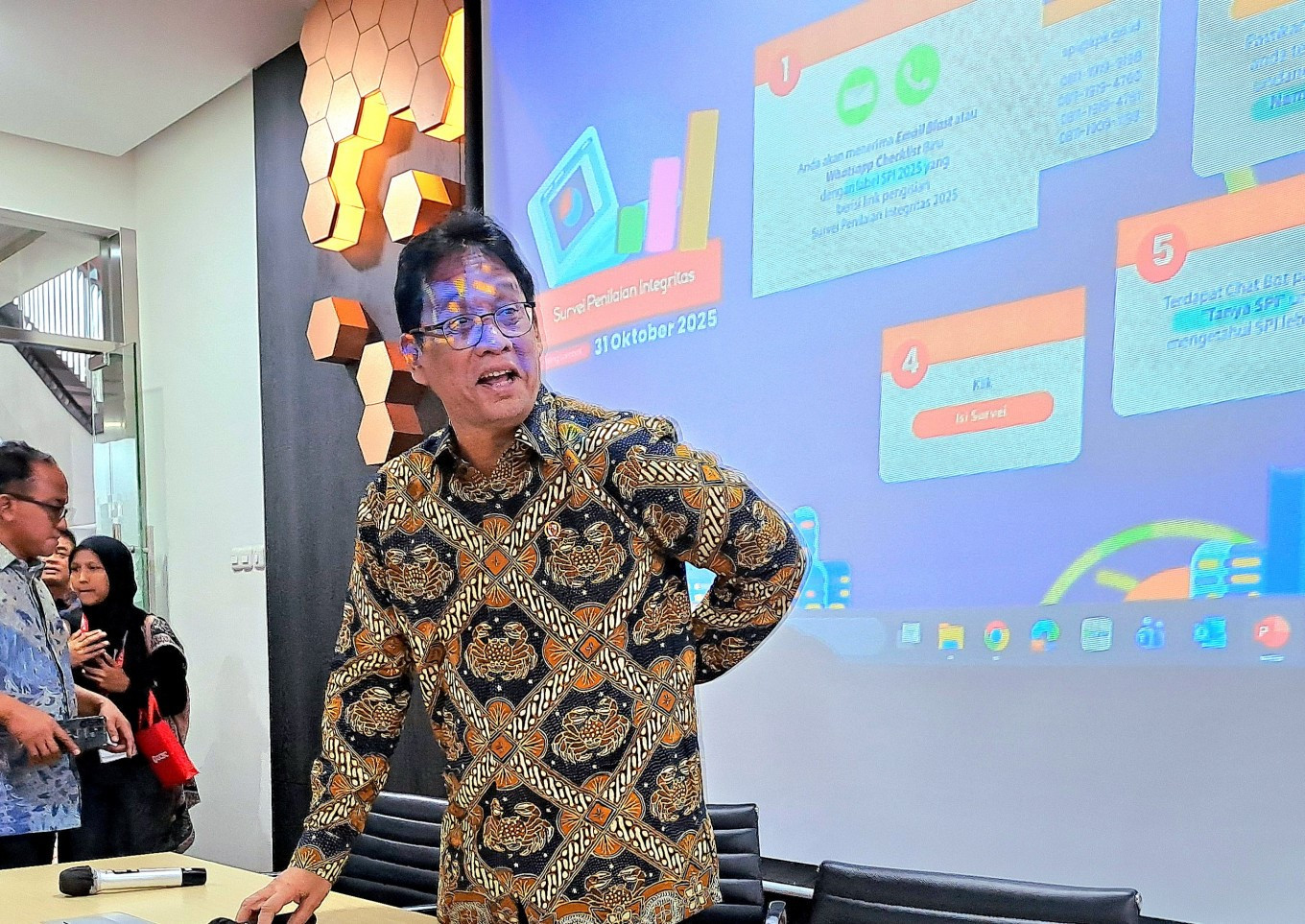 Finance Minister Purbaya Yudhi Sadewa stands at the front of the press room before he provides a briefing to the press on Oct. 24, 2025, at the Finance Ministry in Central Jakarta. (JP/Deni Ghifari)
I
ndonesia’s fiscal position is coming under increasing pressure as global energy prices rise. Early fiscal data already signals strain, with the budget deficit reaching 0.93 percent of gross domestic product - about a third of the 3 percent ceiling - within the first three months of the year. The abrupt reshuffle of key budget officials at the Finance Ministry has further added uncertainty at a time when policy consistency is crucial.
Despite mounting risks, policy responses remain limited. Rather than introducing comprehensive fiscal reforms, recent actions have centered on personnel changes within the ministry. Finance Minister Purbaya Yudhi Sadewa in late April removed Luky Alfirman as director general of budget and Febrio Kacaribu as director general of economic and fiscal strategy, with replacements yet to be announced.
The move has unsettled the market, particularly as Luky had held the position for only a year after succeeding Isa Rachmatarwata, who was dismissed and later jailed for 1.5 years in January 2026 over a corruption case linked to PT Asuransi Jiwasraya during his earlier tenure in government. The sudden removals have fueled speculation over the government’s fiscal direction.
Indonesia’s fiscal outlook has already been under scrutiny. Moody’s recently revised its outlook to negative, citing policy uncertainty and mounting fiscal pressure. S&P Global Ratings has also warned that risks could intensify if interest payments exceed 15 percent of government revenue over the long term - a threshold that signals rising debt vulnerability. Such pressures could trigger broader macroeconomic consequences, including capital outflows and exchange rate depreciation.
Despite these concerns, S&P has maintained a stable outlook, noting that fiscal indicators remain broadly within target. The government has also projected a full-year deficit of around 2.8-2.9 percent of GDP, signaling confidence in maintaining fiscal discipline. S&P has identified Indonesia as one of the Southeast Asian economies most vulnerable to external shocks from rising energy prices.
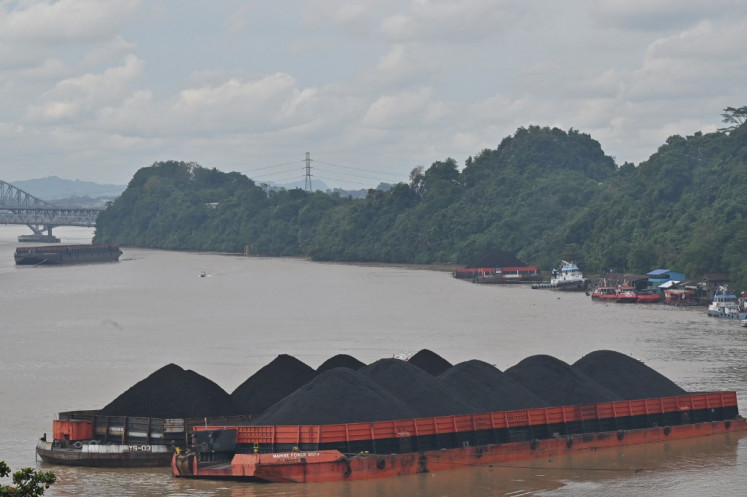
To mitigate these pressures, the government has sought to contain spending by allocating Rp 81 trillion (US$4.8 billion) in budget savings, based on an assumed oil price of around $70 per barrel. Yet this assumption may prove optimistic. Energy subsidies, which reached Rp 281 trillion last year (including fertilizer subsidies), are likely to rise further as oil prices increase. Crude oil prices are currently hovering around $100 per barrel, driven by the US-Iran conflict. Maintaining such subsidies could significantly strain fiscal space over time.

At the same time, reducing subsidies remains politically difficult, as they directly affect public welfare and President Prabowo Subianto’s approval ratings. Instead, the government has raised prices for nonsubsidized fuels such as Pertamax Turbo, Dexlite and Pertamina Dex by up to 60 percent, while increasing prices for non-subsidized liquefied petroleum gas (5.5 kilograms and 12 kg) by 19 percent.