TheJakartaPost
Please Update your browser
Your browser is out of date, and may not be compatible with our website. A list of the most popular web browsers can be found below.
Just click on the icons to get to the download page.


Popular Reads
Top Results
No results found. Please check your search term and try again
Can't find what you're looking for?
View all search results
Popular Reads
Top Results
No results found. Please check your search term and try again
Can't find what you're looking for?
View all search resultsThe Hormuz naval blockade and strategic implications for Indonesia
As Mideast tensions reignite the threat of naval blockades, Indonesia’s control over global maritime choke points is no longer just a geographical fact; it is a strategic liability pointing to a need for Jakarta to move beyond diplomatic partnerships toward a unified, modernized maritime command.
Change text size
Gift Premium Articles
to Anyone
Share the best of The Jakarta Post with friends, family, or colleagues. As a subscriber, you can gift 3 to 5 articles each month that anyone can read—no subscription needed!
 Set as preferred source
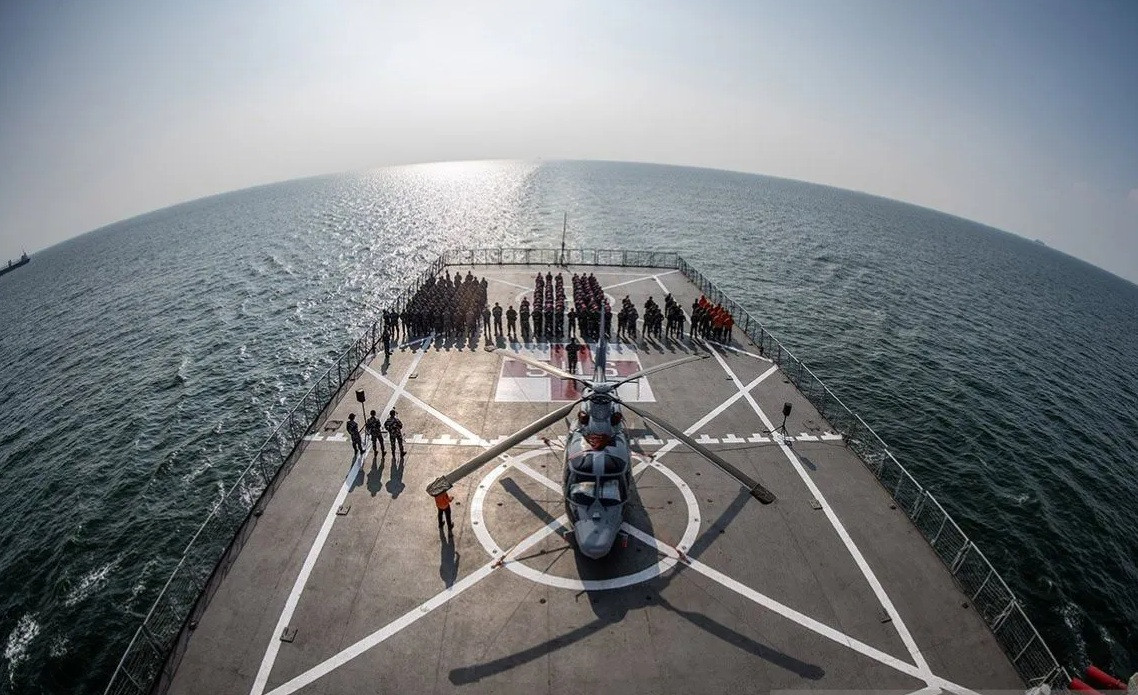 Indonesian Navy personnel stand on deck aboard hospital ship KRI dr. Soeharso on Dec. 3, 2025, during a disaster drill in the waters of Riau province near the Strait of Malacca. (Antara/Bayu Pratama)
T
he United States’ enforcement of a naval blockade on April 13, restricting all maritime traffic entering or departing Iranian ports, marks a significant escalation in the effort to pressure Tehran amid the widening conflict in the Persian Gulf and the Strait of Hormuz. This maneuver has sparked global alarm regarding maritime security, specifically the precedent it sets for the use of blockades in vital international waterways.
While Iran remains the primary target, early strategic assessments suggest the blockade has struggled to achieve its primary objective. Reports indicate the Iranian economy possesses enough diversified internal trade and regional land-based connectivity to withstand the initial impacts, raising questions about the long-term efficacy of such naval interventions.
Beyond the immediate geopolitical friction, the US blockade poses a severe risk to an already fragile global shipping industry. By disrupting established routes, its enforcement aggravates ripple effects that permeate the global economy, specifically in the energy sector.
This does not merely affect the target nation; it also creates significant friction for the commercial fleets of American allies and trade partners. Experts argue that even a partial blockade in these waters creates logistical bottlenecks that trap massive volumes of Gulf energy supplies, thereby exacerbating energy shortages and driving up shipping insurance premiums worldwide.
This shift toward naval blockades as a tool of modern statecraft carries profound implications for the Indo-Pacific. Maritime observers have long warned of a similar "choke point crisis" in the Straits of Malacca and Singapore (SOMS), should a major regional war break out.
This vulnerability is not a new realization. As early as 2003, then-Chinese president Hu Jintao introduced the "Malacca dilemma": This term highlights Beijing’s acute awareness that its economic survival depends on a narrow corridor of water that could be easily closed by a superior naval power, effectively severing its energy supply lines.

For Jakarta, these concerns are not merely theoretical; they are existential. As the world’s largest archipelagic state, Indonesia’s geography is its greatest asset and its most significant vulnerability. A naval blockade in Southeast Asian waters is economically untenable for the country.