The Jakarta Post
Please Update your browser
Your browser is out of date, and may not be compatible with our website. A list of the most popular web browsers can be found below.
Just click on the icons to get to the download page.


Popular Reads
Top Results
No results found. Please check your search term and try again
Can't find what you're looking for?
View all search results
Popular Reads
Top Results
No results found. Please check your search term and try again
Can't find what you're looking for?
View all search resultsAnalysis: Overflight dilemma: Between sovereignty and security
Change text size
Gift Premium Articles
to Anyone
Share the best of The Jakarta Post with friends, family, or colleagues. As a subscriber, you can gift 3 to 5 articles each month that anyone can read—no subscription needed!
 Set as preferred source
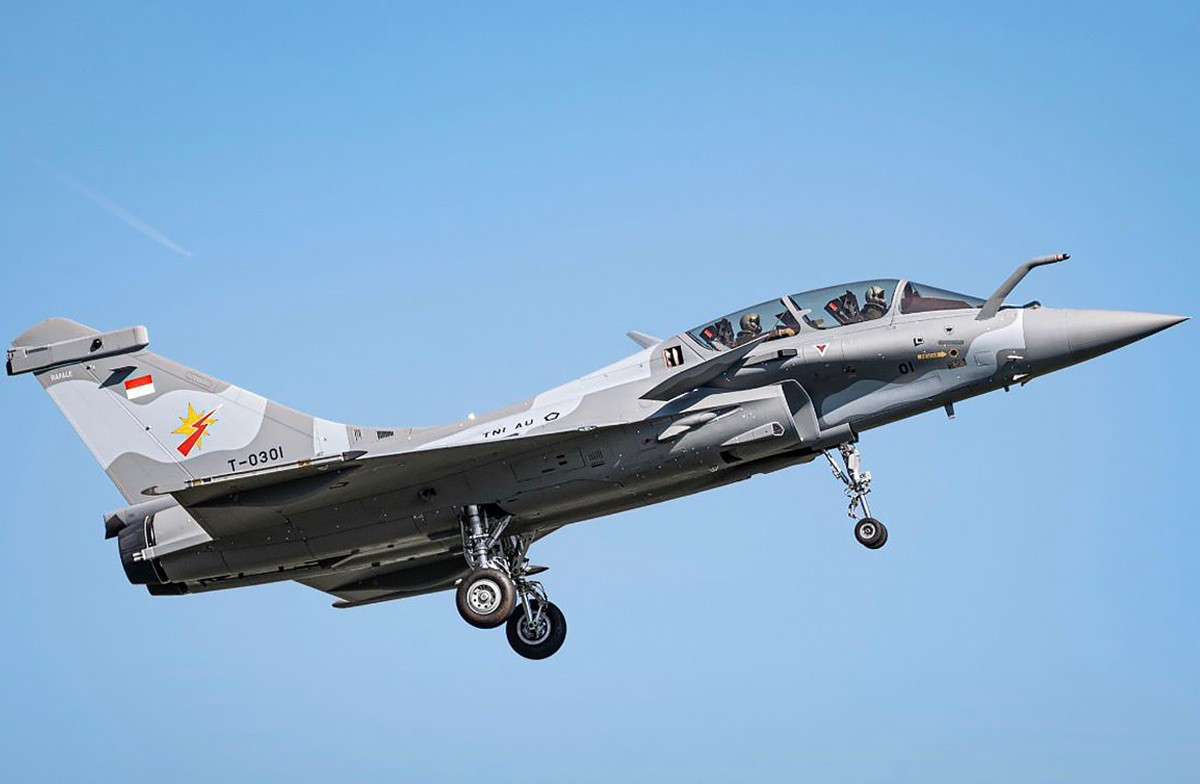 The first flight of the Indonesian Air Force’s Rafale B, registration number T-0301, took place in Mérignac, Bordeaux, France, on Saturday, Sep. 19, 2025. (Courtesy of the Indonesian Air Force)
I
ndonesia is facing mounting scrutiny over a United States proposal to introduce a notification-based overflight arrangement. As policymakers weigh strategic cooperation against legal consistency and long-standing non-alignment, the decision may ultimately redefine Indonesia’s position within an increasingly contested Indo-Pacific security landscape.
The Defense Ministry has confirmed the existence of a draft letter of intent (LoI) proposed by the US Department of Defense dated Feb. 26, titled “Operationalizing U.S. Overflight.” This non-binding document outlines a blanket overflight scheme, proposing that both countries transition from a case-by-case approval system toward a notification-based mechanism. Such a shift would significantly reduce procedural barriers to US military mobility.
This development has drawn widespread attention since Defense Minister Sjafrie Sjamsoeddin and US Secretary of Defense Pete Hegseth announced the Major Defense Cooperation Partnership (MDCP) at the Pentagon on April 13. The agreement rests on three pillars: military organization and capacity building, professional military education and training, and operational cooperation.
Consequently, media and public scrutiny have continued to intensify. The issue is particularly sensitive as it coincides with the implementation of a new legal regime, Law No. 21/2025 on National Airspace Management (UU PRUN), which came into force in December 2025. The law explicitly affirms that Indonesia’s airspace falls under the country’s full and exclusive sovereignty.
This overlap between a strengthened legal assertion of sovereignty and a proposal to ease foreign military access creates a structural policy tension that may test the consistency of Indonesia’s regulatory framework.
A number of analysts have warned that granting blanket overflight clearance to the US risks undermining Indonesia’s legal sovereignty, contradicting the UU PRUN and weakening national control. Such a policy could erode Indonesia’s geopolitical neutrality and expose the country to broader strategic risks. As such, they argue, the proposal should either be rejected or, at minimum, strictly limited with robust regulatory safeguards. Beyond legal contradictions, the proposal raises concerns about a gradual shift in Indonesia’s long-standing “free and active” foreign policy toward implicit strategic alignment.

Domestically, competing views have emerged among stakeholders. House of Representatives Commission I has emphasized that any decision to grant comprehensive overflight access must undergo a parliamentary ratification process. Meanwhile, the Foreign Ministry has urged the Defense Ministry to adopt policies that do not carry adverse implications for regional stability. These differing positions highlight an institutional divide between defense-driven pragmatism and diplomatic risk sensitivity, potentially complicating policy coherence.