TheJakartaPost
Please Update your browser
Your browser is out of date, and may not be compatible with our website. A list of the most popular web browsers can be found below.
Just click on the icons to get to the download page.


Popular Reads
Top Results
No results found. Please check your search term and try again
Can't find what you're looking for?
View all search results
Popular Reads
Top Results
No results found. Please check your search term and try again
Can't find what you're looking for?
View all search resultsOfficial Statistics 4.0: Restoring trust amid the data flood
In an era defined by an overwhelming surge of data, the central challenge is no longer scarcity, but meaning. Governments today are surrounded by an ever-expanding volume of information generated from surveys, administrative systems and digital footprints.
Change text size
Gift Premium Articles
to Anyone
Share the best of The Jakarta Post with friends, family, or colleagues. As a subscriber, you can gift 3 to 5 articles each month that anyone can read—no subscription needed!
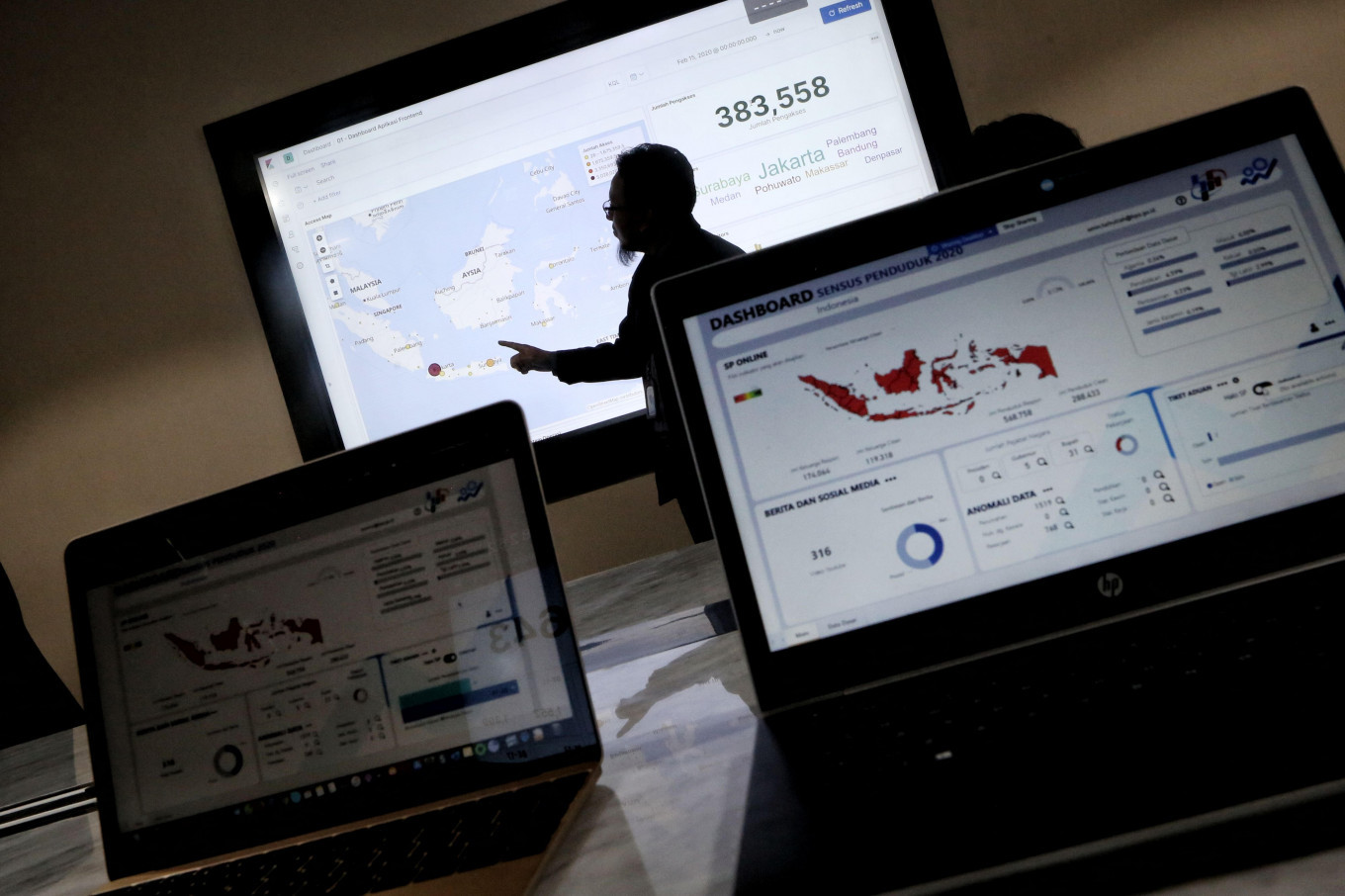 Statistics Indonesia (BPS) staff compile data at the 2020 population census call center in Jakarta, on Feb. 17, 2020 .The population census, which occurs every 10 years, aims to update the country’s demographics, which are crucial in supporting policy interventions and combine door-to-door interviews and data gathering and online submission. (JP/Seto Wardhana)
I
n an era defined by an overwhelming surge of data, the central challenge is no longer scarcity, but meaning. Governments today are surrounded by an ever-expanding volume of information generated from surveys, administrative systems and digital footprints. Yet the critical question remains: Can this abundance be translated into knowledge that informs policy and builds public trust?
For Indonesia, this question is particularly relevant as the nation stands at a pivotal moment in its data transformation journey.
The emergence of big data and rapid digitalization has created an opportunity to rethink the role of official statistics. No longer confined to retrospective measurement, statistics are increasingly expected to support timely, inclusive and forward-looking policymaking.
Within this context, the concept of Official Statistics 4.0 offers a compelling vision. It represents more than a technological upgrade; it is a fundamental shift in how data is collected, integrated, interpreted and communicated.
Indonesia’s statistical system has long been anchored in methodological rigor. Carefully designed surveys, large-scale censuses and robust validation processes have ensured that official statistics maintain high standards of accuracy and reliability.
While these qualities remain essential, the speed and complexity of today’s socioeconomic changes demand more. Policymakers require data that is not only accurate but also flexible and relevant to rapidly evolving conditions.

Digital transformation has dramatically broadened the scope of available data. Beyond traditional instruments, valuable information now flows from administrative databases, financial transactions, mobility patterns and digital interactions. These sources enable more granular, real-time insights. When integrated effectively, they complement traditional statistical methods and enrich the overall analytical landscape.