TheJakartaPost
Please Update your browser
Your browser is out of date, and may not be compatible with our website. A list of the most popular web browsers can be found below.
Just click on the icons to get to the download page.


Popular Reads
Top Results
No results found. Please check your search term and try again
Can't find what you're looking for?
View all search results
Popular Reads
Top Results
No results found. Please check your search term and try again
Can't find what you're looking for?
View all search resultsQuestions on COVID-19 that are unsatisfactorily answered
Six years after the outbreak, the world has moved on, yet the most critical questions surrounding the COVID-19 pandemic remain shrouded in mystery. From lab-leak theories to the ethics of draconian lockdowns, this inquiry demands an objective post-mortem to ensure history does not repeat itself.
Change text size
Gift Premium Articles
to Anyone
Share the best of The Jakarta Post with friends, family, or colleagues. As a subscriber, you can gift 3 to 5 articles each month that anyone can read—no subscription needed!
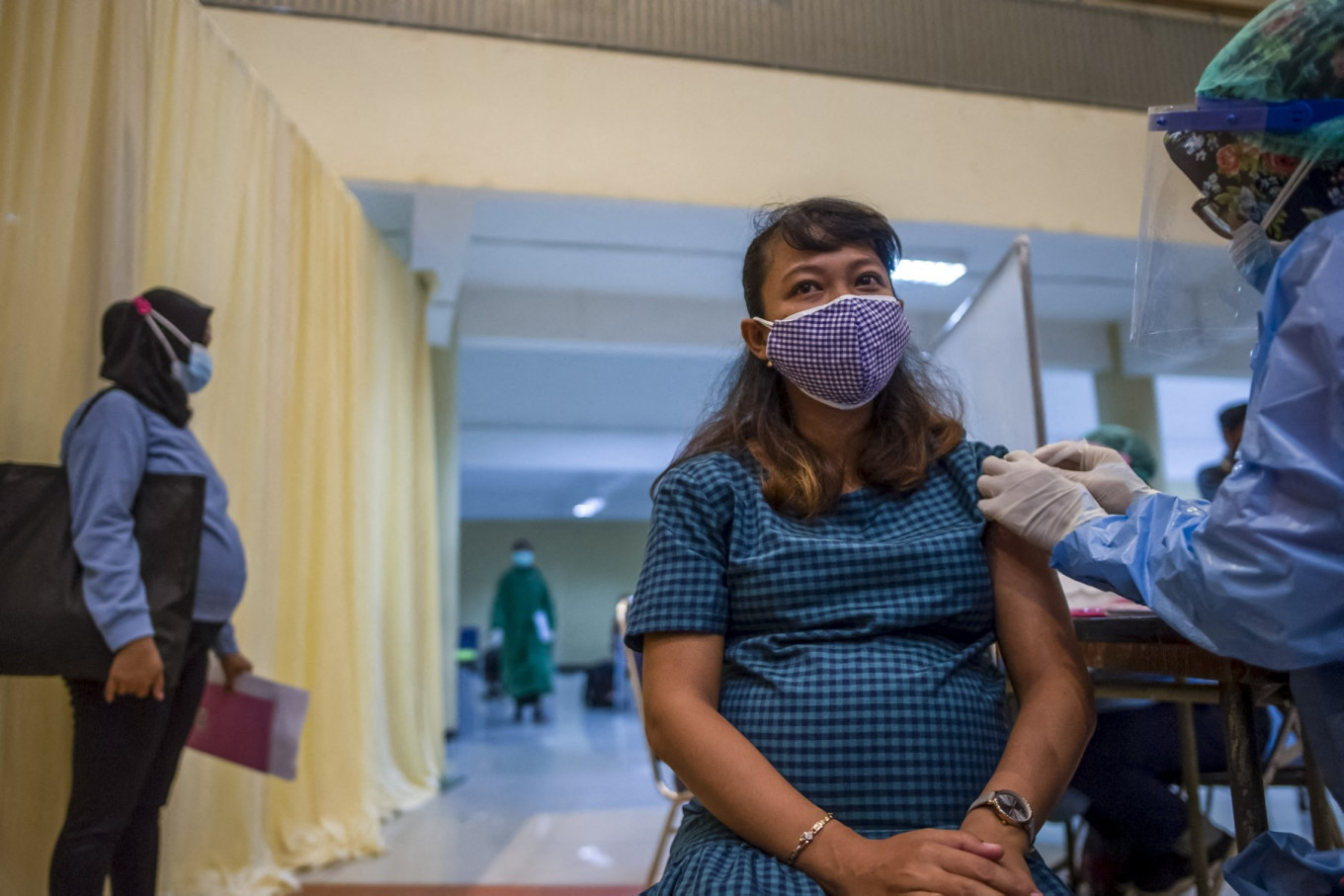 A pregnant woman receives the Sinovac COVID-19 vaccine on Aug. 19, 2021, in Surabaya, East Java, during an accelerated vaccination program including pregnant women. (AFP/Juni Kriswanto)
I
n his book The Life of Reason, philosopher George Santayana cautioned that “those who cannot remember the past are condemned to repeat it.” To this, I would add that we need to move beyond mere remembrance toward an objective analysis of the lessons history is trying to teach us—an analysis rooted in facts, rigorous questioning and objective critique.
For most of us, the most grueling 24-month stretch in recent memory was defined by the outbreak of COVID-19. The virus, classified as a pandemic by the World Health Organization (WHO) on March 11, 2020, remained at its peak for the next two years. It gradually lost its destructive potency through a combination of the passage of time, social isolation and increased immunity—the result of vaccinations, improved diets, exercise, lifestyle choices and the often-underestimated resilience of the human body.
The COVID-19 statistics reported on the ‘Worldometer’ website—which became the go-to source for country-wise data on cases, recoveries and deaths—were last updated on April 13, 2024. By then, approximately 705 million cases and 7 million deaths had been reported. The WHO database currently shows around 7.1 million deaths as of the end of March 2026. This is welcome news, as the spread and lethality of the pandemic have slowed drastically; however, government health agencies must not let their guard down regarding this or any other serious disease.
The bad news, however, is that even six years after the pandemic began, many critical questions have yet to be satisfactorily answered. To forget, to stop flagging concerns, or to adopt an ‘ostrich in the sand’ approach is to foolishly invite a repetition of a painful chapter no one wants to revisit. Let us examine five of the most important questions related to COVID-19 that require debate, investigation, and data-backed answers.
Question 1: What is the truth about the origin of the virus—did it evolve naturally, or was it the result of a synthetic experiment gone wrong?
Six years on, opinions remain divided on the origin of SARS-CoV-2. There is a sizeable body of opinion that the spread was a zoonotic phenomenon—the result of animal-to-human transmission. Yet, a significant number of people remain skeptical of this theory, claiming the virus resulted from man-made bioengineering. With intelligence agencies, government committees and scientific experts expressing conflicting views, are there any collaborative efforts aimed at reaching an evidence-based consensus?

If so, when will these findings be publicized transparently? Surely, the 21st century's greatest human catastrophe requires an understanding that moves beyond conspiracy theories and superpower posturing.