The Jakarta Post
Please Update your browser
Your browser is out of date, and may not be compatible with our website. A list of the most popular web browsers can be found below.
Just click on the icons to get to the download page.


Popular Reads
Top Results
No results found. Please check your search term and try again
Can't find what you're looking for?
View all search results
Popular Reads
Top Results
No results found. Please check your search term and try again
Can't find what you're looking for?
View all search resultsThe international system remains uni-multipolar, with the US at its core
Whether the uni-multipolar system tilts toward stability or confrontation will depend on how the US chooses to wield the immense power it still possesses.
Change text size
Gift Premium Articles
to Anyone
Share the best of The Jakarta Post with friends, family, or colleagues. As a subscriber, you can gift 3 to 5 articles each month that anyone can read—no subscription needed!
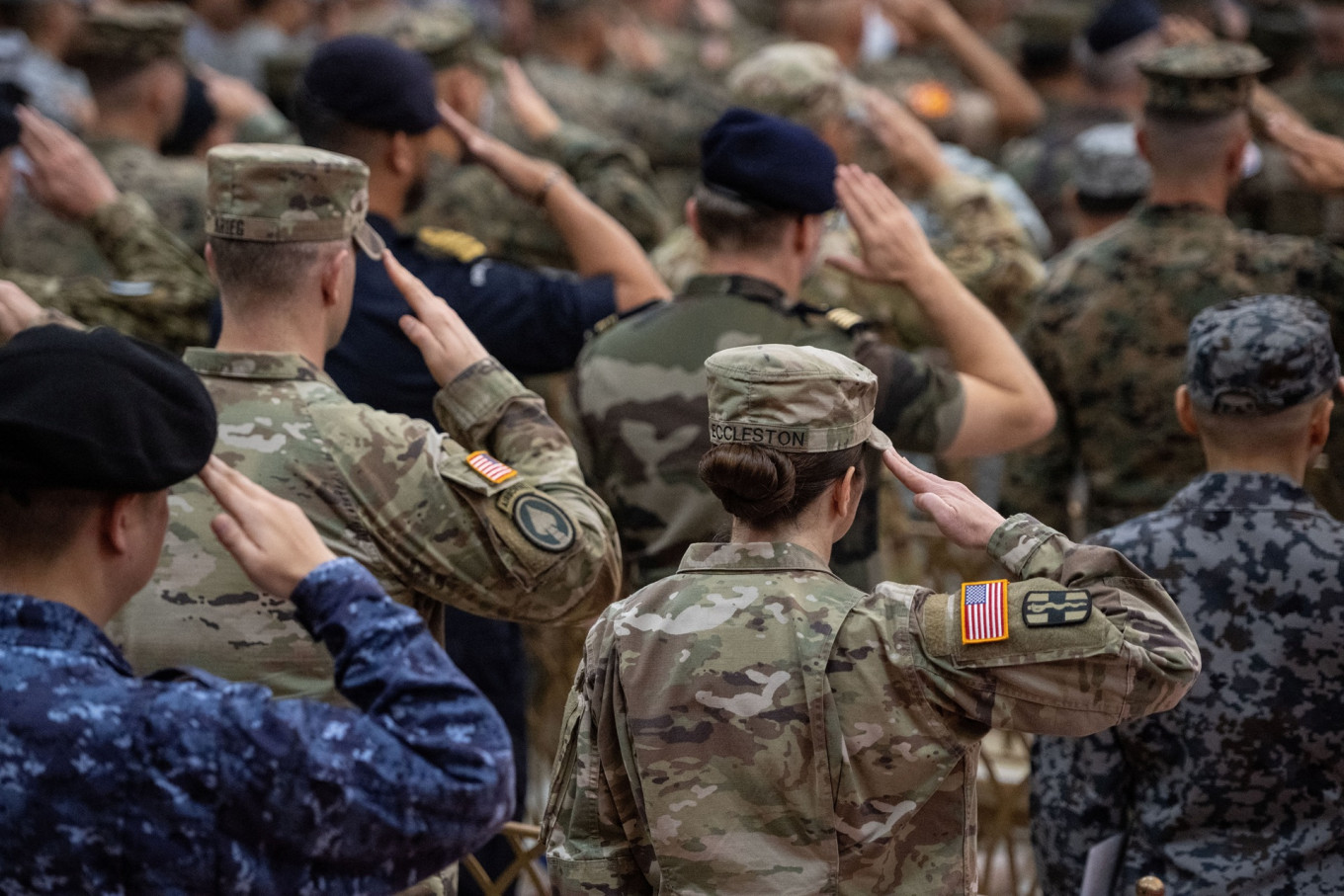 Philippine and United States soldiers salute during the flag ceremony on April 20 at the opening ceremony of the US-Philippines “Balikatan“ joint military exercises at Camp Aguinaldo in Quezon City, Metro Manila, the Philippines. (Reuters/Noel Celis)
T
he contemporary international system is often described as multipolar, reflecting the rise of China, the persistence of Russia and the growing assertiveness of medium sized powers. Yet such a description remains incomplete.
The world today is better understood as uni-multipolar: a system in which multiple centers of power exist, but one state, the United States, continues to dominate in terms of aggregate hard power. This formulation was not coined recently.
As early as 1993, the late Samuel P. Huntington, writing in Foreign Affairs, described the post-Cold War order as neither fully unipolar nor genuinely multipolar.
Instead, he identified it as a hybrid structure—uni-multipolar—where the US stood at the apex, but other major powers retained sufficient capability to influence regional balances.
Crucially, Huntington did not see this system as permanent. He understood it as temporal, contingent upon how the US chose to exercise its power. This insight is more relevant today than ever.
The US still retains unparalleled military capabilities.

Its global network of bases, alliances and expeditionary forces allows it to project power across continents with a speed and scale unmatched by any rival.