The Jakarta Post
Please Update your browser
Your browser is out of date, and may not be compatible with our website. A list of the most popular web browsers can be found below.
Just click on the icons to get to the download page.


Popular Reads
Top Results
No results found. Please check your search term and try again
Can't find what you're looking for?
View all search results
Popular Reads
Top Results
No results found. Please check your search term and try again
Can't find what you're looking for?
View all search resultsAnalysis: Unsubsidized fuel, LPG prices rise as energy crisis persists
Change text size
Gift Premium Articles
to Anyone
Share the best of The Jakarta Post with friends, family, or colleagues. As a subscriber, you can gift 3 to 5 articles each month that anyone can read—no subscription needed!
 Set as preferred source
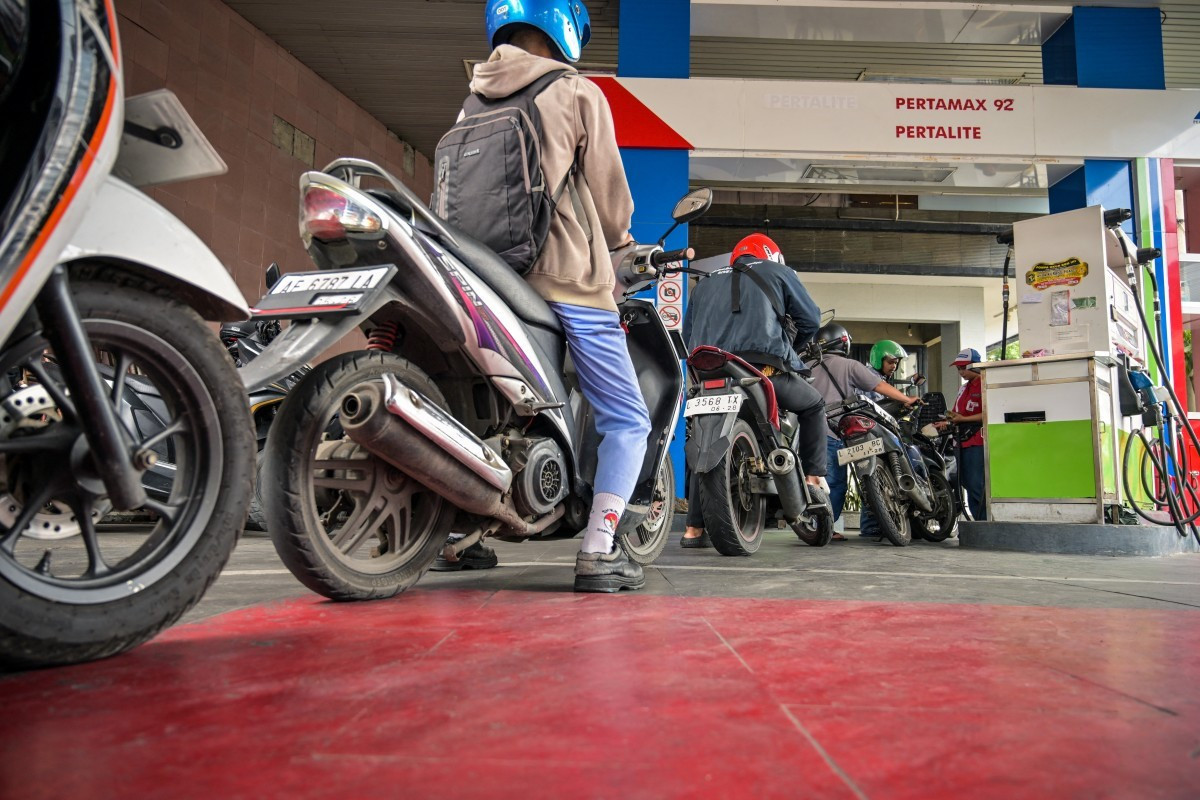 Motorists queue at a petrol station in Surabaya, East Java on March 9, 2026. (AFP/Juni Kriswanto)
P
resident Prabowo Subianto’s administration has begun feeling the pressure of the global energy crisis, with state-owned energy company Pertamina raising prices for several unsubsidized fuel and liquefied petroleum gas (LPG) products. The move appears necessary to protect fiscal stability and Pertamina’s operations amid supply disruptions caused by the United States-Israeli war on Iran.
The US-Iran conflict has driven a sharp increase in global crude oil prices. West Texas Intermediate (WTI) crude futures rose from $67.02 per barrel on Feb. 27 to $112.95 per barrel on April 7. Both benchmarks declined following a ceasefire on April 8, with Brent and WTI falling to $94.75 and $94.41 per barrel, respectively. Meanwhile, according to the Energy and Mineral Resource (ESDM) Ministry, the Indonesia Crude Price (ICP) surged from US$68.79 per barrel in February to $102.26 per barrel in March, reflecting movements in global crude futures. From a pre-war level of $72.48 per barrel on Feb. 27, Brent Crude futures climbed to $118.35 per barrel on March 31.
Accordingly, PT Pertamina Patra Niaga, a subsidiary of state-owned energy company Pertamina, announced on April 18 that it would adjust prices for Pertamax Turbo, Pertamina’s research octane number (RON) 98 gasoline, as well as Dex and Dexlite, Pertamina’s cetane number (CN) 53 and CN 51 diesel products. The price of Pertamax Turbo increased from Rp 13,100 (US 76 cents) per liter to Rp 19,400 per liter. Dex rose from Rp 14,500 per liter to Rp 23,900 per liter, while Dexlite increased from Rp 14,200 per liter to Rp 23,600 per liter.
Pertamina Patra Niaga also raised prices for unsubsidized 12-kilogram LPG cylinders in Java, Bali and West Nusa Tenggara from Rp 192,000 to Rp 228,000 per cylinder, marking the first increase since 2023. Meanwhile, prices for unsubsidized 5.5-kg LPG cylinders in the same regions rose from Rp 90,000 to Rp 107,000 per cylinder. Prices in other regions will be adjusted based on distribution costs.
The ESDM Ministry reiterated the government’s commitment to maintain subsidized fuel prices until the end of 2026. However, it also acknowledged that a second phase of price hikes for other unsubsidized fuel and gas products may be necessary if crude prices remain elevated.
The Finance Ministry stated that maintaining fuel subsidies remains possible through budget reallocations from ministries and agencies, as well as the projected 2.9 percent fiscal deficit. The ministry also noted that the government has Rp 490 trillion in excess budget balances from the previous fiscal year that could serve as a buffer. According to its calculations, these reallocations would be sufficient to sustain fuel subsidies if crude prices average around US$100 per barrel in 2026.

However, that assumption remains risky. The 2026 state budget is based on an average crude oil price of just $70 per barrel, while state-owned Bank Mandiri estimates that every $1 increase in crude prices would add roughly Rp 10.3 trillion in energy subsidy and compensation costs. By comparison, every $1 increase in crude prices would generate only Rp 3.5 trillion in additional tax and royalty revenues. The government’s reluctance to raise subsidized fuel prices also reflects inflation concerns. For instance, every Rp 1 increase in the price of subsidized RON 90 Pertalite could raise inflation by 0.27 percentage points.