TheJakartaPost
Please Update your browser
Your browser is out of date, and may not be compatible with our website. A list of the most popular web browsers can be found below.
Just click on the icons to get to the download page.


Popular Reads
Top Results
No results found. Please check your search term and try again
Can't find what you're looking for?
View all search results
Popular Reads
Top Results
No results found. Please check your search term and try again
Can't find what you're looking for?
View all search resultsTaxing without turmoil
Regional taxes will not be accepted if citizens see local elites living extravagantly, renovating official residences or wasting public money on nonessential spending.
Change text size
Gift Premium Articles
to Anyone
Share the best of The Jakarta Post with friends, family, or colleagues. As a subscriber, you can gift 3 to 5 articles each month that anyone can read—no subscription needed!
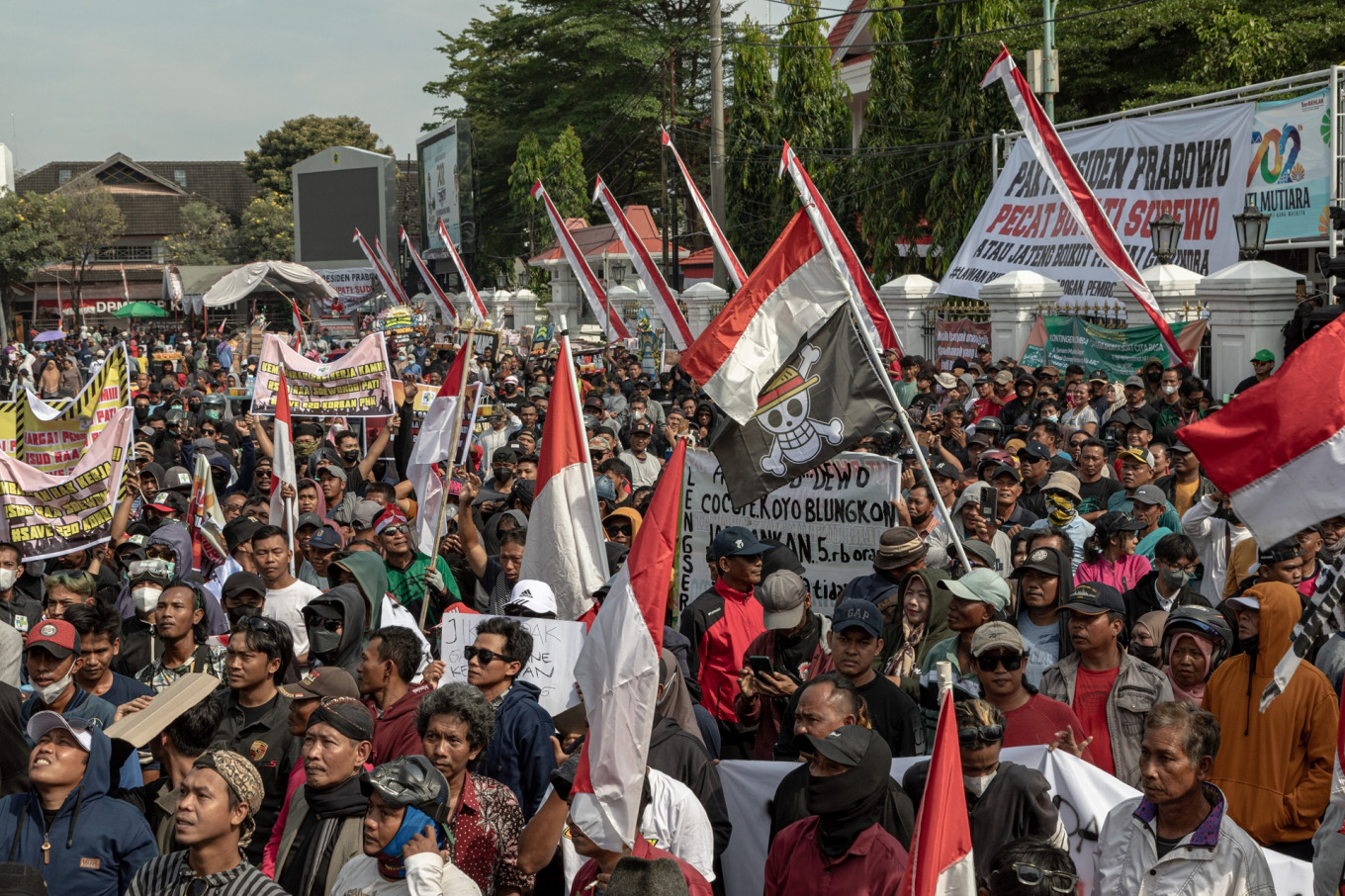 Grassroots groups stage a rally on Aug. 13, 2025 outside Pati Regent Sudewo's office in Central Java, demanding his resignation. (Antara/Aji Styawan)
R
egional leaders across the country are rushing to roll out a new wave of local taxes, from levies on electric vehicles to surface water charges on oil palm plantations, in a bid to shore up their revenue streams. But without careful planning and clear communication, as recent unrest in East Kalimantan and Pati, Central Java, has shown, excessive taxation policies can quickly spark public anger and escalate into social turmoil.
The fiscal anxiety stems from President Prabowo Subianto’s budget strategy, which has sharply reduced regional transfer funds from the central government to regional governments to make room for his flagship programs such as free nutritious meals and the Red and White Cooperatives initiative. Many regions, particularly those with weak local revenue bases and heavy reliance on central government support, are now sounding the alarm. With their budgets squeezed, regional leaders fear they may be unable to deliver on campaign promises or even meet basic obligations such as paying civil servants’ salaries.
In response, the central government has urged regional administrations to be more creative in raising their own-source revenue, including through new local taxes. Law No. 1/2022 on central-regional fiscal relations (HKPD) has laid out the legal boundaries for how far regions can go in expanding their tax base. But despite this framework, local leaders still face major challenges in striking a balance between boosting income and avoiding policies that could scare off investors, choke economic activity and trigger unrest.
Finance Minister Purbaya Yudhi Sadewa has tried to set the tone by saying that the central government will not introduce new levies until economic growth and purchasing power show meaningful improvement, indicated by 6 percent GDP growth. But his remarks also highlight a reality that regional governments are being told to increase revenue at a time when the economy remains fragile.
The tension became clear after the Home Ministry issued Regulation No. 11/2026 in March, prompting concerns that it could weaken EV tax incentives. Governors in Jakarta and West Java signaled their readiness to draft a legal basis for an EV tax, despite the current exemption, sparking protests from many EV owners and electrification proponents.
The Home Ministry later stepped in to draw a line, urging regions to maintain the exemption and align with the central government’s electrification agenda.

Elsewhere, local administrations have floated surface water taxes on oil palm plantations, the backbone of Indonesia’s crude palm oil (CPO) exports. On paper, the policy could boost local revenue while reinforcing environmental accountability. But in practice, such levies risk backfiring if they squeeze producers’ margins and reduce investment appetite.