The Jakarta Post
Please Update your browser
Your browser is out of date, and may not be compatible with our website. A list of the most popular web browsers can be found below.
Just click on the icons to get to the download page.


Popular Reads
Top Results
No results found. Please check your search term and try again
Can't find what you're looking for?
View all search results
Popular Reads
Top Results
No results found. Please check your search term and try again
Can't find what you're looking for?
View all search resultsWhat role does Indonesia want to play in the world?
As Indonesia audits for a global starring role alongside giants like the US and China, its traditional seat as ASEAN's anchor is starting to look like a mere side stage. From transactional energy deals to a pragmatic silence on regional norms, President Prabowo Subianto is redrawing Jakarta’s map, leaving Southeast Asia wondering if its leader has finally outgrown the neighborhood.
Change text size
Gift Premium Articles
to Anyone
Share the best of The Jakarta Post with friends, family, or colleagues. As a subscriber, you can gift 3 to 5 articles each month that anyone can read—no subscription needed!
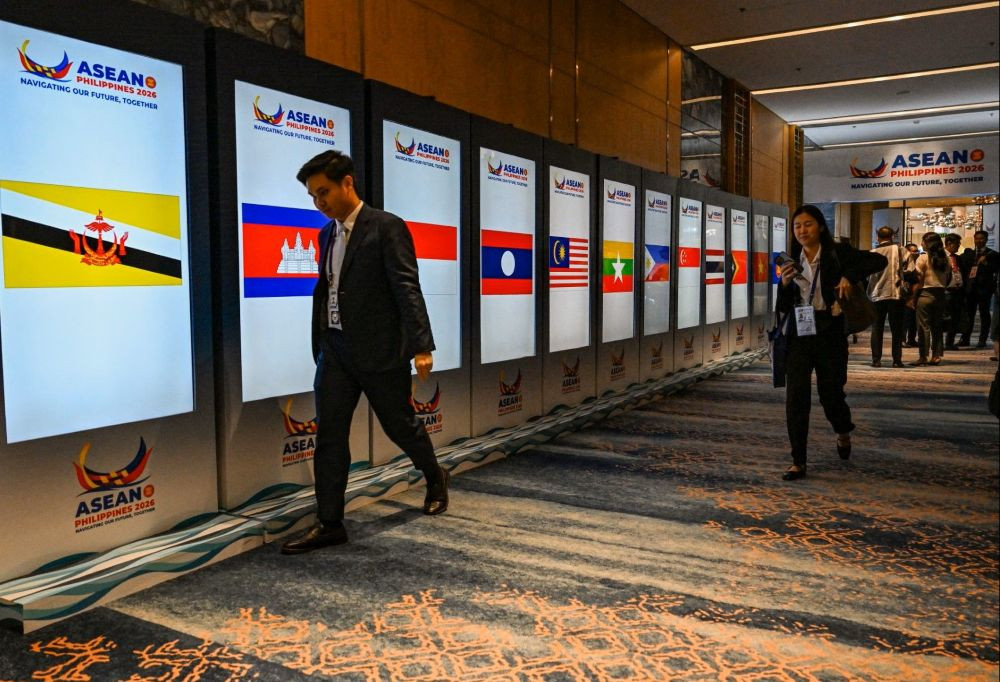 Screens display flags of ASEAN member countries at a hallway at the Nustar Hotel during the ASEAN Foreign Ministers' Retreat in Cebu City, the Philippines, on Jan. 28, 2026. (AFP/Jam Sta. Rosa)
W
ith the ASEAN Summit convening in Cebu, the Philippines, Indonesia faces a simple, stubborn question: does it still want to be ASEAN's default anchor, by sheer weight of population, economy and territory, or does it treat ASEAN as a side stage while it auditions as a global middle power, prancing with Washington, Beijing, Moscow and other giants?
The doubt has surfaced in think-tank corridors from Singapore to Manila, and in unguarded coffee-shop conversations where Southeast Asians say what they really think, even in reserved Brunei. Jakarta increasingly seems more drawn to the drama of great-power deal-making than to the patient, unglamorous work of leading its own region. ASEAN is starting to feel peripheral in its anchor's eyes.
President Prabowo Subianto is not running Indonesia's traditional foreign-policy script, ASEAN-first by instinct, bebas aktif (independent and active) by reflex, carefully choreographed by the diplomatic corps. He is running a pragmatic playbook: blunt, selective, aimed at leverage where it counts. Less time for ASEAN's slow grind; more appetite for the global marquee.
He has the résumé to match: a polyglot who has lived and studied across Asia, Europe and the United States; who reads geopolitics and philosophy; who, before his October 2024 inauguration, had already held more than 80 meetings with officials from almost 40 countries. His international pedigree outstrips that of his foreign minister and arguably anyone in his cabinet. That confidence shows in the method: he will not toe old lines; he will redraw them, away from ASEAN caucuses and communiqués, toward power centers.
Once Jakarta's amplifier, ASEAN now looks like a ceremonial stage: useful for lines about cohesion, less useful for navigating Myanmar's civil war, Thailand-Cambodia friction and the region's other grinding disorders. Past Indonesian presidents treated ASEAN leadership as strategic hygiene. Now, it increasingly looks optional.
The signals have been explicit enough. Foreign Minister Sugiono, elevated from long-time personal assistant to Indonesia's top diplomatic post, skipped the ASEAN Foreign Ministers Meeting in December 2025 to accompany Prabowo to Egypt. He turned up at the BRICS summit in Kazan, Russia, two days after the October 2024 inauguration, yet took nearly a year to visit the ASEAN Secretariat barely 10 kilometers from his office.

Prabowo talks about ASEAN cohesion. Yet, the pattern is strategic absence.