TheJakartaPost
Please Update your browser
Your browser is out of date, and may not be compatible with our website. A list of the most popular web browsers can be found below.
Just click on the icons to get to the download page.


Popular Reads
Top Results
No results found. Please check your search term and try again
Can't find what you're looking for?
View all search results
Popular Reads
Top Results
No results found. Please check your search term and try again
Can't find what you're looking for?
View all search resultsIndonesia’s businesses face a new human rights era
We offer a paradigm shift: from managing conflict to preventing conflict through shared prosperity models.
Change text size
Gift Premium Articles
to Anyone
Share the best of The Jakarta Post with friends, family, or colleagues. As a subscriber, you can gift 3 to 5 articles each month that anyone can read—no subscription needed!
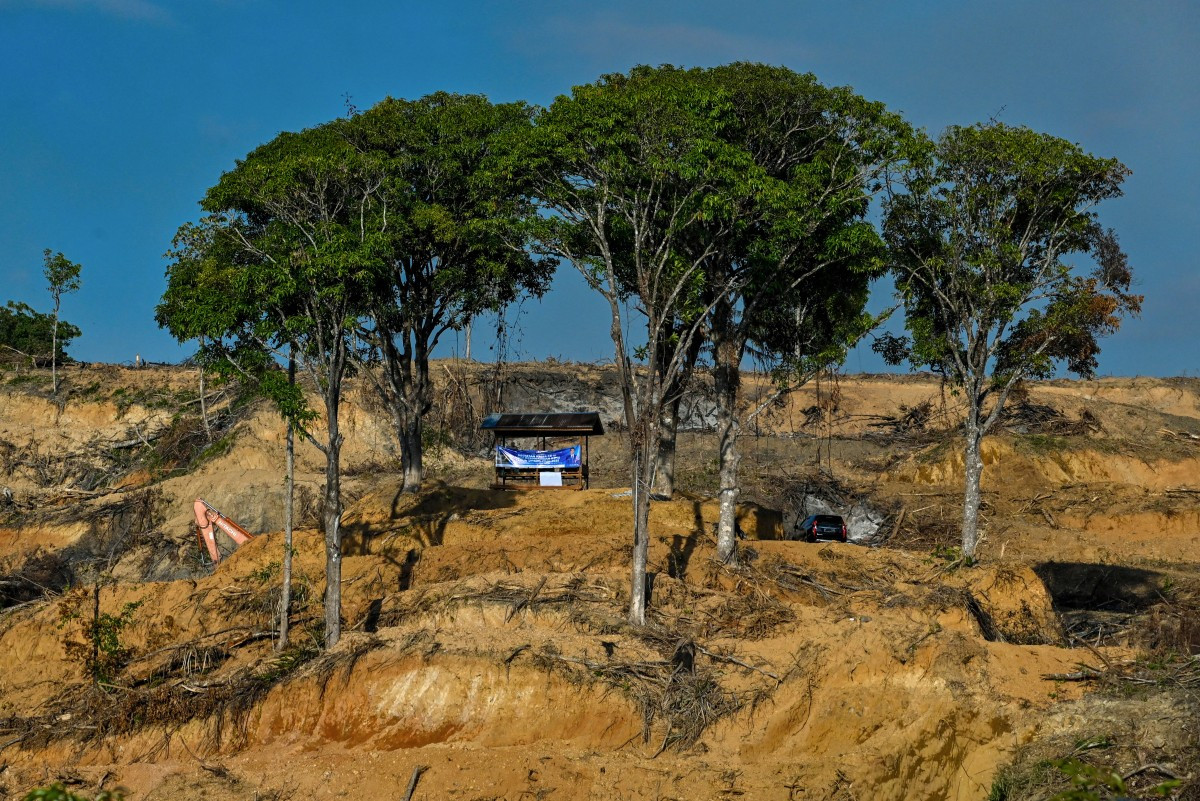 A hut stands amid a handful of trees on Jan. 18 after people driving heavy equipment cleared a swath of land for an oil palm expansion project in Lamno, Aceh Jaya regency, Aceh. (AFP/Chaideer Mahyuddin)
T
he global Business and Human Rights (BHR) agenda is moving in a direction that can no longer be ignored. Following the first Omnibus amendment to the European Union Corporate Sustainability Due Diligence Directive, which entered into force on March 18, the EU has entered the transposition phase, requiring member states to incorporate the directive into national law by July 26, 2028, at the latest. For companies within its scope, compliance obligations under these new measures will take effect no later than July 2029.
As of 2025, 36 countries have adopted National Action Plans on Business and Human Rights. Indonesia has not been left behind. But we need to be honest: how ready are we?
The year 2026 marks a decisive milestone and transition point. The Human Rights Ministry is advancing revisions to Presidential Regulation (Perpres) No. 60/2023 on the National Strategy for Business and Human Rights (Stranas BHR). The core of the change is singular: transitioning Human Rights Due Diligence (HRDD) from voluntary to mandatory (mHRDD). In our Business and Human Rights Indonesia Outlook 2026 (BHR Outlook 2026), we describe it as a marker of a fundamental paradigm shift in corporate governance.
Indonesia introduced PRISMA, a web-based tool enabling companies to conduct voluntary, self-administered human rights risk assessments. The results have been telling. During the period in which Perpres Stranas BHR was in force, 2023 to 2025, the National Commission on Human Rights (Komnas HAM) still received 1,194 complaints of alleged corporate human rights violations. Between 2012 and 2025, total complaints received by Komnas HAM reached 10,337 cases. This is a clear signal that self-assessment without adequate standards, oversight and enforcement has not delivered substantive change in corporate behaviour.
In BHR Outlook 2026, we identify five key trends shaping the national BHR agenda: regulation, environment, corporate performance, technology and impacted communities. From regulation, corporate performance and technology, we show that global pressure toward mHRDD can no longer be deferred, that corporate human rights compliance in Indonesia remains trapped in document formalism — strong on normative commitment, weak on field-level evidence, and that the gig economy and the energy transition are producing new human rights risks that existing regulatory frameworks must urgently address.
But environment and impacted communities are areas most distinctly Indonesian, contexts that cannot simply be borrowed from global BHR frameworks without a deep reading of the particularities of our local realities.

In the environment area, disaster risk is a foundational variable in Indonesia's BHR agenda — not merely as a natural phenomenon. This is a proposition that remains uncommon in BHR discourse, which is precisely what makes it urgent. Indonesia experiences an average of more than 3,000 disasters annually.