The Jakarta Post
Please Update your browser
Your browser is out of date, and may not be compatible with our website. A list of the most popular web browsers can be found below.
Just click on the icons to get to the download page.


Popular Reads
Top Results
No results found. Please check your search term and try again
Can't find what you're looking for?
View all search results
Popular Reads
Top Results
No results found. Please check your search term and try again
Can't find what you're looking for?
View all search resultsDefending rights defenders
By attempting to screen who qualifies for protection, the government risks transforming itself from a guardian of liberty into a gatekeeper for rights violators.
Change text size
Gift Premium Articles
to Anyone
Share the best of The Jakarta Post with friends, family, or colleagues. As a subscriber, you can gift 3 to 5 articles each month that anyone can read—no subscription needed!
 Set as preferred source
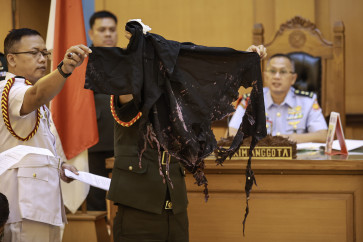
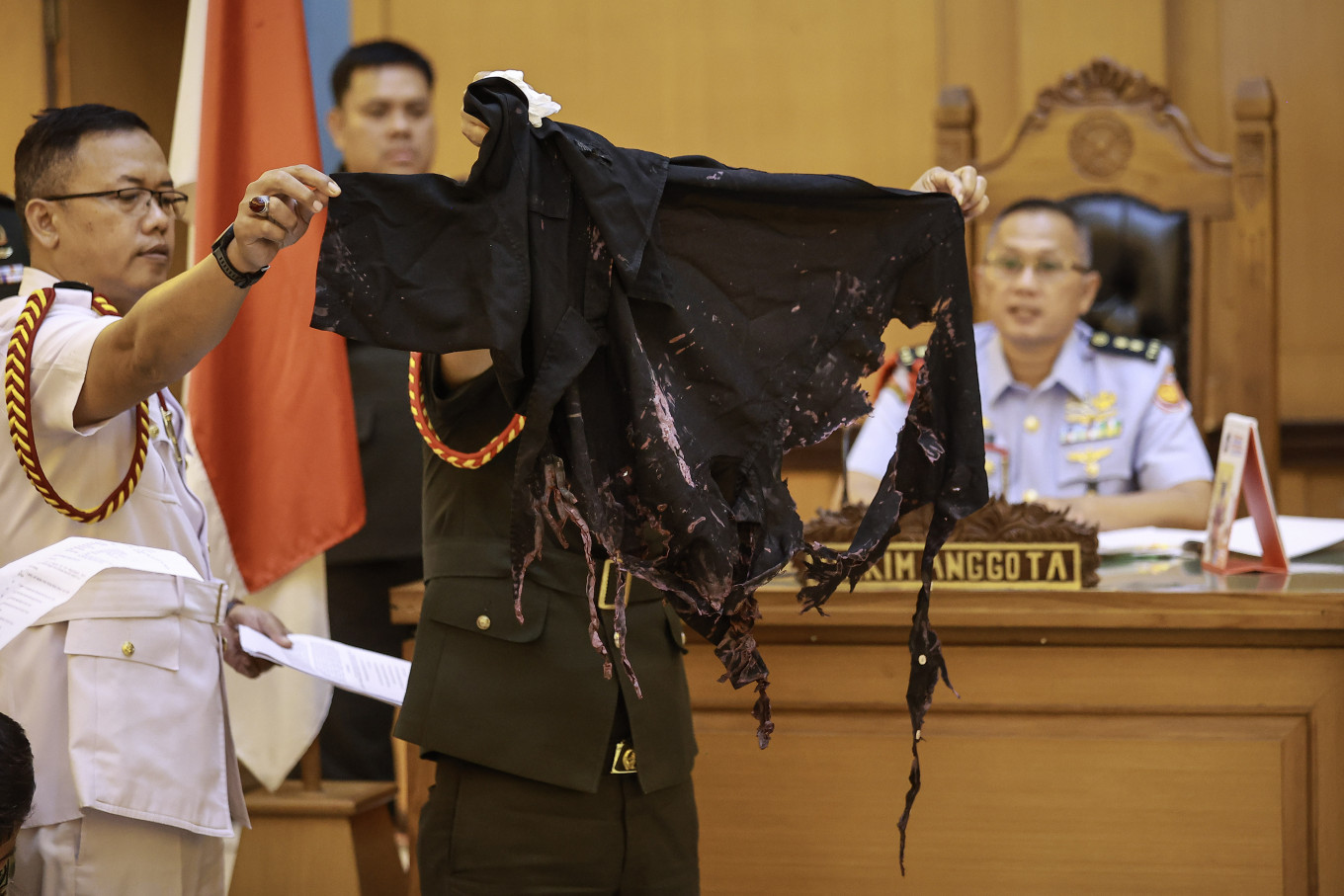 A military prosecutor (left) presents during a follow-up hearing at Military Court II-08 Jakarta on May 6, 2026, a shirt worn by Kontras activist Andrie Yunus when he suffered an acid attack on March 12. The hearing featured testimony from eight witnesses, five members of the Indonesian Military and three civilians, presented by the military prosecutor. (Antara/Dhemas Reviyanto)
T
he government has unveiled plans to screen and determine who qualifies as a human rights activist to decide who receives legal protection. This is a dangerous proposal that risks undermining human rights work across the nation.
Human Rights Minister Natalius Pigai first revealed the idea late last month. He stated that his ministry would form an assessor team comprising members from the government, civil society, government-sanctioned human rights institutions, such as the National Commission on Human Rights (Komnas HAM), and law enforcement bodies. This team would evaluate whether individuals meet the criteria to be considered human rights defenders and thus be eligible for legal protection.
Yet, Pigai provided no compelling justification for this vetting process, offering only a vague correlation to his concerns over the criminalization of those involved in advocacy work. Days later, Pigai clarified his stance, claiming the government had no intention of intervening to label "genuine" rights defenders and that vetting was merely a way to ensure their safety. Despite this clarification, the proposal remains fundamentally discriminatory, if not outright dismissive of efforts to advance human rights.
The United Nations’ Declaration on Human Rights Defenders, adopted in 1998, makes it clear: anyone who acts to promote, protect or strive for the fulfillment of human rights and basic freedoms through peaceful means is a rights defender. This applies whether they act individually or in association with others.
This definition is intentionally broad. It includes those working in a professional capacity for rights organizations, human rights lawyers, volunteers and even students campaigning for free speech or an end to police brutality. Under the UN framework, the government’s role is simple: it must ensure the protection of these defenders against violence or threats.
Pigai’s proposal to vet defenders is part of a broader plan by the Human Rights Ministry to revise the prevailing 1999 Human Rights Law. However, the plan has met stiff resistance, even from within the political establishment.

In their critique, lawmakers from the National Awakening Party (PKB) and the Indonesian Democratic Party of Struggle (PDI-P) have said, "No democracy labels or strips rights defenders of their status through a state screening process" and such a screening "risks the government becoming a ‘protector’ of rights violators”.