TheJakartaPost
Please Update your browser
Your browser is out of date, and may not be compatible with our website. A list of the most popular web browsers can be found below.
Just click on the icons to get to the download page.


Popular Reads
Top Results
No results found. Please check your search term and try again
Can't find what you're looking for?
View all search results
Popular Reads
Top Results
No results found. Please check your search term and try again
Can't find what you're looking for?
View all search resultsEurope is losing the energy security battle to China
China is currently leading the energy transition in terms of competitive advantage as the Middle East crisis exposes the deep divide between petrostates and electrostates, and although Europe has begun to strategize its shift to clean power, sustained financing remains a crux.
Change text size
Gift Premium Articles
to Anyone
Share the best of The Jakarta Post with friends, family, or colleagues. As a subscriber, you can gift 3 to 5 articles each month that anyone can read—no subscription needed!
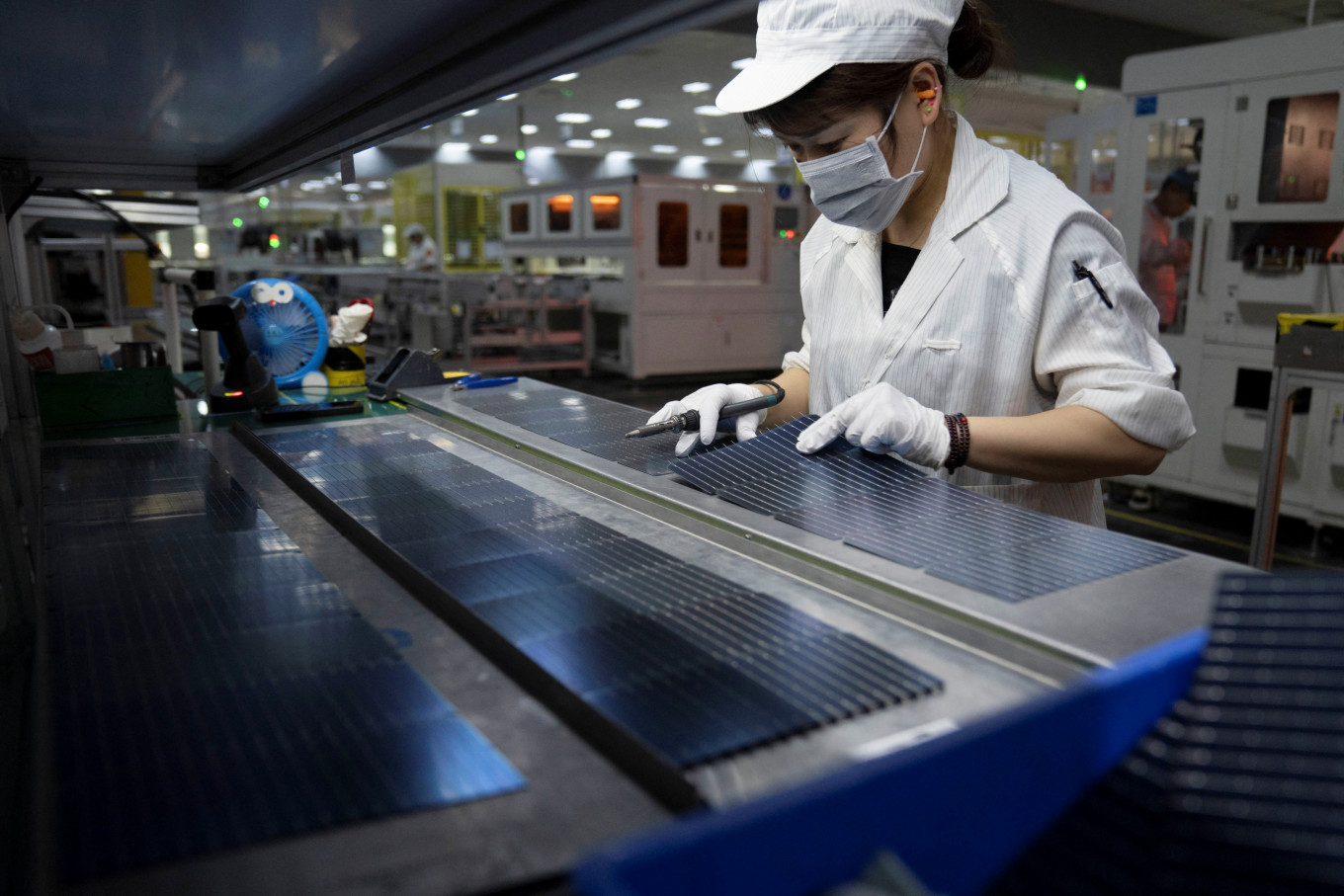 A worker arranges photovoltaic cells on May 16, 2024, at the solar panel factory of GCL System Integration Technology in Hefei, Anhui province, China. (Reuters/China Daily)
T
he United States-Israeli war against Iran has triggered a dramatic redistribution of global wealth. US oil and gas companies stand to pocket at least US$60 billion in windfall profits this year, while Russia could gain up to $100 billion in additional fiscal revenues. But nearly every economy, including energy exporters, is grappling with slower growth, rising inflation and the prospect of persistently high interest rates.
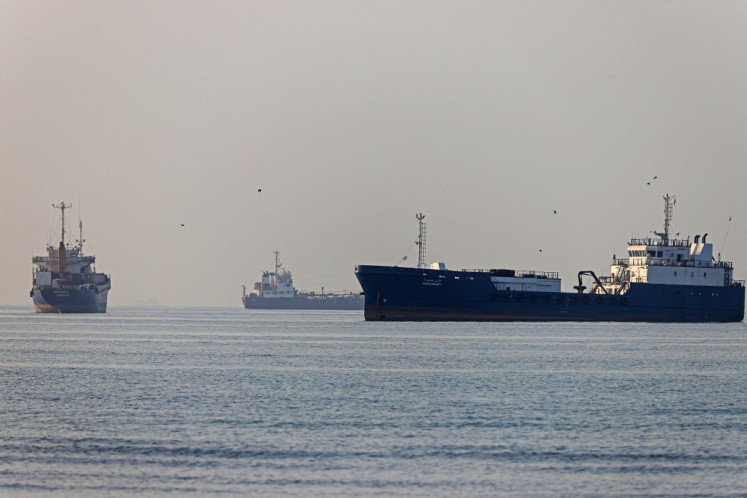
The clearest fault line runs through the Strait of Hormuz, as its closure has exposed Asia’s heavy dependence on Gulf energy. Europe, too, is paying a steep price: Since the Iran war began, the European Union has spent an additional 24 billion euros ($28 billion) on fossil fuel imports.
At the same time, the current crisis is redefining energy security. In the 20th century, it meant reliable access to oil and gas. Today, energy security increasingly rests on the ability to electrify rapidly, produce clean power domestically and control the technologies and supply chains on which the electricity systems of the future will depend.
By those measures, China holds a clear competitive advantage. Electricity already accounts for roughly 30 percent of its total energy consumption, compared with around 20 percent in the US and Europe. The EU, for all its climate ambition and electrification targets, remains dependent on imported fossil fuels and foreign clean technologies.
The divide within Europe is just as striking. Spain, for example, has built a partial buffer against fossil fuel volatility: Renewables now set wholesale electricity prices roughly 80 percent of the time, averaging 60 euros per megawatt-hour (MWh). Italy, by contrast, remains heavily exposed to natural gas markets, with electricity prices hovering near 130 euros per MWh.
The AccelerateEU initiative of the European Commission reflects the urgency of electrification. This package of measures seeks to curb rising energy costs and reduce the bloc’s dependence on imported fossil fuels by scaling up electric vehicles and heat pumps, expanding renewables, strengthening power grids and building storage capacity.

But it lacks the financing needed to achieve its stated objectives. Without a credible investment strategy, the initiative risks remaining a tissue of ambition rather than a coherent plan.