TheJakartaPost
Please Update your browser
Your browser is out of date, and may not be compatible with our website. A list of the most popular web browsers can be found below.
Just click on the icons to get to the download page.


Popular Reads
Top Results
No results found. Please check your search term and try again
Can't find what you're looking for?
View all search results
Popular Reads
Top Results
No results found. Please check your search term and try again
Can't find what you're looking for?
View all search resultsFamilies can't wait for better childcare system
As Indonesia chases its "Golden 2045" dreams, the tragic raid of a Yogyakarta childcare center reveals a haunting truth: our economic future is stalled by a systemic refusal to treat childcare as a public priority.
Change text size
Gift Premium Articles
to Anyone
Share the best of The Jakarta Post with friends, family, or colleagues. As a subscriber, you can gift 3 to 5 articles each month that anyone can read—no subscription needed!
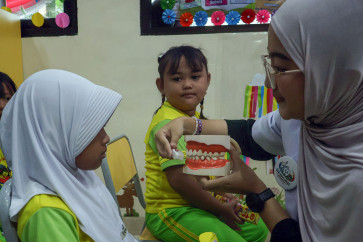
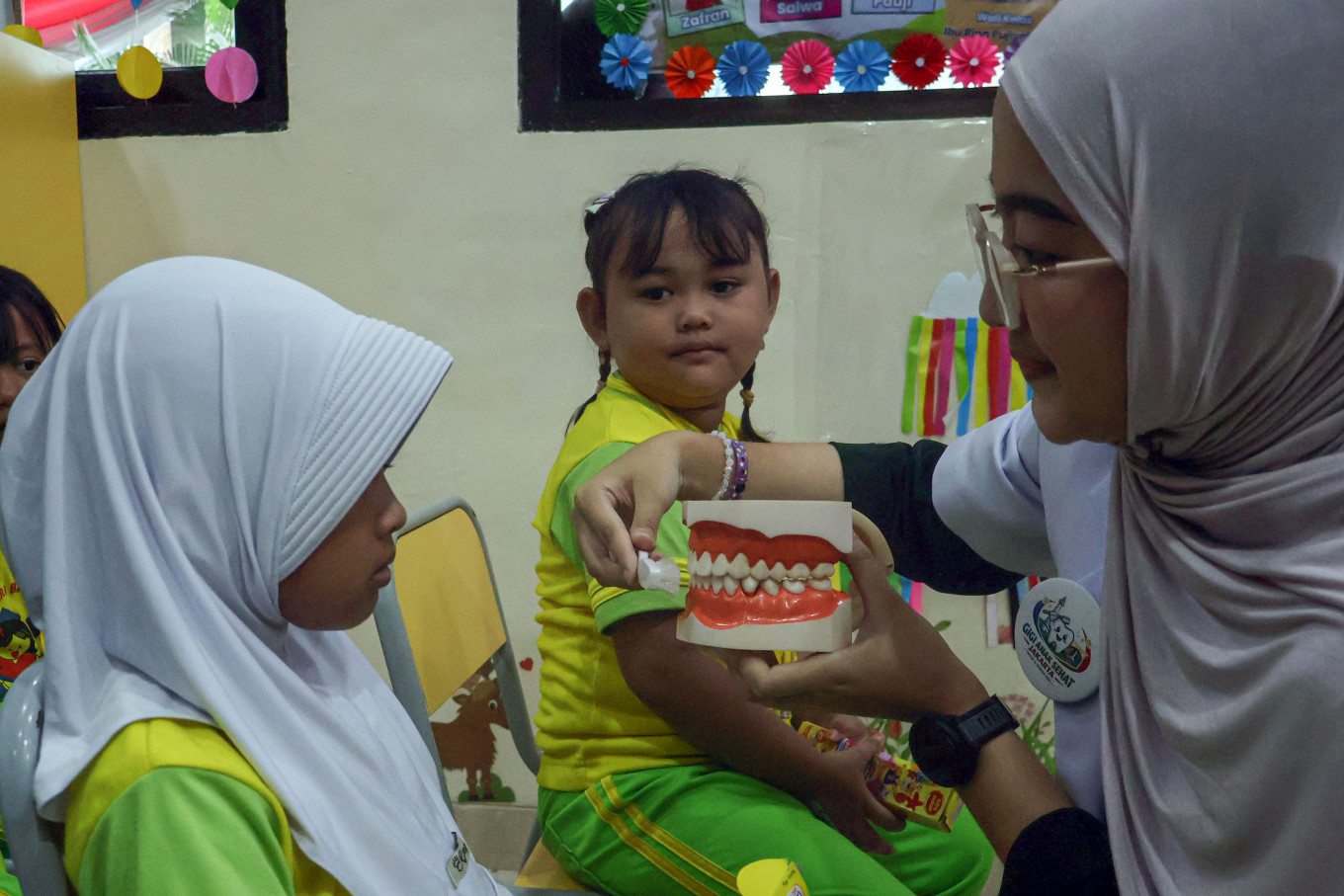 Smile squad: A health worker educates pupils on proper toothbrushing during the launch of the Healthy Children’s Teeth Program on Jan. 19 at SPS Bale Bermain Rubah in Pasar Rebo, East Jakarta. (Antara/Yulius Satria Wijaya)
A
few weeks ago, police raided a childcare center in Yogyakarta. Little Aresha, a facility located in the Umbulharjo district in the southern part of the municipality, had been operating for years allegedly with minimum oversight.
Prior to the raid, more than 180 families had come forward with complaints of abuse and neglect. Medical examinations of the children later revealed a haunting spectrum of neglect: developmental setbacks, significant weight loss and physical injuries.
This was not a case of careless or negligent parenting. The victims were working parents who simply needed a safe place to leave their children. They inevitably placed their trust in the few options available to them—a direct consequence of a country of 280 million people having only 29 government-funded childcare centers. That figure is no typo; it comes from the Investing in Women report, produced in collaboration with the Australian National University.
Behind these statistics are millions of mothers who wake up every morning asking themselves the same impossible questions: Who will look after my child today, and can they be trusted? Should I quit my job?
Indonesia must answer these questions honestly as it commemorates the International Day of Families on May 15. This year's United Nations theme, "Family, Inequality and Child Well-Being," aligns with the eight official functions recognized by Indonesia's National Family Planning Agency (BKKBN), which include protection, education, and economic development. Furthermore, the Universal Declaration of Human Rights defines the family as the "natural and fundamental group unit of society" worthy of state protection.
But protection is more than a declaration; it is infrastructure and policy. Today, we are failing to provide either.

Globally, unpaid care work prevents approximately 708 million women from participating in the workforce, according to the ILO. In Indonesia, female labor force participation has stagnated between 53 and 56 percent for decades. Compare this to Vietnam, where participation stands at 69 percent, supported by public kindergartens that operate around the clock and reach an enrollment rate of 93 percent. In contrast, Indonesia’s enrollment stands at only 46 percent.