TheJakartaPost
Please Update your browser
Your browser is out of date, and may not be compatible with our website. A list of the most popular web browsers can be found below.
Just click on the icons to get to the download page.


Popular Reads
Top Results
No results found. Please check your search term and try again
Can't find what you're looking for?
View all search results
Popular Reads
Top Results
No results found. Please check your search term and try again
Can't find what you're looking for?
View all search resultsAnalysis: Growth masks rising risks from fiscal, monetary expansion
Change text size
Gift Premium Articles
to Anyone
Share the best of The Jakarta Post with friends, family, or colleagues. As a subscriber, you can gift 3 to 5 articles each month that anyone can read—no subscription needed!
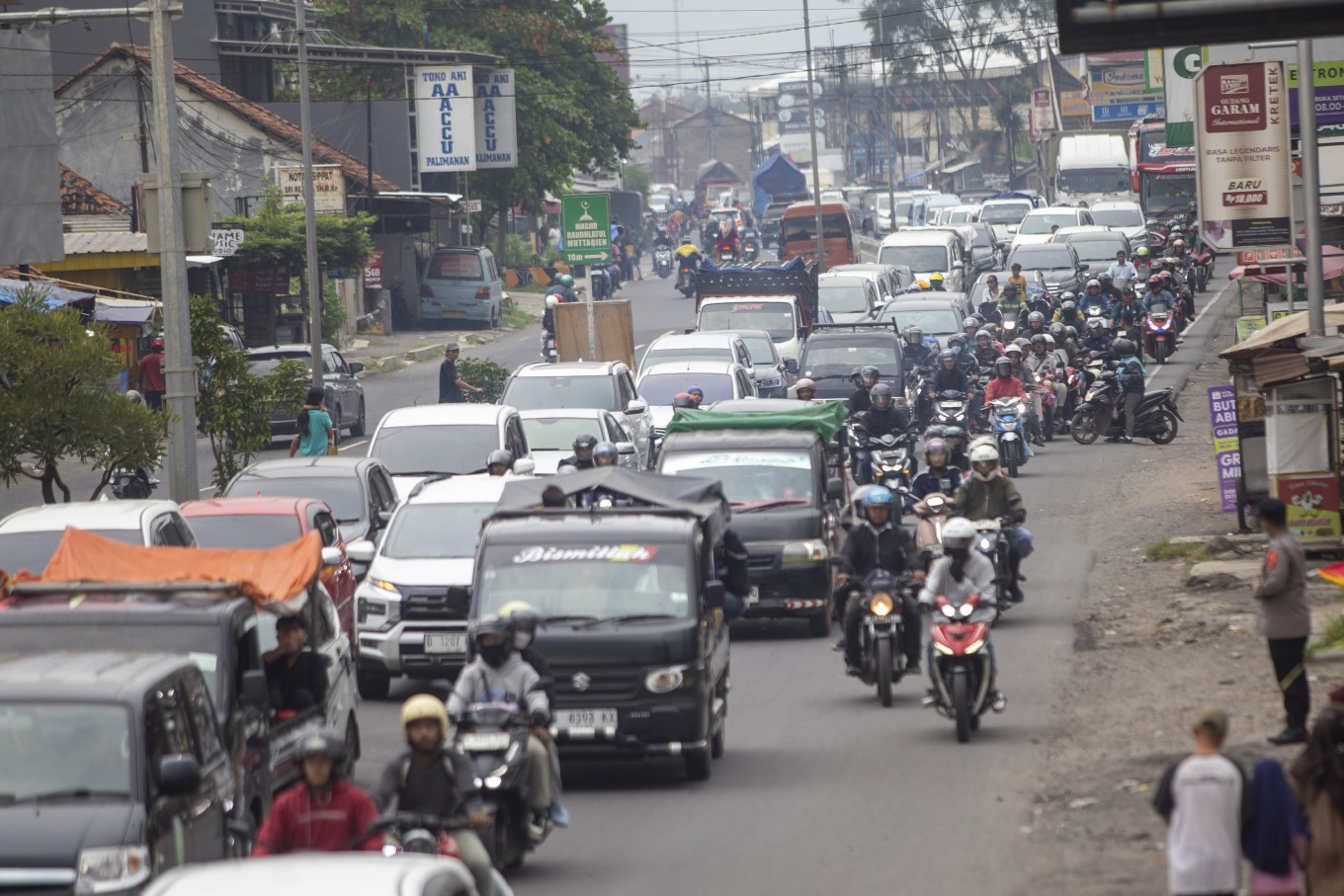 Vehicles line up bumper-to-bumper in Cirebon, West Java, on March 23, 2026, as people headed back to Greater Jakarta from the Idul Fitri holiday. (Antara/Dedi Suwidiantoro)
T
he recent announcement on 5.6 percent economic growth came as little surprise after Finance Minister Purbaya Yudhi Sadewa made a similar projection in February. At first glance, the figure appears to validate President Prabowo Subianto’s economic agenda, particularly the free nutritious meal program. Yet behind the stable headline growth, macroeconomic indicators suggest the economy is becoming increasingly dependent on government spending and monetary expansion rather than healthy private sector activity.
First-quarter growth was driven primarily by government expenditure, which surged 21.81 percent year-on-year (yoy) despite contributing only 6.72 percent to gross domestic product. Household consumption, the backbone of Indonesia’s economy, meanwhile grew a more modest 5.52 percent, and other growth components also remained relatively weak. This imbalance suggests that economic expansion is being propped up by fiscal stimulus rather than broad-based recovery.
A major driver of the spending increase was the rollout of the free meals program, as reflected by the 13.14 percent growth in the accommodation and food services sector. However, the program comes with a significant fiscal burden: government expenditure increased 16.6 percent while regional transfers were cut 25.5 percent in the 2026 state budget.
The effectiveness of the free meals program also remains unclear. The government has yet to publish a comprehensive report about its impact on health and nutrition outcomes. What is already visible, however, is the growing pressure it has placed on fiscal sustainability. In the first quarter alone, the program spent Rp 55.3 trillion (US$3.2 billion), or around 1.6 percent of GDP. This is far above what India spends on a comparable program, which amounts to roughly 0.06 percent of its GDP.
The widening fiscal burden is becoming more difficult to ignore. Government expenditure expanded 31.4 percent while state revenue grew only 10.5 percent. The crowding out effect of the free meals program therefore extends beyond fiscal space, potentially affecting regional development, inflation and even the government’s long-term credibility.
Inflationary pressure already has become more apparent. Since the free meals program expanded in mid-2025, food prices have remained elevated, as Coordinating Food Minister Zulkifli Hasan has acknowledged. By April 2026, the inflation rate had risen to 2.42 percent, up from 1.95 percent a year earlier. Food and beverage inflation reached 3.06 percent, reflecting stronger demand generated by government spending.

This inflationary impact has been reinforced by rapid monetary expansion. As of April 2026, base money growth reached 11.8 percent yoy while adjusted base money grew at an even faster 16.8 percent, after a prolonged period of subdued single-digit growth. The widening gap between the two indicators signals increasingly aggressive liquidity expansion by Bank Indonesia (BI). This aligns with the commitment of BI Governor Perry Warjiyo to maintain base money growth within the 10-12 percent range.