TheJakartaPost
Please Update your browser
Your browser is out of date, and may not be compatible with our website. A list of the most popular web browsers can be found below.
Just click on the icons to get to the download page.


Popular Reads
Top Results
No results found. Please check your search term and try again
Can't find what you're looking for?
View all search results
Popular Reads
Top Results
No results found. Please check your search term and try again
Can't find what you're looking for?
View all search resultsIndonesia’s economic growth strong, but pressure mounts
As populist spending programs collide with a volatile global energy market and a free-falling rupiah, Indonesia’s fiscal credibility faces its most dangerous trial since the 1997 financial crisis.
Change text size
Gift Premium Articles
to Anyone
Share the best of The Jakarta Post with friends, family, or colleagues. As a subscriber, you can gift 3 to 5 articles each month that anyone can read—no subscription needed!
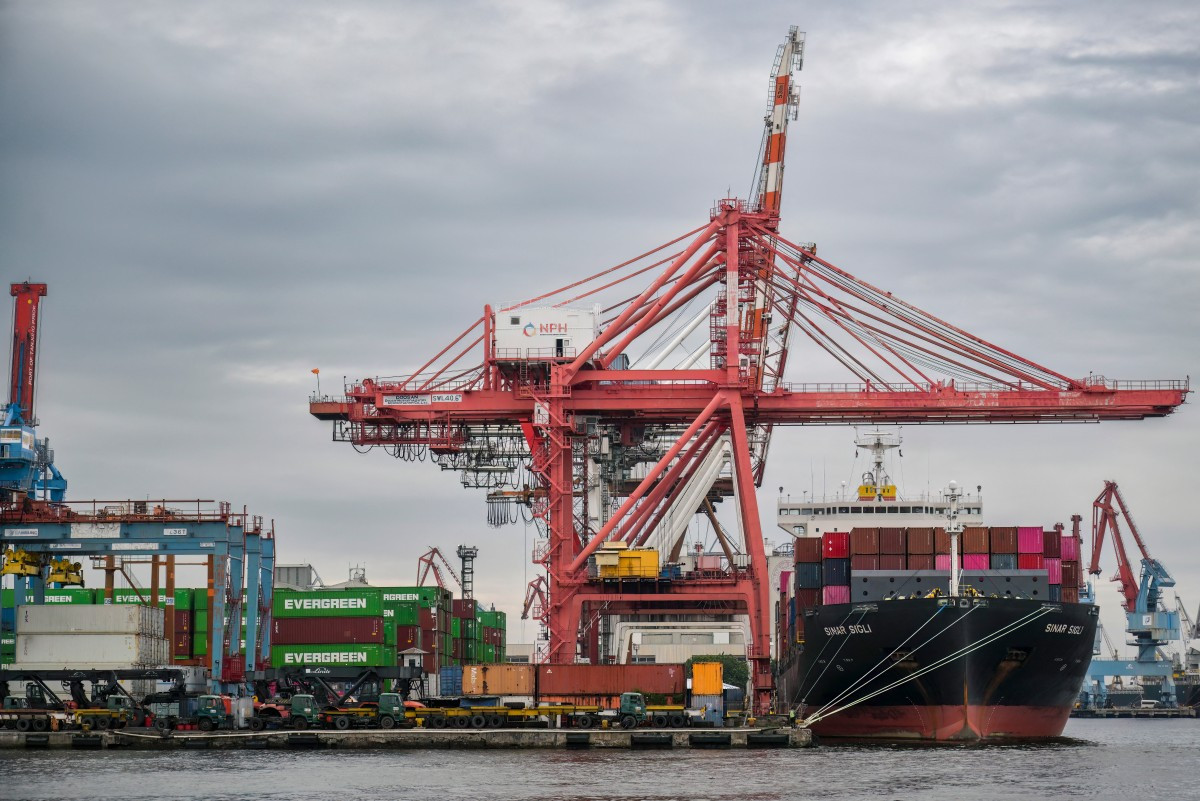 Workers load and unload containers on Feb. 4, 2026, at the Tanjung Priok International Export-Import Port in North Jakarta. (AFP/Bay Ismoyo)
A
lthough Indonesia’s economy grew strongly in the first quarter of 2026, its fiscal budget outcomes revealed pressures that are set to intensify as the full effect of oil price increases takes hold. Total government revenue in the first quarter reached Rp 575 trillion (US$33 billion), a 10.5 percent increase year-on-year.
However, this represented only 18 percent of the total 2026 budget. This suggests that achieving the Rp 3.2 quadrillion revenue target in the 2026 budget will be a formidable challenge.
The fiscal trajectory for the remainder of the year has become increasingly uncertain. The energy crisis sparked by conflict in the Middle East will likely persist even if the Strait of Hormuz is reopened; restoring the Gulf’s oil and gas infrastructure, destroyed by the war, will take weeks, if not months. Since Indonesia is a net oil-importing country, and because the government has delayed or canceled planned tax increases in several sectors, establishing a sustainable revenue stream for the 2026 budget remains elusive.
Tax revenue rose 14 percent year-on-year due to the base effect, but the tax-to-gross domestic product ratio stood at only 7.5 percent, a significant decline from the 10 percent achieved in 2025. Excluding import duties and excise, tax revenue was a mere 6.4 percent of GDP. This is a dismal performance, as it represents less than half the ratios of Indonesia's ASEAN peers, trailing significantly behind Vietnam (22.8 percent) and Thailand (17.6 percent).
First-quarter spending was dominated by subsidies, interest payments, and the free nutritious meal program, which together consumed 55.1 percent of total revenue. Consequently, the budget has little room for infrastructure and social assistance, the very spending required to strengthen the foundation for future growth. Expenditure for free meals program alone amounted to Rp 54.4 trillion, representing 50 percent of the government’s total material purchases and exceeding the combined spending on infrastructure and social assistance.
Due to surging oil prices and the depreciation of the rupiah, subsidies jumped 60 percent to Rp 52.2 trillion. However, when including compensation to state-owned enterprises Pertamina and PLN, which, as of March, is being paid monthly by the Finance Ministry, the total subsidy bill reached Rp 118.7 trillion, or more than one-fifth of total revenue. Since the government refuses to cut these subsidies, this figure will only rise as the full impact of high oil prices seeps into the economy.

Interest payments reached Rp 144 trillion, or 25 percent of revenue, far exceeding the 15 percent threshold generally considered a safe level. This leaves a narrow fiscal window for essential services and leaves the government with almost no fiscal buffer against future economic shocks. Furthermore, the reduction in transfers to regions (TKD) to finance the free meals program has begun to bite. Transfers to regions dropped by 1.1 percent to Rp 205 trillion. At this rate, the regional budget allocation will be depleted by the end of the third quarter, leaving the fourth quarter with no funds. Regional administrations, which rely heavily on these transfers, will soon find themselves unable to fund education, health, infrastructure or even basic civil service salaries.