The Jakarta Post
Please Update your browser
Your browser is out of date, and may not be compatible with our website. A list of the most popular web browsers can be found below.
Just click on the icons to get to the download page.


Popular Reads
Top Results
No results found. Please check your search term and try again
Can't find what you're looking for?
View all search results
Popular Reads
Top Results
No results found. Please check your search term and try again
Can't find what you're looking for?
View all search resultsNormalizing Myanmar’s junta will not bring peace
Frustration with a failed strategy should not lead ASEAN into a more dangerous mistake: legitimizing military rule without accountability.
Change text size
Gift Premium Articles
to Anyone
Share the best of The Jakarta Post with friends, family, or colleagues. As a subscriber, you can gift 3 to 5 articles each month that anyone can read—no subscription needed!
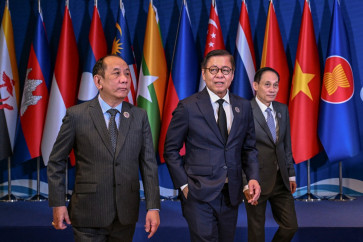
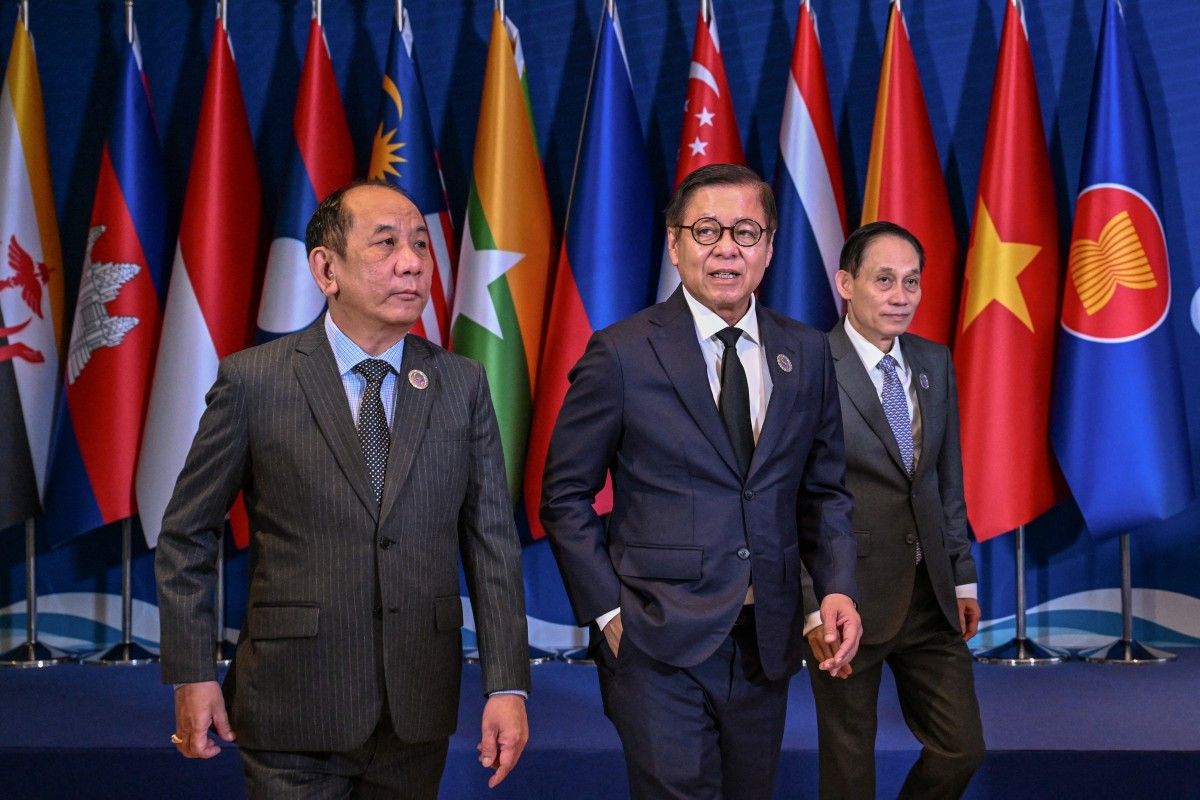 Myanmar's Permanent Secretary of the Ministry of Foreign Affairs Hau Khan Sum (left) walks on Jan. 29, 2026, with Thailand's Minister of Foreign Affairs Sihasak Phuangketkeow (center) and Vietnam's Foreign Minister Le Hoai Trung after the group photo during the ASEAN Foreign Ministers' Meeting in Cebu, the Philippines. (AFP/Pool/Jam Sta Rosa)
T
he recent ASEAN Summit in Cebu, the Philippines, marked an important, if understated, shift in ASEAN’s approach to Myanmar. While leaders formally reaffirmed the Five-Point Consensus (5PC), they also signaled increasing openness to “calibrated engagement” with Myanmar’s junta through technical and virtual talks.
The shift reflects a deeper reality confronting ASEAN: five years after the 2021 coup, its current approach has failed to produce meaningful progress. Violence has intensified, humanitarian needs have deepened and Myanmar’s instability increasingly spills across borders through refugee movements, cybercrime networks, arms trafficking and drug production. Faced with a worsening regional crisis, some ASEAN member states are now questioning whether continued exclusion of Myanmar’s military leadership remains sustainable.
As this year’s ASEAN Chair, the Philippines occupies a particularly delicate position. Manila must balance competing pressures within the bloc: maintaining ASEAN unity, preserving the organization’s credibility, responding to mounting regional security concerns and demonstrating that ASEAN remains capable of addressing one of the gravest crises in its history.
Yet frustration with a failed strategy should not lead ASEAN into a more dangerous mistake: legitimizing military rule without accountability.
Since the coup, ASEAN’s exclusion policy has served an important political function. By barring Ming Aung Hlaing and senior junta leaders from high-level meetings, ASEAN established that the violent overthrow of an elected government could not simply be normalized within the regional order. The policy also protected ASEAN from appearing entirely indifferent to mass atrocities, widespread repression and the junta’s persistent refusal to implement the 5PC.
Most importantly, exclusion has denied the junta the regional legitimacy it seeks. Following the deeply flawed 2025-2026 elections, Min Aung Hlaing has attempted to recast himself from coup leader into civilian president. Reintegration into the ASEAN summit would significantly strengthen that narrative, particularly at a moment when the military remains unable to consolidate authority across large parts of the country.

This legitimacy question is not merely symbolic. It directly affects the rights, security and political future of Myanmar’s people.