TheJakartaPost
Please Update your browser
Your browser is out of date, and may not be compatible with our website. A list of the most popular web browsers can be found below.
Just click on the icons to get to the download page.


Popular Reads
Top Results
No results found. Please check your search term and try again
Can't find what you're looking for?
View all search results
Popular Reads
Top Results
No results found. Please check your search term and try again
Can't find what you're looking for?
View all search resultsThe calm that was never real: ‘Minsky stability' as a source of instability
The current crisis unfolding in the forex market is not the same as in 1997 and stems from inherited vulnerabilities, but what is similar is the artificially suppressed inflation underlying it.
Change text size
Gift Premium Articles
to Anyone
Share the best of The Jakarta Post with friends, family, or colleagues. As a subscriber, you can gift 3 to 5 articles each month that anyone can read—no subscription needed!
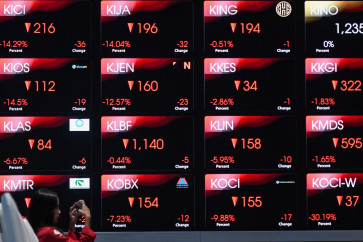
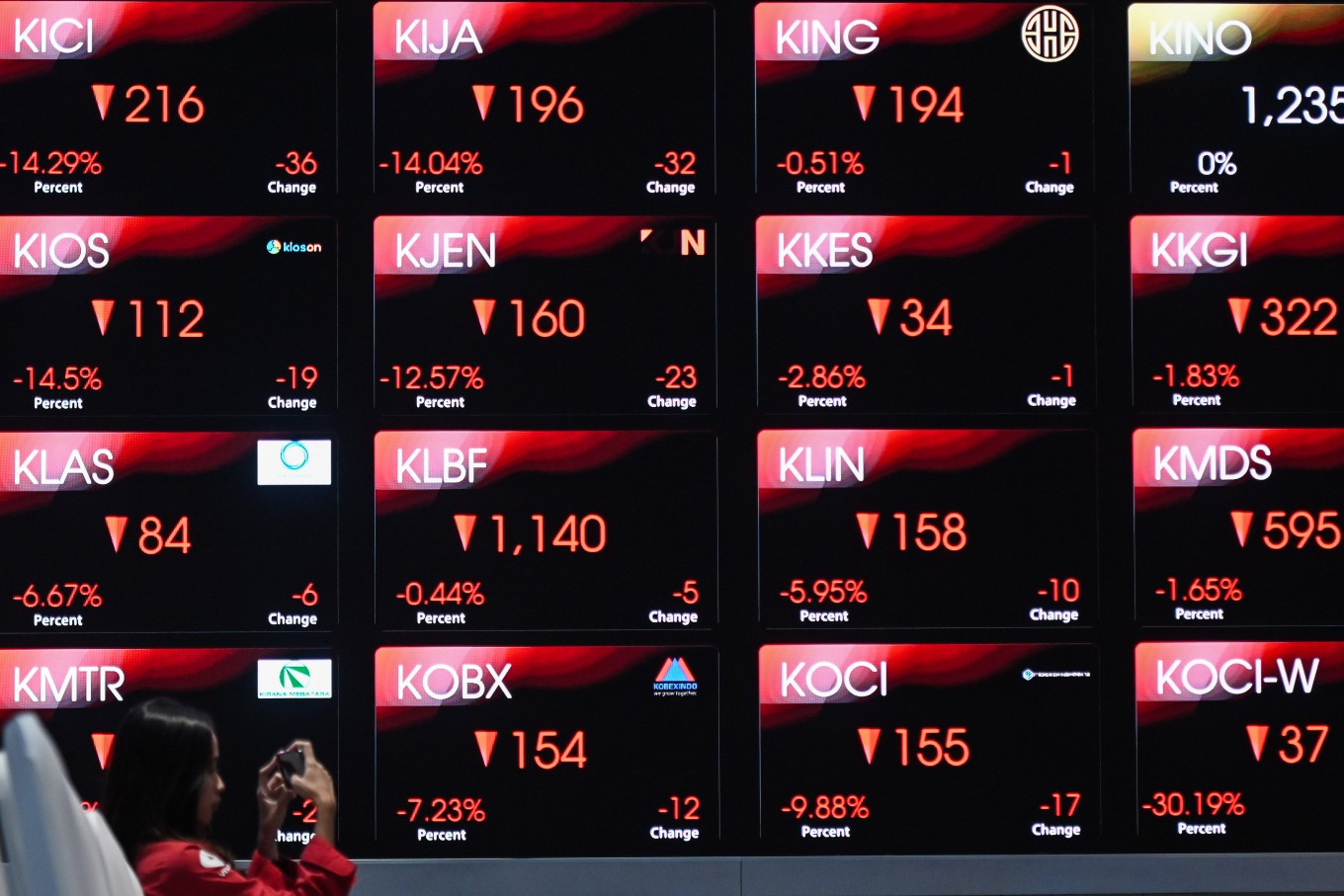 A woman takes a photo of an electronic information board at the Indonesia Stock Exchange (IDX) in South Jakarta on Feb. 2, 2026, showing negative movements across the IDX Composite index. (Antara/Sulthony Hasanuddin)
T
he rupiah is now trading above 17,400 per United States dollar; the Indonesia Stock Exchange (IDX) Composite index has shed nearly 8 percent over the past month; foreign exchange (forex) reserves have fallen for four consecutive months to their lowest in two years. These are not ordinary market fluctuations. They are the symptoms of a structural vulnerability that was partly manufactured by the very policies that appeared to keep Indonesia stable.
The question is not only why the crisis is happening but also why almost no one prepared for it. To answer that, we need to ask a more fundamental question: Was Indonesia’s stability over the past several years actually real?
For much of the period leading up to the current episode, as in the years before the 1997 Asian Financial Crisis, Indonesian inflation was low and the exchange rate appeared stable. Policymakers, investors and households took both as credible signals that the macroeconomic fundamentals were sound.
But the low inflation was, to a significant degree, manufactured. Fiscal subsidies on fuel, electricity and food suppressed the prices that households and businesses actually observed. Price controls did the rest.
The inflation numbers in the statistics were not a reliable measure of underlying cost pressures but were, in part, a fiscal artifact. This mattered enormously for behavior.
Standard exchange rate economics tells us that currencies should adjust over time to offset inflation differentials. If Indonesia's inflation is higher than that of the US, the rupiah should gradually depreciate to maintain purchasing power parity.

But if agents observe artificially low inflation, suppressed by subsidies and controls, they stop pricing in the adjustment. They take exchange rate stability for granted, and from that complacency, a cascade of poor decisions follows.