The Jakarta Post
Please Update your browser
Your browser is out of date, and may not be compatible with our website. A list of the most popular web browsers can be found below.
Just click on the icons to get to the download page.


Popular Reads
Top Results
No results found. Please check your search term and try again
Can't find what you're looking for?
View all search results
Popular Reads
Top Results
No results found. Please check your search term and try again
Can't find what you're looking for?
View all search resultsThe ghost in the film
A series of crackdowns on public screenings and discussions of the documentary film Pesta Babi (Pig Feast) serves as a grim reminder that the nation’s democratic progress is not only stalling but effectively backsliding.
Change text size
Gift Premium Articles
to Anyone
Share the best of The Jakarta Post with friends, family, or colleagues. As a subscriber, you can gift 3 to 5 articles each month that anyone can read—no subscription needed!
 Set as preferred source
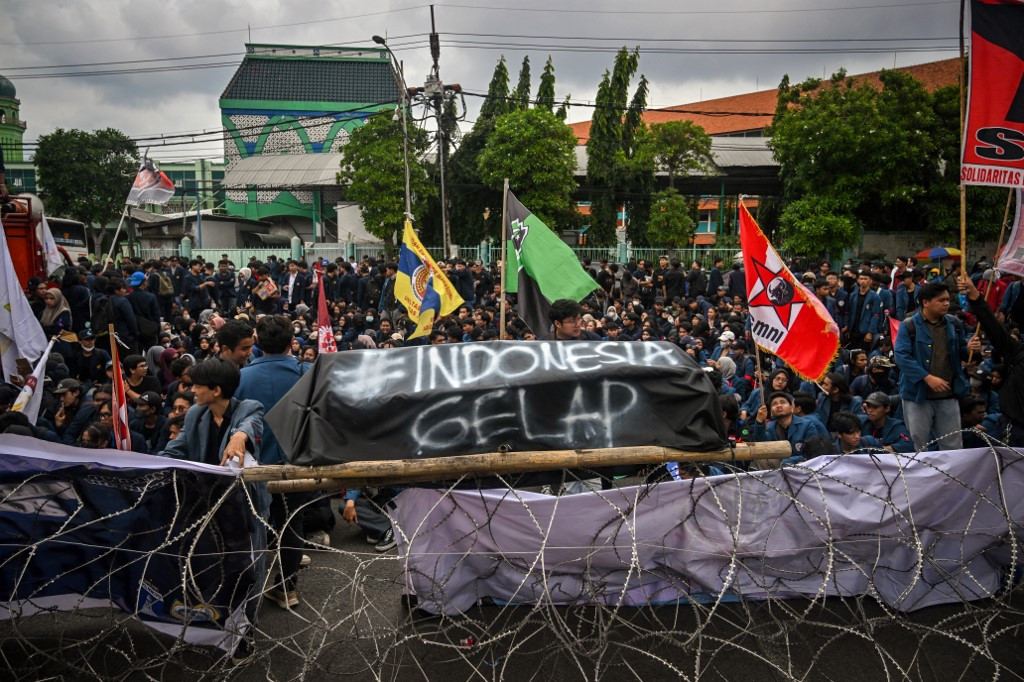 Students hold a rally on Feb. 17, 2025, for "Indonesia Gelap" (Dark Indonesia) in front of the East Java Regional House of Representatives building in Surabaya.
(AFP/Juni Kriswanto)
Students hold a rally on Feb. 17, 2025, for "Indonesia Gelap" (Dark Indonesia) in front of the East Java Regional House of Representatives building in Surabaya.
(AFP/Juni Kriswanto)
E
very May, we pause to commemorate the Reform Era movement of 1998, a pivotal moment when the tide of student-led protests finally broke the 32-year authoritarian grip of the New Order. It was a rebirth of civil liberties, promising a future where the right to speak, assemble and critique the state would be sacrosanct.
However, 28 years later, the air of celebration is increasingly stifled by a familiar, chilling draft. The recent series of crackdowns on public screenings and discussions of the documentary film Pesta Babi (Pig Feast) serves as a grim reminder that the nation’s democratic progress is not only stalling but effectively backsliding.
Directed by investigative journalist Dandhy Laksono, who was also involved in the 2019 film Sexy Killers on Indonesia’s coal industry and the 2024 film Dirty Vote on the presidential election, Pesta Babi is far more than a cinematic exercise; it is a vital piece of advocacy that shines a light on the systematic displacement of indigenous Papuans.
The film documents the aggressive seizure of ancestral lands and customary forests to make way for National Strategic Projects (PSN) as realization of President Prabowo Subianto’s food and energy security ambitions. The state has facilitated the conversion of vast Papuan ecosystems into industrial estates, often without the genuine free, prior and informed consent of the indigenous communities.
The message of the documentary film is clear: For the people of Papua, the "pig feast", a traditional ceremony of gratitude and community, is being overshadowed by the machinery of state-led dispossession.
The reaction of the authorities to this film has been disproportionately heavy-handed. From Yogyakarta to West Nusa Tenggara, screenings have faced intimidation, cancellations and forced shutdowns by local authorities, including police and military, often citing lack of permits or the potential for "public disorder". At least 21 incidents have been documented by a coalition of 10 civil society organizations since the film’s limited release in April.

These justifications are no less than thin veils for state-sponsored censorship. By preventing citizens from viewing and discussing the realities of Papuan land-grabbing, the government is effectively attempting to monopolize the narrative of development. When the state dictates which stories can be told and which truths are too dangerous for public consumption, the foundational pillars of freedom of expression begin to crumble.