TheJakartaPost
Please Update your browser
Your browser is out of date, and may not be compatible with our website. A list of the most popular web browsers can be found below.
Just click on the icons to get to the download page.


Popular Reads
Top Results
No results found. Please check your search term and try again
Can't find what you're looking for?
View all search results
Popular Reads
Top Results
No results found. Please check your search term and try again
Can't find what you're looking for?
View all search resultsThe missing pillar: Faith-based efforts to help solve Jakarta’s waste crisis
Jakarta’s billion-dollar WtE dreams will remain buried under a landslide of inefficiency unless the city bridges the gap between high-tech downstream plants and the untapped power of faith-based household sorting.
Change text size
Gift Premium Articles
to Anyone
Share the best of The Jakarta Post with friends, family, or colleagues. As a subscriber, you can gift 3 to 5 articles each month that anyone can read—no subscription needed!
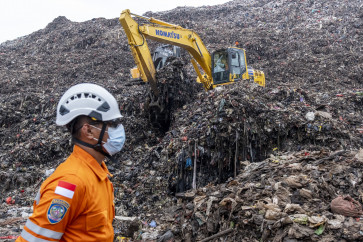
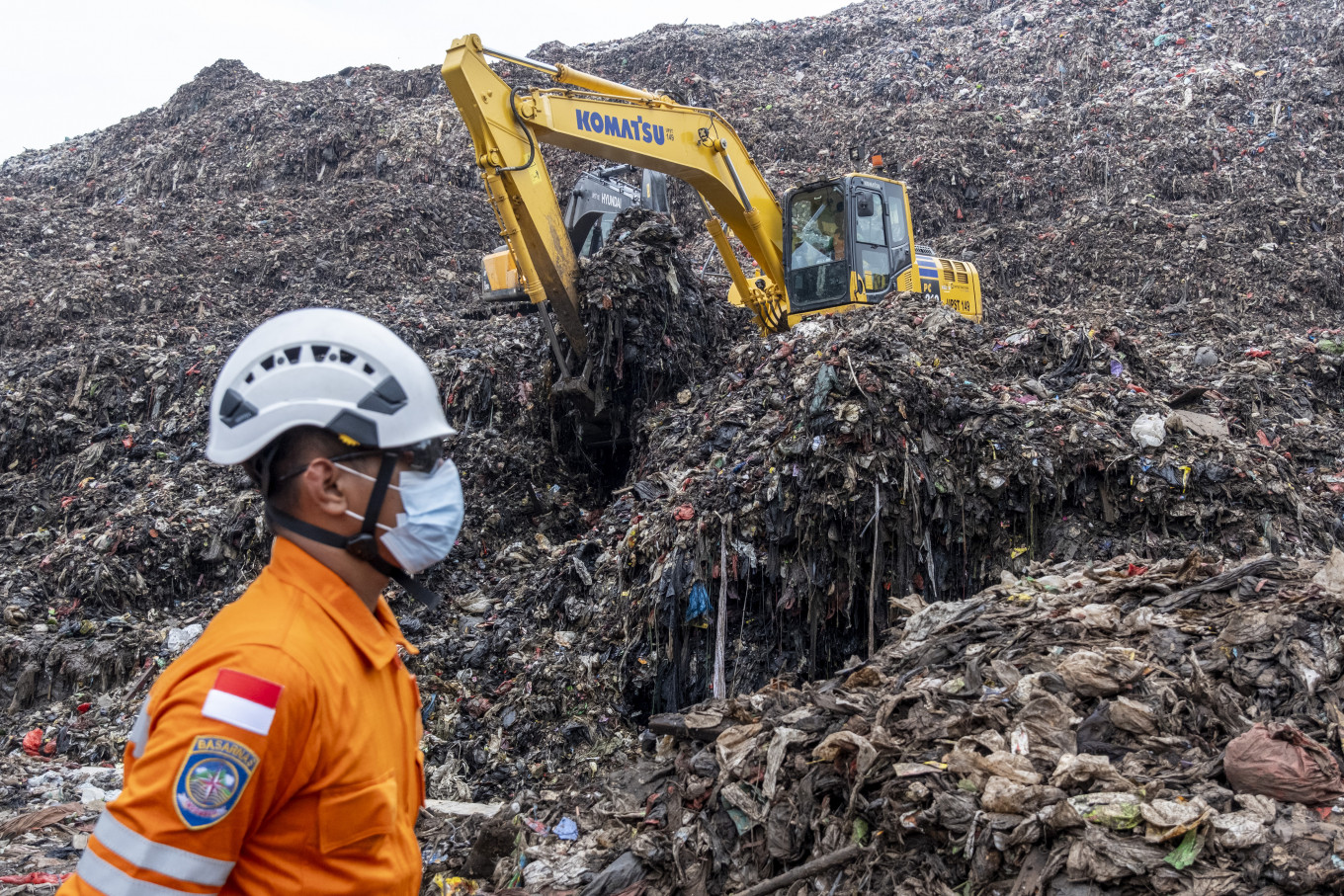 A rescue worker monitors an operation using heavy machinery to search for missing people on March 9, 2026, after a landslide buried trucks, food stalls and at least 13 people at the Bantar Gebang landfill in Bekasi, West Java. (AFP/Bay Ismoyo)
O
n a rainy Sunday afternoon in March, seven people were buried alive beneath the garbage produced by 11 million Jakartans. The landslide at the Bantar Gebang landfill was no accident.
For decades, policy has prioritized funding for where trash ends up while neglecting how it gets there. The Environment Ministry’s records show similar collapses in 2003 and 2006. Twenty-three years and three tragedies later, the city continues to run the same playbook of open dumping with a different cast of victims.
Two months after the Bantar Gebang landfill disaster, state asset fund Danantara announced a US$1 billion waste-to-energy (WtE) project. The initiative aims to process 8,000 tonnes of waste each day across Bantar Gebang in Bekasi, West Java, and Tanjung Kamal Muara in North Jakarta, with operations targeted for 2028.
On its own terms, this is progress. Jakarta desperately needs modern waste treatment infrastructure. However, infrastructure alone will not fix its waste crisis. The question policymakers continue to avoid is the most fundamental: Who is paying for the rest of the system?
Last month, Danantara Investment Management established PT Daya Energi Bersih Nusantara (Denera) as the vehicle for the national WtE program. Under this structure, Denera holds a 30 percent equity stake, private partners hold the remaining 70 percent through construction and operating companies and state electricity firm PLN guarantees the offtake.
Each plant in the WtE program is valued at Rp 2.5-2.8 trillion ($140-160 million). While pilot projects are running in several cities, Jakarta remains the flagship.

History suggests that infrastructure can fail even with ample funding and political backing. The Sunter Intermediate Treatment Facility (ITF) in North Jakarta is the clearest cautionary tale.