TheJakartaPost
Please Update your browser
Your browser is out of date, and may not be compatible with our website. A list of the most popular web browsers can be found below.
Just click on the icons to get to the download page.


Popular Reads
Top Results
No results found. Please check your search term and try again
Can't find what you're looking for?
View all search results
Popular Reads
Top Results
No results found. Please check your search term and try again
Can't find what you're looking for?
View all search resultsWaste sorting can’t wait
As the Bantar Gebang landfill overflows, Jakarta’s new waste sorting mandate marks a vital yet long overdue shift toward sustainability. But its success depends on real solutions, consistent enforcement and above all, public education.
Change text size
Gift Premium Articles
to Anyone
Share the best of The Jakarta Post with friends, family, or colleagues. As a subscriber, you can gift 3 to 5 articles each month that anyone can read—no subscription needed!
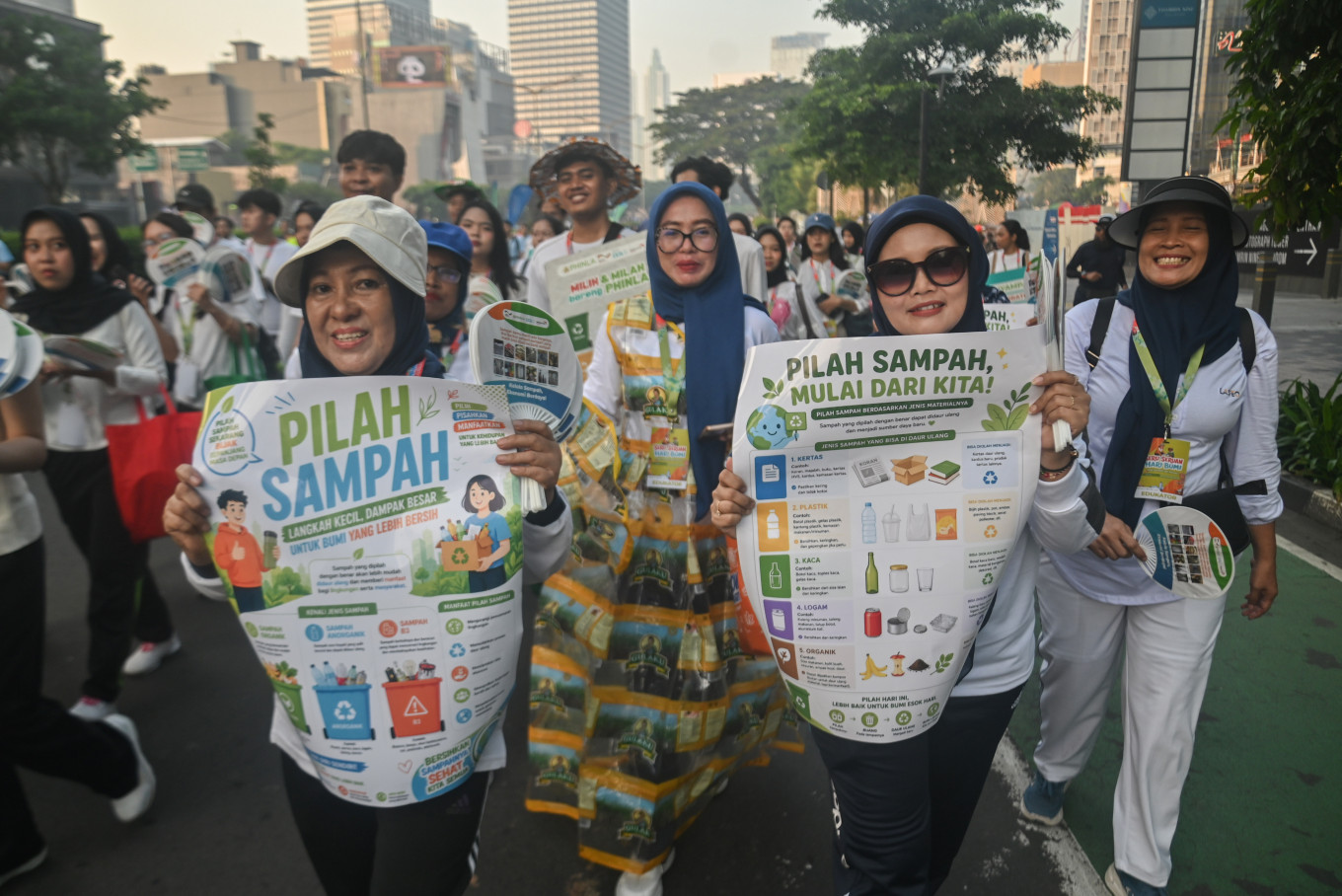 People smile as they participate in an educational rally on household waste sorting on May 3, 2026, during an Earth Day-themed Car Free Day event on Jl. Sudirman in Central Jakarta. (Antara/Fakhri Hermansyah)
J
akarta is finally confronting its massive waste crisis by mandating “waste sorting at source” through an instruction issued on April 30 by Governor Pramono Anung, which orders all residents to separate their household waste into four categories. The move aims to prevent the disposal of unsorted waste at the Bantar Gebang landfill in Bekasi, West Java: the sole destination of the city’s garbage that has already exceeded capacity.
Once sorted, hazardous and recyclable waste must be taken to designated sites for processing into industrial raw materials or fuel for power plants.
The instruction also directs community unit (RW) and subdistrict heads to ramp up monitoring to ensure that households are actually sorting their trash. It even comes with an incentive for areas that achieve 100 percent compliance, as well as the authority to set administrative sanctions at the community level for noncompliant residents.
The initiative is long overdue, especially for a metropolis of over 11 million people that produces nearly 8,000 tonnes of garbage every day. Tragically, the city administration only acted after seven people were killed in a garbage avalanche in March at Bantar Gebang, the nation’s largest landfill.
Nevertheless, we appreciate the Jakarta administration for taking concrete steps toward realizing the city’s significant potential for reducing the amount of garbage it sends to landfills. Belated action will only exacerbate the country’s waste crisis, perhaps even lead to more lives lost.
Official data show that food waste, which can be composted, makes up almost 50 percent of Jakarta’s trash. Plastic, metal and glass, all of which are highly recyclable materials, comprise around a third of what’s left.

But a positive initiative like this can fail without rigorous enforcement. Rather than relying solely on a gubernatorial instruction, the new waste sorting scheme should be codified as a formal policy that uses a balanced carrot-and-stick approach. At the very least, the city administration should draft clear guidelines on how to incentivize compliance and penalize noncompliance.